
Home & Garden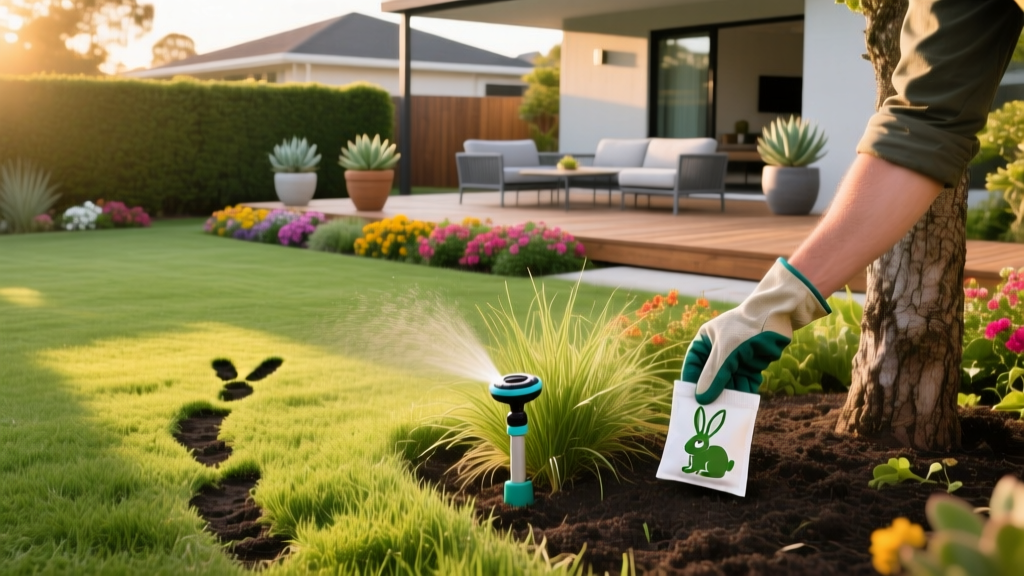
How to Get Rid of Bunnies in Your Yard: A Humane Playbook
The Bunny Damage Assessment: Confirming the Culprit
Before deploying any control measures, you must confirm that rabbits are actually the source of your landscape damage. Misidentifying the pest leads to wasted money and ineffective treatments. Rabbits (Sylvilagus floridanus and related species) leave highly specific forensic evidence in the garden that distinguishes them from deer, voles, and groundhogs.
Damage Identification Matrix:
- Rabbits: Clean, sharp cuts at a precise 45-degree angle on stems and branches. Damage is typically limited to 2.5 feet above ground level. Bark stripping on young trees reveals distinct, paired 1/8-inch tooth marks.
- Deer: Ragged, torn, or shredded stem ends (deer lack upper incisors and must tear vegetation). Damage occurs up to 6 feet high.
- Voles: Do not typically clip stems at an angle. They leave 1/4-inch wide, parallel teeth marks on roots and bark, often hidden under snow or mulch, accompanied by 1-inch wide surface runways.
Additionally, check for tracks. Rabbit tracks are highly distinct: the larger hind feet land ahead of the smaller front feet when hopping, creating a Y-shaped track pattern in soft soil. According to the Internet Center for Wildlife Damage Management (ICWDM), confirming these specific track patterns and 45-degree clipping angles is the mandatory first step in any integrated pest management (IPM) playbook.
Phase 1: Habitat Modification (Removing the Appeal)
Rabbits are edge-dwelling prey animals. They require dense cover to hide from hawks, coyotes, and domestic dogs, and they will not forage in open spaces where they feel exposed. Modifying your yard's micro-habitat is the most cost-effective, long-term strategy for reducing rabbit populations.
Clearing the Perimeter
Eliminate brush piles, tall weeds, and dense groundcover (like ivy or pachysandra) within a 50-foot radius of your primary garden beds. If you have woodpiles, elevate them at least 18 inches off the ground on concrete blocks or metal racks to remove the dark, sheltered underneath space where rabbits nest. Trim the lower branches of shrubs up to 2 feet from the ground to remove hiding spots.
Strategic Plant Swaps
While no plant is 100% rabbit-proof, especially in early spring when food is scarce, rabbits have strong preferences. Swap out highly palatable plants for resistant alternatives.
- Remove/Protect: Tulips, hostas, asters, snapdragons, young peas, and beans.
- Plant Alternatives: Daffodils, alliums, lavender, salvia, yarrow, and marigolds. The strong aromatic oils and fuzzy or leathery leaves of these plants naturally deter foraging.
Phase 2: Physical Exclusion (Fencing Done Right)
When learning how to get rid of bunnies in your yard, physical barriers offer the highest success rate. However, standard garden fencing often fails because rabbits are prolific diggers. You must engineer the fence to defeat both their jumping and burrowing instincts.
| Fencing Material | Required Specifications | Est. 2026 Cost (per linear ft) |
|---|---|---|
| Galvanized Poultry Netting | 1-inch hexagonal mesh, 16-gauge or 19-gauge wire, 24 to 36 inches tall. | $1.20 - $1.80 |
| Welded Wire Mesh | 1/2-inch or 1-inch square grid, 14-gauge wire. Heavier duty for permanent installations. | $2.50 - $3.50 |
| Metal T-Posts | 4-foot to 5-foot height, driven 12 inches into the ground, spaced every 6 to 8 feet. | $4.00 - $6.00 (per post) |
The "L-Shape" Apron Technique for Diggers:
Do not just bury the fence straight down. Rabbits will dig directly at the base of the barrier. Instead, bend the bottom 12 inches of the wire mesh outward at a 90-degree angle, away from the garden, and bury this "apron" 2 to 4 inches deep under the soil or pin it down with landscape staples and cover with mulch. When a rabbit digs at the fence line, they hit the wire apron and cannot dig under it.
Do not just bury the fence straight down. Rabbits will dig directly at the base of the barrier. Instead, bend the bottom 12 inches of the wire mesh outward at a 90-degree angle, away from the garden, and bury this "apron" 2 to 4 inches deep under the soil or pin it down with landscape staples and cover with mulch. When a rabbit digs at the fence line, they hit the wire apron and cannot dig under it.
Phase 3: Scent and Taste Deterrents
Repellents are best used as a secondary layer of defense or for protecting large, unfenced areas like open lawns or scattered perennial beds. They must be applied before damage begins, as rabbits will sample a plant to test the deterrent. As of 2026, commercial repellents generally fall into two chemical categories: area repellents (odor-based) and contact repellents (taste-based).
Commercial Repellent Comparison
- Putrescent Whole Egg Solids (e.g., Liquid Fence): Costs roughly $18 to $22 for a 32oz ready-to-use bottle. Highly effective odor deterrent that mimics predator scent. Drawback: Washes off after 1 inch of rainfall and requires frequent reapplication.
- Blood Meal Base (e.g., Plantskydd): Costs roughly $35 for a 2.2lb powder concentrate. Excellent for dormant trees and shrubs in winter. Lasts up to 3 months on dormant wood, but only 3 to 4 weeks on actively growing, tender spring foliage.
- Capsaicin / Hot Pepper Wax: Costs $15 to $20. Works via taste irritation. Warning: Can cause leaf burn (phytotoxicity) on sensitive plants like peppers and tomatoes if applied during high heat (above 85°F) or direct midday sun.
Phase 4: Live Trapping and Relocation
Trapping should only be utilized when exclusion and repellents fail, or when dealing with a specific nuisance animal that has bypassed your defenses. According to Penn State Extension, live trapping requires strict adherence to local wildlife laws and humane handling protocols.
Equipment and Baiting
Use a single-door live trap, specifically the Havahart Model 1077 (dimensions: 15 x 5 x 5 inches), which is perfectly sized for cottontail rabbits. Larger traps allow the rabbit to turn around and potentially escape the trigger plate. Bait the trap with fresh carrots, apples, or a small smear of peanut butter placed behind the trigger pan so the rabbit must fully enter and step on the plate to reach it.
Critical Welfare Warning: Capture Myopathy
Rabbits are highly susceptible to stress-induced capture myopathy, a fatal metabolic condition caused by extreme exertion and panic. You must check traps at least twice daily (every 12 hours). Never leave a trapped rabbit in direct sunlight, as they will rapidly succumb to heat stroke. Cover the trap with a light, breathable cloth immediately upon capture to calm the animal.
Rabbits are highly susceptible to stress-induced capture myopathy, a fatal metabolic condition caused by extreme exertion and panic. You must check traps at least twice daily (every 12 hours). Never leave a trapped rabbit in direct sunlight, as they will rapidly succumb to heat stroke. Cover the trap with a light, breathable cloth immediately upon capture to calm the animal.
Relocation Laws: In many states and municipalities, it is illegal to relocate wildlife without a permit due to the risk of spreading diseases like Rabbit Hemorrhagic Disease Virus (RHDV2). Always consult your state's Department of Natural Resources (DNR) before moving a trapped animal off your property. In many cases, humane euthanasia by a licensed professional is the legally mandated outcome for trapped urban rabbits.
The Seasonal Defense Calendar
Rabbit behavior shifts with the seasons. Your playbook must adapt to their changing dietary needs and breeding cycles.
- Early Spring (March - April): Rabbits emerge hungry, and tender new shoots are their primary target. Apply granular repellents around the perimeter of beds before plants break dormancy. Install physical fencing around newly planted vegetables.
- Summer (May - August): Peak breeding season. Focus on habitat modification to remove nesting sites (dense brush, tall grass). Check fence lines weekly for new digging attempts or holes created by heavy rain washing away soil.
- Fall (September - November): Food sources begin to dry up. Rabbits will start testing woody shrubs and young tree bark. Apply liquid trunk protectors or install corrugated plastic tree guards (minimum 18 inches tall) around the base of young fruit and ornamental trees.
- Winter (December - February): Snow cover limits food, making rabbits desperate. They will eat bark, twigs, and dried perennials. Ensure tree guards extend at least 3 inches above the anticipated maximum snow line. Reapply long-lasting winter repellents like Plantskydd on dormant wood.
Frequently Asked Questions
Do ultrasonic rabbit repellents work?
No. Independent university studies have consistently shown that ultrasonic pest repellers are ineffective against rabbits. Rabbits have a different hearing range than rodents, and the high-frequency sounds do not deter them from foraging. Save your money and invest in physical mesh barriers.
Will a dog keep rabbits out of my yard?
While an active, outdoor dog will deter rabbits from the specific areas it patrols, dogs rarely provide 100% coverage. Rabbits will quickly learn the dog's schedule and boundaries, foraging in the dog's blind spots or when the dog is inside. Dogs are a great supplementary deterrent but should not replace physical fencing for high-value garden beds.
What is the fastest way to get rid of bunnies in your yard?
The fastest immediate solution is installing a 2-foot tall, 1-inch mesh galvanized wire fence with a buried L-shaped apron around the specific garden beds being damaged. While repellents take time to condition the rabbits' behavior and habitat modification takes weeks to yield results, physical exclusion provides instant, 100% protection for the enclosed area the moment it is installed.