Home & Garden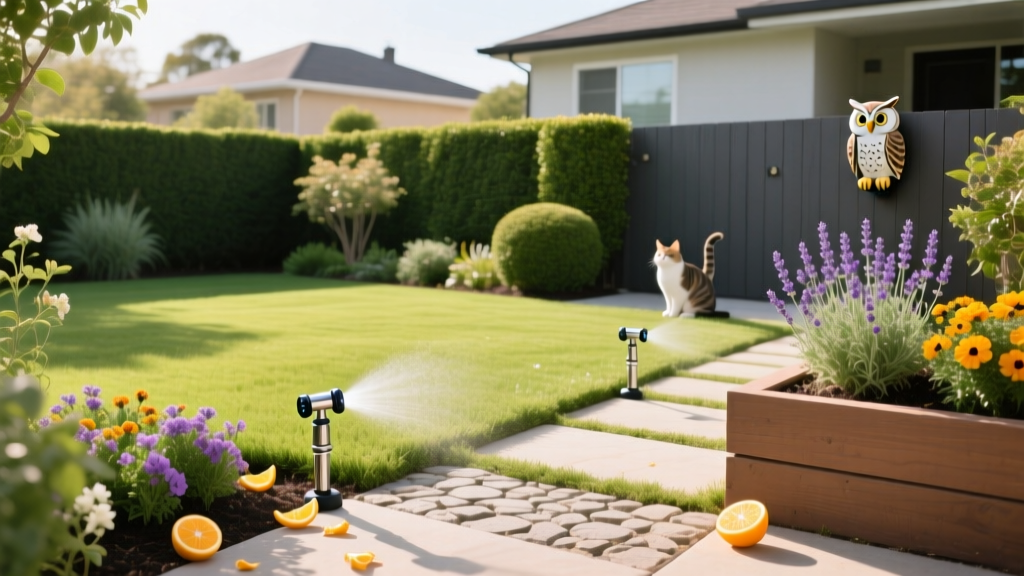
How Do You Get Rid of Cats From Your Yard? A Humane Playbook
The Feline Pest Problem: Health and Landscape Risks
When addressing yard pests, most homeowners immediately think of grubs, deer, or rodents. However, free-roaming neighborhood cats and feral colonies present a unique set of landscape and public health challenges that require a specialized Integrated Pest Management (IPM) approach. If you are wondering how do you get rid of cats from your yard without violating local animal cruelty laws or harming the animals, you must understand the mechanics of feline behavior.
Cats treat loose, freshly turned garden soil and mulch beds as giant, inviting litter boxes. This behavior leads to two primary issues. First, landscape destruction: the physical digging severs the shallow root systems of newly planted annuals and perennials. Furthermore, feline urine is highly concentrated in urea and nitrogen, causing severe 'nitrogen burn' in turfgrass—characterized by yellow, dead patches surrounded by a dark green halo of over-fertilized grass.
Second, and more critically, is the public health risk. Cat feces can harbor Toxoplasma gondii, a parasite that causes toxoplasmosis. According to the Centers for Disease Control and Prevention (CDC), Toxoplasma oocysts shed in cat feces can sporulate and remain infectious in moist soil for over a year. This poses a severe risk to pregnant women, immunocompromised individuals, and local wildlife. Therefore, reclaiming your yard is not just an aesthetic pursuit; it is a necessary sanitation protocol.
The Sensory Deterrent Matrix: What Actually Works?
To effectively evict cats, you must target their highly tuned sensory systems: olfactory (smell), tactile (touch), and auditory/startle responses. Relying on a single method rarely works long-term, as cats are intelligent and will habituate to static deterrents. Below is a comparison matrix of the most effective humane deterrent categories.
| Deterrent Method | Mechanism of Action | Effectiveness (1-10) | Estimated Cost | Best Application Zone |
|---|---|---|---|---|
| Motion-Activated Sprinklers | Startle response + tactile aversion (water) | 9.5/10 | $40 - $75 | Open lawns, large garden beds, driveways |
| Prickly / Textural Mulch | Tactile discomfort on sensitive paw pads | 8.0/10 | $15 - $40 | Seed beds, soft soil, base of trees |
| Botanical / Scent Repellents | Olfactory irritation (volatile oils) | 7.0/10 | $15 - $30 | Perimeter borders, fence lines, patio edges |
| Ultrasonic Emitters | High-frequency auditory annoyance (20-25 kHz) | 5.5/10 | $25 - $50 | Enclosed patios, fenced courtyards |
Step-by-Step Yard Modification Playbook
Implementing a multi-layered defense strategy is the gold standard for humane pest removal. Follow this sequential playbook to secure your property.
Step 1: Sanitize and Remove Existing Attractants
Cats are drawn to areas that already smell like them. Before deploying deterrents, you must break the scent-marking cycle. Wear heavy-duty nitrile gloves and use a dedicated scooper to remove all visible feces. Dispose of it in sealed plastic bags in your municipal trash—never in compost. For hard surfaces (patios, retaining walls) where cats have sprayed, scrub the area with a 10% bleach solution or an enzymatic cleaner specifically formulated to break down uric acid crystals. Cover freshly turned soil with a layer of chicken wire or hardware cloth just beneath the surface; cats despise the feeling of wire against their claws when attempting to dig.
Step 2: Deploy Active Startle Deterrents
The single most effective tool in the humane pest arsenal is the motion-activated sprinkler. The Orbit 62100 Yard Enforcer is the industry benchmark. It utilizes a passive infrared (PIR) sensor that detects animal body heat and motion up to 35 feet away across a 120-degree arc.
- Placement: Position the sprinkler at the entry point the cats use to access your yard, or directly facing the targeted garden bed.
- Settings: Set the dial to 'Day and Night' mode. Adjust the sensitivity dial to the maximum setting to ensure it triggers on smaller feline heat signatures rather than just human-sized targets.
- Power: It requires 3 AA batteries and hooks directly to your standard garden hose. Expect to use 10 to 15 gallons of water per day during peak intrusion periods.
Step 3: Establish Botanical and Textural Perimeters
Once the active deterrents have broken the habit loop, reinforce the perimeter with passive barriers. Plant Coleus canina (often sold under the trademarked name 'Scaredy Cat' plant). This perennial emits a volatile compound that smells intensely like skunk to felines and canines, but is barely perceptible to the human nose unless the leaves are crushed. Space these plants 18 inches apart along your fence line.
For mulch beds, abandon soft, shredded cedar or cocoa bean mulch, which cats find incredibly comfortable. Instead, use textural deterrents: lay down pine cones, holly cuttings, or specifically manufactured plastic 'cat scat mats' (which feature blunt, flexible spikes that are uncomfortable but do not pierce the skin). A 2-inch layer of coarse, jagged lava rock is also highly effective and doubles as excellent drainage material for xeriscaped beds.
⚠️ CRITICAL WARNING: The Mothball Myth
Never use mothballs (naphthalene or paradichlorobenzene) outdoors to repel cats or any other wildlife. According to the ASPCA Animal Poison Control Center, using mothballs in an open environment is illegal in most jurisdictions, as it violates federal pesticide labeling laws. Furthermore, they are highly toxic to dogs, children, local bird populations, and can severely contaminate your local groundwater and soil ecology. Stick to EPA-registered, naturally derived repellents like Nature's MACE Cat Repellent, which uses safe plant oils like cinnamon and peppermint.
Managing Feral Colonies: The TNR Protocol
It is vital to distinguish between a 'stray' cat (a lost or abandoned socialized pet) and a 'feral' cat (an unsocialized animal born in the wild). If you are dealing with a colony of feral cats, deterrents will only shift the problem to your neighbor's yard. The only scientifically proven, long-term solution for feral population control is Trap-Neuter-Return (TNR).
The Humane Society of the United States strongly advocates for TNR, as it halts the breeding cycle and reduces nuisance behaviors like yowling, spraying, and fighting. Here is how to execute a TNR playbook:
- Procure a Humane Trap: Rent or purchase a gravity-fed live trap (e.g., Tru-Catch 30D). Bait the trap with strong-smelling wet food like mackerel or sardines.
- Acclimate the Colony: Feed the cats at the exact same time and location for 3 to 5 days without setting the trap, building a routine and establishing trust.
- Trap and Cover: On trapping day, withhold food for 12 hours. Once a cat enters and triggers the plate, immediately cover the trap with a heavy blanket. Darkness instantly calms a panicked feral animal.
- Surgical Alteration and Ear-Tipping: Transport the trapped cat to a local low-cost spay/neuter clinic. The veterinarian will humanely 'ear-tip' (remove the top quarter-inch of the left ear) while the cat is under anesthesia. This is the universal visual marker that a feral cat has been altered and vaccinated against rabies.
- Return: Release the cat back to the exact location it was trapped. Altered cats will naturally disperse over time and cease the territorial spraying that ruins garden perimeters.
Maintaining a Cat-Free Landscape
Pest management is not a one-time event; it is an ongoing seasonal practice. Motion-activated sprinklers must be winterized and drained before the first freeze to prevent cracked PIR valves. Botanical repellents like Coleus canina are tender perennials and may need to be replanted or heavily mulched in USDA Hardiness Zones below 8. By combining active startle technology, passive textural barriers, and responsible TNR practices for feral populations, you can reclaim your outdoor living spaces, protect your turfgrass from nitrogen burn, and eliminate the health risks associated with Toxoplasma-bearing feces, all while adhering to strict humane standards.