
Home & Garden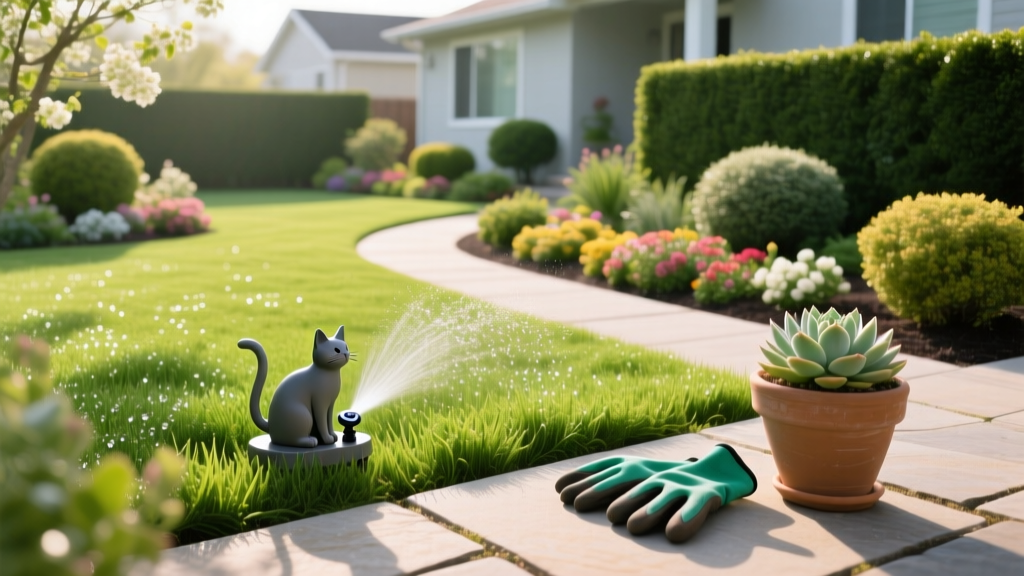
How to Get Rid of Cats From Around Your House and Garden
The True Cost of Feline Trespassing
When neighborhood or feral cats treat your landscaping as a personal litter box, the damage extends far beyond aesthetic nuisance. Feline urine contains exceptionally high concentrations of urea and nitrogen. While nitrogen is a standard lawn fertilizer component, the localized, concentrated dose deposited by a cat causes severe 'nitrogen burn,' resulting in dead, yellow-brown patches of turfgrass that require complete sod replacement or reseeding.
More critically, cat feces pose a documented biological hazard. Feces can harbor Toxoplasma gondii, a parasite that causes toxoplasmosis. According to the Centers for Disease Control and Prevention (CDC), environmental oocysts from infected cats can survive in moist soil for over a year, posing risks to gardeners, children playing in the yard, and immunocompromised individuals. Learning how to get rid of cats from around your house is not just about protecting your petunias; it is a necessary public health and property maintenance protocol.
⚠️ Health & Safety Warning: Never handle cat feces or contaminated soil without heavy-duty nitrile gloves and an N95 mask. If you find feces in a vegetable garden or sandbox, remove the contaminated soil to a depth of at least 2 inches and dispose of it in sealed plastic bags. Do not compost it.
Sensory Deterrents: Smell and Taste Barriers
Cats possess an olfactory system with approximately 200 million odor-sensitive cells (compared to a human's 5 million). You can exploit this biological sensitivity to create invisible perimeter barriers. However, not all home remedies are effective. The popular internet myth of using coffee grounds fails in practice; grounds wash away rapidly in the rain, alter soil pH in ways that harm acid-sensitive plants, and eventually grow mold.
Commercial vs. DIY Scent Deterrents
| Deterrent Type | Active Ingredients | Avg. Cost | Efficacy & Reapplication |
|---|---|---|---|
| Liquid Fence Dog & Cat Repellent | Putrescent whole egg solids, garlic, white pepper | $18 (32 oz) | High. Reapply every 2-3 weeks or after heavy rainfall. |
| Pure Peppermint Essential Oil Spray | Menthol, pulegone | $12 (DIY Mix) | Moderate. Volatile oils evaporate quickly; requires spraying every 3 days. |
| Granular Citrus / Methyl Nonyl Ketone | Synthetic predator urine analogs, citrus extracts | $25 (5 lb bag) | High. Granules resist wind displacement and last up to 30 days. |
| Cayenne Pepper / Hot Sauce Mix | Capsaicin | $5 (DIY) | Low/Cruel. Washes away immediately; risks severe eye irritation to animals. |
For a reliable commercial option, Liquid Fence utilizes putrescent egg solids that mimic the scent of decaying organic matter, triggering a cat's instinctual avoidance of spoiled food sources. Apply it heavily along the perimeter of your property, the base of your home's foundation, and directly onto the edges of garden beds.
Physical and Tactical Yard Modifications
Cats are tactile creatures that prefer loose, dry, easily diggable substrates. If you alter the physical texture of your soil surface, you remove the primary incentive for them to visit your yard.
Sub-Surface Wire Meshing
If cats are digging up newly planted bulbs or destroying freshly laid mulch, install 1-inch hexagonal galvanized chicken wire. Lay the wire flat over the soil and cover it with exactly 1.5 to 2 inches of mulch or topsoil. Plants will grow through the gaps, but cats cannot dig through the rigid metal grid. This method costs roughly $0.50 per square foot and provides a permanent, invisible physical barrier.
Prickly Surface Mats
Products like the Scat Mat by Concept Industries feature blunt, rigid plastic spikes. When placed on top of soil, fence lines, or patio furniture, they make the surface physically uncomfortable for cats to walk or lie on without causing injury. Expect to pay around $30 for a pack of six interlocking mats. Avoid metal spike strips, which can lacerate paws and violate local animal cruelty ordinances.
Botanical Deterrents
Integrate Coleus canina (commonly marketed as the 'Scaredy Cat' plant) into your garden borders. This plant emits a volatile organic compound that smells heavily of skunk and rue when brushed against. While not a standalone cure, planting it at 3-foot intervals along fence lines creates a complementary olfactory shield.
Tech-Driven Repellents: Ultrasonic and Motion-Activated
When passive barriers fail, active deterrent systems provide the most reliable results for persistent feral populations.
Motion-Activated Sprinklers: The Gold Standard
The Orbit 62100 Yard Enforcer (approx. $75) utilizes a passive infrared (PIR) sensor to detect body heat and motion up to 70 feet away. Upon detecting a cat, it releases a sudden, 3-second burst of water accompanied by a loud mechanical clicking noise. The combination of physical startle and water aversion conditions cats to avoid the zone entirely after 2 to 3 encounters. Ensure you connect it to a standard garden hose and adjust the sensitivity dial to 'Medium' to prevent false triggers from blowing leaves.
Ultrasonic Emitters: Hit or Miss
Devices like the Aspectek Powerful 2-in-1 Ultrasonic Repeller (approx. $35) emit high-frequency sound waves (13.5 kHz to 45.5 kHz) inaudible to most humans but highly irritating to felines. Caveat: Ultrasonic waves cannot penetrate solid objects like fences, dense shrubs, or walls. They are only effective in wide-open, unobstructed sightlines. Additionally, older cats with age-related hearing loss may be entirely unaffected.
Repairing Cat-Damaged Turf and Soil
Once you have secured the perimeter, you must remediate the existing damage. For urine-burned lawn patches, standard watering is insufficient to flush out the concentrated urea salts. Apply an outdoor-specific enzymatic cleaner, such as Nature's Miracle Outdoor Formula ($22 per gallon). These cleaners contain specialized bacteria that enzymatically digest the uric acid crystals and urea at a molecular level, neutralizing both the chemical burn risk and the territorial pheromones that attract other cats.
For feces contamination in garden beds, remove the top 2 inches of soil, treat the exposed subsoil with a 10% bleach solution (1 part bleach to 9 parts water) to kill lingering pathogens, let it dry completely, and backfill with fresh, sterile potting mix.
Community Management: The TNR Approach
If the cats in your yard are part of a managed feral colony rather than roaming pets, aggressive repellents will only result in an endless cycle of new cats moving into the vacated territory (a phenomenon known as the 'vacuum effect'). The most scientifically validated long-term solution is Trap-Neuter-Return (TNR).
According to Alley Cat Allies, TNR stabilizes and eventually reduces feral cat populations by halting reproduction while allowing sterilized cats to hold their territory against unneutered intruders. Contact your local municipal animal control or a regional rescue organization to borrow humane Havahart traps. Sterilized cats are significantly less likely to spray urine, fight, or roam widely, drastically reducing their impact on your property.
🚫 What NOT To Do: Never use mothballs (naphthalene or paradichlorobenzene) outdoors. Using mothballs as an animal repellent is a violation of federal pesticide law (FIFRA) and is highly toxic to cats, dogs, wildlife, and children. Furthermore, never use antifreeze, which contains ethylene glycol, a sweet-tasting compound that causes fatal acute kidney failure in mammals. For safe pest management guidelines, consult the ASPCA Animal Poison Control resources.
Frequently Asked Questions
Will vinegar keep cats out of my garden?
White vinegar (5% acetic acid) can deter cats due to its sharp odor, but it is highly volatile and evaporates within 24 hours outdoors. Furthermore, spraying vinegar directly on your lawn or garden soil will drastically lower the soil pH, killing grass roots and harming alkaline-preferring plants. It is not recommended as a primary deterrent.
How do I stop a neighbor's cat from entering my yard?
Start with non-confrontational physical barriers like sub-surface chicken wire and motion-activated sprinklers. If the cat is wearing a collar, attach a small, polite note to the collar requesting the owner keep the cat indoors. If the owner is uncooperative, escalate to local animal control to report a 'leash law' or 'at-large pet' ordinance violation, depending on your municipal codes.
Do ultrasonic cat repellents affect dogs?
Yes. Dogs possess a similar hearing range to cats and can hear frequencies up to 45-65 kHz. If you own a dog or if your neighbors have outdoor dogs, ultrasonic repellents will cause them equal distress and anxiety. In mixed-pet neighborhoods, rely strictly on motion-activated water sprinklers or olfactory repellents instead.