
Home & Garden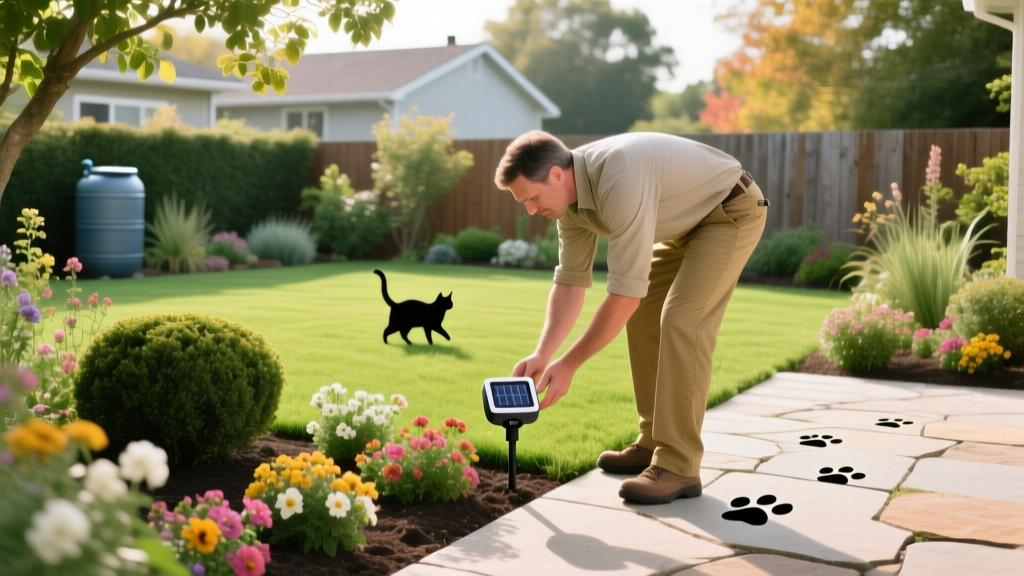
How to Keep Feral Cats Away From Your Yard and Garden
The Reality of Feral Cats in Residential Landscapes
Feral cats (Felis catus) are driven by two primary instincts when entering your yard: hunting and elimination. Freshly tilled garden beds, loose topsoil, and soft mulch perfectly mimic the texture of commercial cat litter, making your landscaping an irresistible communal bathroom. Beyond the destruction of delicate root systems and the uprooting of seedlings, feral cat feces carry severe health risks, including Toxoplasma gondii and roundworms, which can contaminate soil for years.
Successfully reclaiming your yard requires a multi-layered approach that targets their sensory sensitivities. Cats possess highly sensitive paw pads, an acute sense of smell, and a deep-seated aversion to unpredictable environmental changes. By combining physical barriers with active deterrents, you can humanely retrain local colonies to avoid your property entirely.
CRITICAL WARNING: Avoid Toxic DIY Repellents
Never use mothballs (naphthalene or paradichlorobenzene) outdoors. They are highly toxic to dogs, wildlife, and children, and their outdoor use violates federal pesticide laws. Similarly, avoid cayenne pepper or hot sauce sprays; these can cause severe corneal damage and respiratory distress to cats and are considered inhumane by veterinary professionals.
Phase 1: Eliminating the 'Litter Box' Appeal via Physical Barriers
The most permanent solution to stop digging is to alter the tactile feedback of the soil. If a cat cannot dig, it will not use the area as a latrine.
The Hex Netting and Mulch Method
Chicken wire is often recommended, but standard poultry netting can rust and has large gaps. Instead, use 19-gauge galvanized hex netting with a 1-inch mesh.
- Prep the Soil: Level your garden bed and remove any large rocks or existing clumps of cat feces (wear heavy gloves and a mask).
- Lay the Mesh: Unroll the galvanized netting flat over the soil. Overlap seams by at least 6 inches.
- Secure the Perimeter: Anchor the mesh using 6-inch steel landscape staples, placing one staple every 3 feet along the edges and in a grid pattern through the center.
- Camouflage: Cover the wire with 2 to 3 inches of heavy mulch, such as cedar or hardwood bark. The plants will grow up through the 1-inch gaps, but the wire prevents any downward digging.
Prickly Surface Deterrents
If wire mesh is impractical for established perennial beds, create an uncomfortable walking surface. Cats despise walking on uneven, spiky materials. Scatter pine cones, holly leaf cuttings, or sweetgum balls densely around the base of vulnerable plants. Alternatively, lay down branches from thorny bushes like roses or barberry prunings. These organic barriers decompose over a season and must be replenished, but they are highly effective and free if you have the source material on your property.
Phase 2: Active Deterrent Systems (Tech and Water)
Physical barriers protect specific beds, but active deterrents are required to keep feral cats off open lawns, patios, and broader landscape perimeters.
Motion-Activated Sprinklers
Water is the single most effective feline deterrent due to the sudden sensory shock. The industry standard is the Orbit Yard Enforcer Motion-Activated Sprinkler (typically priced around $85). It features an infrared sensor with a 75-foot detection range and a 120-degree field of view.
Setup Specifics: Mount the unit on a standard garden hose and insert the included metal stake into the ground. Set the dial to 'Day and Night' mode. The unit requires 3 AAA batteries, which generally last for 3,000 activation cycles. To conserve water and increase the 'shock' factor, set the sprinkler head to a sharp, pulsating jet rather than a gentle mist. During winter months in freezing climates, you must drain and store the unit to prevent the internal solenoid valve from cracking.
The Ultrasonic Device Debate
Ultrasonic repellents emit high-frequency sound waves (usually between 18kHz and 24kHz) intended to irritate cats. While initial tests show a temporary reduction in yard visits, habituation is a major failure mode. Studies indicate that within 14 to 21 days, feral cats realize the sound poses no physical threat and begin ignoring it. If you use an ultrasonic device like the PestOff or Aspectek models, you must physically move the device to a new location and angle every 10 days to prevent the local colony from mapping the safe zones.
Phase 3: Deterrent Method Comparison Matrix
Choosing the right combination of tools depends on your budget, the size of your yard, and the severity of the feral cat presence. Use this matrix to plan your defense strategy.
| Method | Upfront Cost | Long-Term Efficacy | Maintenance Level | Best Application |
|---|---|---|---|---|
| Galvanized Hex Netting | $30 - $50 | 95%+ (Permanent) | Low (Annual check) | Vegetable gardens, raised beds |
| Motion Sprinklers | $75 - $90 | 90% (High) | Medium (Battery/Winterize) | Open lawns, patios, perimeters |
| Commercial Scent Repellents | $20 - $35 | 60% (Variable) | High (Reapply after rain) | Fence lines, specific shrubs |
| Ultrasonic Emitters | $30 - $60 | 40% (Habituation) | High (Frequent relocation) | Small enclosed courtyards |
Phase 4: Scent and Taste Repellents That Actually Work
Cats have a vomeronasal organ (Jacobson's organ) that makes their sense of smell roughly 14 times stronger than a human's. You can exploit this by introducing odors they find repulsive.
Commercial Repellents
Look for granular or liquid repellents that utilize putrescent whole egg solids, garlic oil, and white pepper. Products like Liquid Fence Dog & Cat Repellent or Nature's Mace Cat Repellent are highly effective. The sulfur compounds in the egg solids mimic the scent of decaying matter, triggering a predator-avoidance instinct. Apply these granules heavily around the perimeter of your property and along fence lines. Crucial application rule: You must reapply immediately after any rainfall or heavy irrigation, as the active volatile oils wash away quickly.
Coffee Grounds and Citrus: The DIY Reality
Many online guides recommend spreading used coffee grounds. While cats dislike the bitter scent and the gritty texture, coffee grounds contain caffeine, which is highly toxic to dogs if ingested. If you have dogs that roam your yard, skip the coffee grounds. Instead, use citrus peels. Scatter orange, lemon, and grapefruit rinds in your garden beds. As the peels decompose, they release d-limonene, a compound that irritates a cat's respiratory tract without causing permanent harm. Replace the peels every two weeks as they dry out and lose their potency.
'Feral cats are incredibly adaptable. If you rely on a single deterrent method, the colony will eventually test the boundaries and find the weak point. Layering a physical barrier in the beds with an active motion sprinkler on the lawn creates a psychological boundary that the cats will not risk crossing.'
— Wildlife Management Best Practices
Long-Term Management: TNR and Community Efforts
Deterrents protect your specific property, but they do not solve the root cause of the feral cat population. Relocating or trapping cats without a managed plan triggers the 'vacuum effect,' where new, unneutered cats immediately move into the vacated territory to take advantage of available food and shelter.
The only scientifically proven method for stabilizing and reducing feral cat populations over time is Trap-Neuter-Return (TNR). According to the Humane Society of the United States, TNR humanely traps the cats, spays or neuters them, vaccinates them against rabies, and returns them to their outdoor home. Neutered cats roam less, fight less, and do not produce litters, gradually shrinking the colony size through natural attrition while maintaining a territorial buffer against new, unvaccinated cats.
Contact your local animal control or a dedicated community cat rescue organization to borrow humane box traps (like the Tru-Catch 36D) and access low-cost spay/neuter clinics. Combining TNR efforts with your yard's physical and active deterrents will yield the most permanent, humane results for your landscape.
Frequently Asked Questions
Will feral cats eventually just get used to the motion sprinkler?
Occasionally, a highly motivated or dominant tomcat may test the sprinkler. To prevent habituation, move the Orbit Yard Enforcer to a different stake location every few weeks and occasionally adjust the sensor sensitivity dial so the trigger distance varies.
Are there specific plants that repel cats?
Yes, the 'Scaredy Cat' plant (Coleus caninus/Plectranthus ornatus) emits a strong odor resembling skunk or dog urine when brushed against. Rosemary and lavender also have strong essential oils that cats generally avoid, though they are less effective than physical barriers for determined diggers.