
Home & Garden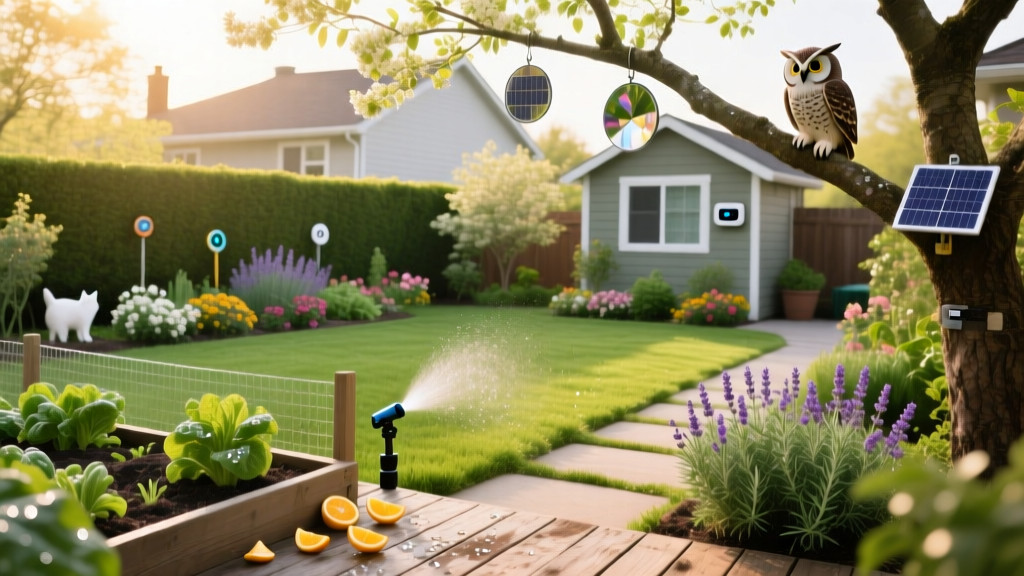
How to Keep Stray Cats Away: 7 Humane Yard and Garden Deterrents
Stray and feral cats treat loose, freshly tilled garden soil as an oversized litter box. Their digging destroys root systems, their urine introduces harmful pathogens like toxoplasmosis, and their feces contaminate vegetable beds. Learning how to keep stray cats away requires a multi-layered approach that targets their sensory preferences and physical access points without causing them harm. According to The Humane Society of the United States, consistent use of humane deterrents alters feline behavioral patterns over a 2-to-3-week period, eventually training them to bypass your property entirely.
Understanding Why Stray Cats Target Your Yard
Cats are territorial and highly tactile. They seek out specific environmental conditions for elimination and resting. Fine-textured, dry, and loose soils—such as freshly laid mulch, peat moss, or tilled garden beds—mimic the commercial clumping litter they are accustomed to. Furthermore, elevated garden beds retain heat from the sun, making them attractive resting spots during cooler mornings. To successfully deter them, you must make the physical environment uncomfortable to walk on, smell offensive to their highly sensitive olfactory receptors, or introduce unpredictable stimuli that trigger their flight response.
Physical Barriers: Blocking Access to Garden Beds
Physical barriers offer the highest long-term success rate because they do not degrade in the rain or require weekly reapplication. Cats despise walking on uneven, prickly, or unstable surfaces.
Chicken Wire and Hardware Cloth
Laying 1-inch hexagonal galvanized chicken wire flat over your soil is highly effective. Cats cannot dig through the wire, and the texture is uncomfortable on their paw pads. For existing plants, cut slits in the wire to slide it around the base of the stems. Bury the edges of the wire 1 to 2 inches deep or secure them with 6-inch landscape staples (U-pins) spaced every 3 feet to prevent cats from prying up the corners. Over time, annuals and perennials will grow up through the 1-inch gaps, rendering the wire nearly invisible while maintaining a subterranean shield.
Plastic Spike Mats
Products like the Digstop Cat Scat Mat or generic PVC spike strips (typically costing $25 to $35 for a 10-square-foot coverage area) feature blunt, flexible spikes that are painful to step on but will not pierce the skin or cause injury. Place these directly on top of the soil in high-traffic corners of your raised beds. They are particularly useful for protecting the edges of garden beds where cats prefer to perch and survey their territory.
Heavy River Rocks
Replace lightweight mulches like cedar shavings or straw with heavy, smooth river rocks measuring at least 2 to 3 inches in diameter. Cats cannot easily displace rocks of this weight to reach the soil beneath, effectively eliminating the digging incentive while still allowing water penetration.
Motion-Activated Sprinklers and Ultrasonic Deterrents
When physical barriers are impractical for large, open lawn areas, technology provides an automated defense. These devices exploit a cat's natural startle reflex.
Top Tech Deterrents for Current Yards
- Orbit 62100 Yard Enforcer Motion-Activated Sprinkler ($75 - $85): This is the industry standard for water-based deterrence. It features a 35-foot detection range, a 120-degree infrared sensor arc, and requires only 3 AA batteries for up to 7,500 activation cycles. The sudden burst of water and the mechanical 'click' of the valve startle cats effectively. Set it to 'Night' mode if the issue is strictly nocturnal to conserve water.
- Hoont Solar-Powered Ultrasonic Repeller ($30 - $40): Cats hear frequencies up to 64kHz. This device emits a sweeping ultrasonic siren between 13.5kHz and 45.5kHz, which is highly irritating to felines but largely inaudible to adult humans. For maximum efficacy, place the unit 12 to 18 inches off the ground, angling the PIR (Passive Infrared) sensor directly across the cat's primary entry path. Note that ultrasonic waves do not penetrate solid objects; ensure there is a clear line of sight between the sensor and the garden bed.
Scent and Taste Repellents: What Actually Works
A cat's sense of smell is roughly 14 times stronger than a human's. Repellents work by overwhelming their olfactory system, making the area unpleasant to investigate. However, outdoor repellents degrade rapidly due to UV exposure, rain, and irrigation.
| Repellent Type | Specific Product / Ingredient | Avg Cost | Longevity | Best Application |
|---|---|---|---|---|
| Commercial Liquid | Liquid Fence Dog & Cat Repellent (Putrescent egg solids) | $25 / Gallon | 3-4 Weeks | Perimeter spraying on fences and hardscapes |
| Commercial Granular | Nature's MACE Cat Repellent (Peppermint & White Pepper) | $30 / 5 lbs | 2-3 Weeks | Broadcasting over mulch and soil beds |
| DIY Organic | Used Coffee Grounds | Free | 1 Week | Acid-loving plant beds (Azaleas, Hydrangeas) |
| DIY Essential Oil | Citrus Peels / Lemon Eucalyptus Oil | $10 - $15 | 3-5 Days | Soaking rags placed near entry gates |
A note on coffee grounds: While many gardening blogs recommend spreading used coffee grounds to deter cats, use them with caution in vegetable gardens. As coffee grounds decompose, they temporarily tie up soil nitrogen and can lower soil pH. Restrict their use to established, acid-loving ornamental beds rather than nitrogen-heavy vegetable plots.
⚠️ CRITICAL WARNING: The Mothball Myth
Never use mothballs (naphthalene or paradichlorobenzene) outdoors to repel cats. According to ASPCA Animal Poison Control, using mothballs as an outdoor pesticide is illegal, highly toxic to children, domestic pets, and local wildlife, and causes severe soil and groundwater contamination. They dissolve in the rain, creating a toxic sludge rather than a deterrent.
Never use mothballs (naphthalene or paradichlorobenzene) outdoors to repel cats. According to ASPCA Animal Poison Control, using mothballs as an outdoor pesticide is illegal, highly toxic to children, domestic pets, and local wildlife, and causes severe soil and groundwater contamination. They dissolve in the rain, creating a toxic sludge rather than a deterrent.
Modifying Your Landscape to Remove Attractions
Deterrents will fail if your yard offers irresistible resources. You must eliminate the primary attractants that draw stray cats into your property in the first place.
- Eliminate Food Sources: Never feed your own pets outdoors. If you must, remove the bowls immediately after they finish eating. Secure trash cans with bungee cords or locking lids, as the scent of discarded meat and fish will draw scavengers.
- Remove Shelter Opportunities: Stray cats seek dense cover for sleeping and hiding from predators. Clear out overgrown brush piles, block access to the crawl spaces under sheds or porches with 1/2-inch hardware cloth, and stack firewood tightly to eliminate dark crevices.
- Manage Bird Feeders: Bird feeders attract rodents and spilled seed, which in turn attracts the rodents' predators. If you have a severe stray cat problem, temporarily remove ground-level bird feeders and switch to hanging feeders suspended at least 6 feet off the ground, equipped with conical predator baffles.
Step-by-Step Action Plan for Severe Infestations
If your yard has become a established colony hub, a single deterrent will not suffice. Execute this 14-day protocol:
- Day 1-2: Clean existing garden beds. Use an enzymatic cleaner designed for pet urine (like Nature's Miracle Outdoor) on hardscapes and the edges of raised beds to neutralize the pheromone markers cats use to claim territory.
- Day 3-5: Install physical barriers. Lay chicken wire over exposed soil and place spike mats on the corners of raised beds.
- Day 6-7: Deploy tech deterrents. Install the Orbit Yard Enforcer sprinkler at the primary entry point to the yard.
- Day 8-14: Apply commercial granular repellents around the perimeter fence line. Reapply immediately after any rainfall.
Frequently Asked Questions
Will cayenne pepper harm the cats?
While cayenne pepper is a common DIY deterrent, it is not recommended. If a cat steps in cayenne pepper and subsequently grooms its paws, the capsaicin can cause severe irritation to their eyes and mucous membranes. Stick to blunt physical barriers or commercially formulated, non-toxic scent repellents.
Do ultrasonic cat deterrents work through fences?
No. Ultrasonic frequencies are highly directional and are easily blocked by solid objects like wooden privacy fences, dense hedges, and brick walls. The device must have a direct, unobstructed line of sight to the area where the cats are walking.
Is it legal to trap and relocate stray cats?
In most municipalities, it is illegal for private citizens to trap and relocate wildlife or stray domestic animals without a specific permit or animal control authorization. Relocation often results in the animal's death due to territorial disputes in the new area. Always contact your local animal control or a registered TNR (Trap-Neuter-Return) organization for assistance with feral populations.

