
Home & Garden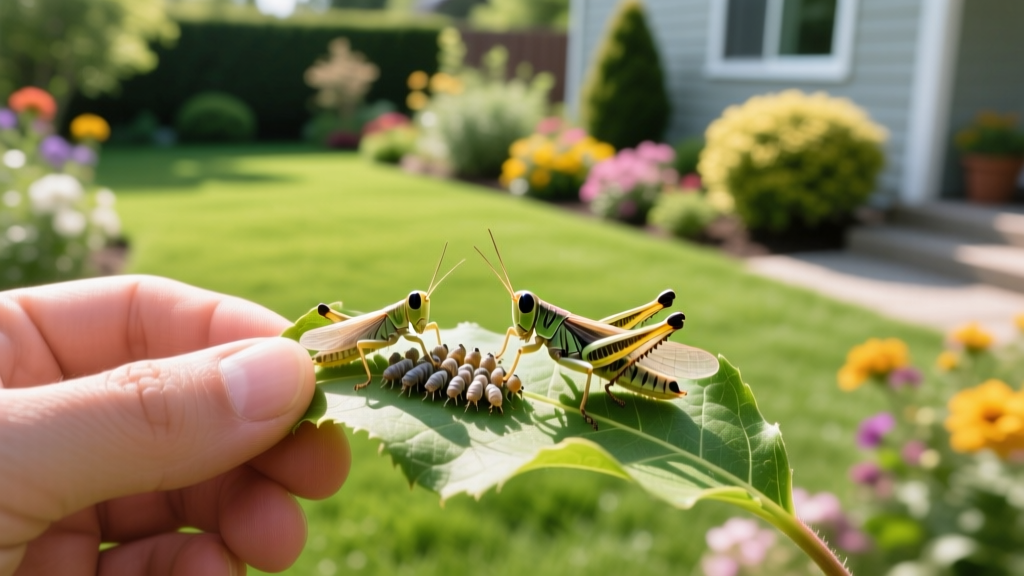
How to Identify and Eliminate Grasshopper Nymphs in Your Garden
Adult grasshoppers are a visible nuisance, but the real threat to your garden's survival begins weeks earlier. Grasshopper nymphs—the juvenile, wingless stage of the insect—are responsible for up to 75% of the total defoliation in a home garden. Because they hatch in dense clusters and possess voracious appetites relative to their body weight, a localized nymph infestation can strip young vegetable starts and ornamental foliage to the stem in a matter of days. Effective management requires precise timing, accurate identification of instar stages, and targeted interventions before they develop the mobility and resilience of adulthood.
Diagnosing the Threat: What Do Grasshopper Nymphs Look Like?
Grasshoppers undergo incomplete metamorphosis, meaning they hatch from eggs looking like miniature versions of adults, lacking only functional wings and reproductive organs. These juveniles progress through five to six developmental stages called instars. The critical window for gardeners to intervene is during the 2nd and 3rd instars, when nymphs are highly susceptible to biological controls but large enough to consume significant plant matter.
Visual Identification Guide by Instar
- 1st Instar (Hatchlings): Roughly 1/8 inch long. Often pale, translucent, or brightly colored (black with white/yellow bands in differential grasshoppers). They remain near the hatching site and feed on tender weed seedlings.
- 2nd & 3rd Instars (Target Stage): 1/4 to 1/2 inch long. Coloration solidifies into species-specific patterns. Wing pads begin to form as small, rigid flaps on the thorax. This is when they migrate from weedy borders into your cultivated garden beds.
- 4th & 5th Instars: 3/4 to 1 inch long. Wing pads are prominent and extend past the abdomen. They are highly mobile, difficult to control with biological baits, and cause rapid, severe chewing damage to mature leaves and developing fruit.
Diagnostic Warning: Do not confuse grasshopper nymphs with beneficial predatory insects or caterpillars. Nymphs possess enlarged, muscular hind femurs adapted for jumping, chewing mouthparts that move laterally (side-to-side), and compound eyes. If the insect is spinning webbing or rolling leaves, you are likely dealing with a lepidopteran larva, not a grasshopper.
The Damage Matrix: Assessing Your Garden's Vulnerability
Not all plants are equally attractive to grasshopper nymphs. Understanding crop susceptibility allows you to prioritize treatment zones and deploy physical barriers where they matter most. According to the University of Minnesota Extension, nymphs prefer broadleaf weeds but will aggressively transition to garden crops when their preferred host plants dry out or are removed.
| Crop / Plant Type | Susceptibility | Primary Nymph Damage Sign |
|---|---|---|
| Leafy Greens (Lettuce, Spinach) | Extreme | Entire leaves consumed; only midribs remain. |
| Young Tomatoes & Peppers | High | Stem girdling; irregular, jagged holes in lower canopy. |
| Beans & Legumes | High | Pods chewed open; seeds extracted; foliage skeletonized. |
| Squash & Cucurbits | Moderate | Large, smooth-edged chunks missing from broad leaves. |
| Alliums (Onions, Garlic) | Low | Rarely targeted unless severe starvation conditions exist. |
Early Intervention: Biological Controls for the Nymph Stage
When nymphs are in their 2nd or 3rd instar, chemical pesticides are often unnecessary and ecologically damaging. The gold standard for early-stage nymph control is Nosema locustae, a naturally occurring microsporidian protozoan that specifically targets grasshoppers and crickets.
How Nosema locustae Works
Commercially available under brand names like Nolo Bait and Semaspore, this biological control consists of wheat bran flakes coated with Nosema spores. When nymphs ingest the bait, the spores multiply in their gut, causing lethargy, reduced feeding, and eventual death within 1 to 3 weeks. Crucially, infected nymphs become sluggish and are easily cannibalized by healthy grasshoppers, spreading the spores through the local population.
Application Protocol for Nolo Bait:
- Cost: $35 to $45 per 1 lb bag.
- Coverage: 1 lb treats approximately 1 acre (or 43,560 sq ft). For a standard 5,000 sq ft suburban garden, 2 to 3 ounces is sufficient.
- Timing: Apply in the early morning when nymphs are actively feeding but before temperatures exceed 85°F.
- Method: Broadcast evenly using a hand-crank spreader. Do not pile the bait; nymphs must encounter individual flakes.
- Shelf Life: Store in a cool, dry place. Spores degrade rapidly if exposed to high humidity or direct UV light for extended periods.
Chemical Escalation: When Biologicals Aren't Enough
If you miss the early instar window and 4th or 5th instar nymphs are actively decimating your crops, biological baits act too slowly to save the harvest. At this stage, targeted synthetic insecticides are required. According to University of Kentucky Entomology, treating the perimeter of your property (the "barrier zone") is more effective than spraying individual plants.
Active Ingredient Comparison Matrix
| Active Ingredient | Common Trade Name | Est. Cost | Dilution Rate (per 1 gal) | Bee Toxicity |
|---|---|---|---|---|
| Bifenthrin (Pyrethroid) | Bifen IT, Talstar P | $40 - $60 / gal | 0.5 to 1.0 fl oz | Highly Toxic (Apply at dusk) |
| Carbaryl (Carbamate) | Sevin 5% Dust / SL | $10 - $15 / 1lb | 1.5 fl oz (liquid form) | Highly Toxic |
| Malathion (Organophosphate) | Ortho Max Malathion | $12 - $18 / pint | 1.0 to 1.5 tbsp | Moderately Toxic |
Pro-Tip for Chemical Application: Bifenthrin provides the longest residual control (up to 30 days on non-porous surfaces and dense foliage). When spraying, focus on the weedy borders, ditch banks, and fence lines where nymphs congregate before migrating into the garden. Spraying the interior of the garden directly is less effective and unnecessarily exposes beneficial pollinators to the chemical.
Habitat Modification: Preventing the Next Hatch
Grasshoppers lay their eggs in late summer and early fall, depositing cylindrical pods containing 15 to 30 eggs about 1 to 2 inches deep in undisturbed, dry soil. They strongly prefer weedy, untilled areas like fence rows, abandoned lots, and alfalfa fields. Disrupting this lifecycle is the most cost-effective long-term solution.
- Fall Tilling: Rototill or deeply turn the soil in weedy border areas in late October or November. This exposes the egg pods to freezing winter temperatures and predatory birds, reducing the spring hatch rate by up to 60%.
- Host Weed Eradication: Nymphs rely on specific weeds immediately after hatching. Aggressively manage ragweed, pigweed, foxtail, and Russian thistle within a 50-foot radius of your garden. If the nymphs hatch and find no immediate food source, they will starve or cannibalize each other before reaching your crops.
- Encourage Natural Predators: Guinea fowl and free-range chickens are devastating to grasshopper populations. A small flock of three to four birds can clear a half-acre lot of 2nd instar nymphs in a single season without the need for chemical interventions.
Frequently Asked Questions
Do grasshopper nymphs fly?
No. Nymphs lack functional wings. They rely entirely on their enlarged hind legs to jump. If you see grasshoppers flying into your garden, they are adults that likely hatched in a neighboring property or agricultural field, meaning your local soil is not the source of the infestation.
Can I use neem oil on grasshopper nymphs?
Neem oil is largely ineffective against grasshoppers of any age. While it works well on soft-bodied insects like aphids and spider mites by disrupting their hormonal systems, grasshoppers possess a tough exoskeleton and a digestive system that is not significantly deterred by azadirachtin (the active compound in neem). Stick to Nosema locustae or synthetic pyrethroids for reliable results.