
Home & Garden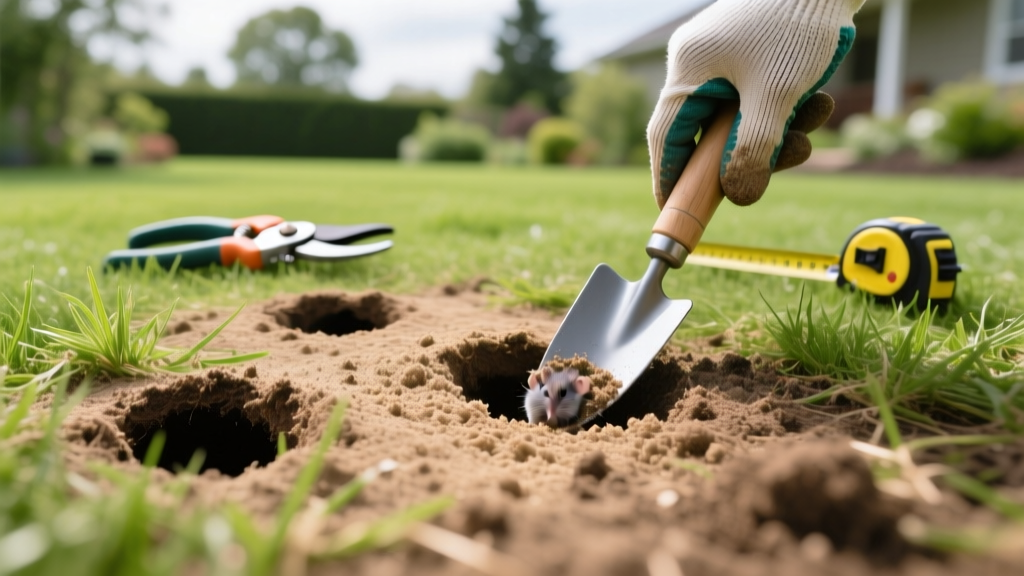
How to Identify and Permanently Fill Mouse Holes in Yard Soil
Diagnosing the Culprit: Mouse vs. Vole vs. Rat Burrows
Finding mouse holes in yard spaces is a primary indicator of an active subterranean rodent population, but accurate identification is critical before deploying control measures. Homeowners frequently misidentify vole runways or rat burrows as mouse holes, leading to ineffective treatment protocols. True field mice (such as the deer mouse) rarely dig extensive underground burrow systems, preferring to nest in surface debris, woodpiles, or abandoned structures. When you observe active digging in your turf or garden beds, you are likely dealing with voles, Norway rats, or ground squirrels.
| Rodent Species | Hole Diameter | Dirt Mound Presence | Surface Runways | Primary Turf Damage |
|---|---|---|---|---|
| Voles (Meadow Mice) | 1.5 to 2 inches | None (clean holes) | Visible 1-2 inch wide grass trails | Root girdling, bark stripping |
| Deer Mouse / House Mouse | 0.75 to 1 inch | Rare / Minimal | None (prefer surface cover) | Seed theft, minimal digging |
| Norway Rat | 2 to 4 inches | Large, fan-shaped dirt mounds | None (subterranean travel) | Foundation undermining, sinkholes |
| Ground Squirrel | 3 to 4 inches | Large, crescent-shaped mounds | None | Deep tunneling, root severing |
Warning: If the holes are 2+ inches wide with distinct dirt fans, you are likely dealing with Norway rats. According to the EPA's guidelines on rodent control, rat burrows can extend up to 3 feet deep and undermine concrete slabs, requiring immediate structural assessment rather than simple soil filling.
The Structural and Turf Damage of Rodent Burrowing
Unaddressed burrowing creates a dual threat to residential landscapes. Agronomically, subterranean rodents sever the taproots of turfgrasses and ornamental shrubs. Voles, often colloquially called 'meadow mice', are particularly destructive to the root crowns of Kentucky Bluegrass and Tall Fescue during winter months when surface forage is scarce. Structurally, extensive tunneling beneath retaining walls, paver patios, and shallow foundations leads to soil subsidence. A single Norway rat colony can displace up to 15 cubic feet of soil over a season, creating hidden voids that collapse under the weight of foot traffic or landscaping equipment.
Step-by-Step Protocol: The Capsaicin-Sand Fill Method
Simply shoveling topsoil into a burrow is a temporary fix; rodents will easily re-excavate loose dirt within 48 hours. To permanently fill mouse holes in yard environments, you must alter the soil texture and introduce a sensory deterrent. The Capsaicin-Sand method creates a physical barrier that is difficult to dig and chemically irritating to rodent nasal passages.
- Clear the Void: Use a narrow trowel or a length of 1/2-inch rebar to probe the hole. Clear out loose debris, feces, and nesting material to a depth of at least 6 inches.
- Mix the Deterrent Soil: In a wheelbarrow, combine 3 parts screened topsoil, 1 part coarse masonry sand (the angular grains deter digging), and 1/4 cup of pure capsaicin powder (or crushed ghost pepper flakes) per gallon of soil mix. The sand prevents compaction, while the capsaicin acts as a powerful olfactory and tactile repellent.
- Hydrate and Tamp: Lightly mist the mix with water until it holds its shape when squeezed. Pack the mixture into the burrow using a 2x4 piece of lumber as a tamper. Apply forceful, repetitive strikes to eliminate air pockets.
- Cap with Sod or Seed: Mound the final 1 inch of the fill slightly above the surrounding grade to account for settling. Top with a 1/4-inch layer of compost and overseed with a fast-germinating perennial ryegrass to re-establish surface root networks that bind the soil.
Perimeter Exclusion: The L-Footer Hardware Cloth Technique
Filling existing holes addresses the symptom, but exclusion prevents re-infestation. For high-value garden beds, tree rings, and shed perimeters, installing an L-footer barrier is the industry standard for mammalian deterrence. According to research published by Penn State Extension, physical barriers are the only 100% effective long-term solution for vole and mouse exclusion in agricultural and residential settings.
Material Specification: Purchase 19-gauge, 1/4-inch galvanized hardware cloth. Do not use chicken wire (poultry netting), as mice and voles can easily compress their skulls to pass through the 1-inch hexagonal gaps.
Installation Steps:
- Dig a narrow trench 6 inches deep and 2 inches wide around the perimeter of the target area.
- Cut the hardware cloth to a height of 18 inches.
- Bend the bottom 6 inches of the mesh at a 90-degree angle to form an 'L' shape.
- Place the mesh in the trench so the vertical section stands 12 inches above grade, and the horizontal 'L' flange points away from the protected area, resting on the trench floor.
- Backfill the trench. When a rodent attempts to dig under the fence, they encounter the horizontal wire mesh and cannot bypass it.
Chemical and Natural Repellents: What Actually Works?
The market is saturated with ultrasonic stakes and chemical granules, but field efficacy varies wildly. Here is a data-driven breakdown of common deterrents used alongside physical filling methods:
Castor Oil Formulations (e.g., Tomcat Mole & Gopher Repellent)
Cost: $12 - $18 per 32oz hose-end sprayer.
Efficacy: Moderate. Castor oil coats the root systems and soil, making the area unpalatable and causing mild gastrointestinal distress if ingested. Requires reapplication every 3 weeks or after heavy rainfall exceeding 0.5 inches.
Predator Urine Granules (Coyote/Fox)
Cost: $20 - $30 per 8oz shaker.
Efficacy: Low to Moderate. While it triggers a fear response in naive populations, urban rodents quickly habituate to the scent if no actual predator presence is detected. Best used as a temporary boundary treatment during the initial filling phase.
Ultrasonic Solar Stakes
Cost: $25 - $40 for a 4-pack.
Efficacy: Negligible. Independent acoustic studies show that high-frequency sound waves are rapidly absorbed by dense soil and turf thatch. Rodents typically ignore the noise after 72 hours of exposure.
Long-Term Monitoring and Turf Recovery
Once the mouse holes in yard areas are filled and exclusion fencing is deployed, shift focus to habitat modification. Rodents thrive in overgrown, heavily mulched environments that provide cover from aerial predators like hawks and owls. Maintain turf at a height of 2.5 to 3 inches; grass taller than 4 inches provides a canopy that hides surface runways. Replace deep, fluffy wood mulch in garden beds with crushed gravel or sharp-edged lava rock within 2 feet of your home's foundation, as the abrasive texture deters burrowing and nesting. Monitor the filled areas weekly for the first 60 days. If fresh soil displacement occurs, re-probe the area, as rodents may be attempting to bypass the capsaicin barrier by digging a parallel, deeper tunnel.