
Home & Garden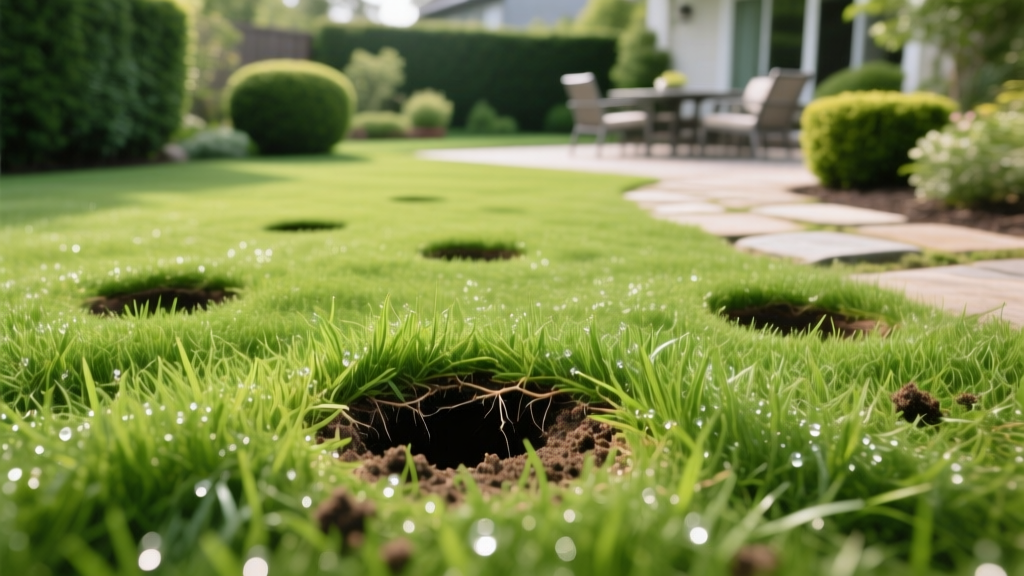
How to Identify and Fix Quarter Size Holes in Yard Grass
Why Are There Quarter Size Holes in Yard Grass?
Waking up to a lawn speckled with small, perfectly round excavations is a common frustration for homeowners. Finding quarter size holes in yard turf usually points to a specific subset of subterranean wildlife. Unlike the massive, volcano-like mounds left by moles or the broad, shallow digging of skunks, a 1/4-inch to 1/2-inch diameter hole indicates a much smaller, often highly beneficial organism. However, misidentifying the culprit can lead to unnecessary pesticide applications that harm your soil ecosystem, or worse, ignoring a destructive pest until your root system is compromised.
To properly address the issue, you must first diagnose the digger based on hole dimensions, soil displacement patterns, and seasonal timing. Below is a comprehensive diagnostic framework to help you identify the exact cause and apply the correct, science-backed solution.
The Culprit Identification Matrix
Use this diagnostic table to cross-reference the physical characteristics of the holes in your lawn with the most likely organisms responsible.
| Organism | Hole Diameter | Soil Mound Characteristics | Peak Activity Season | Lawn Impact |
|---|---|---|---|---|
| Nightcrawler Earthworms | 1/4 inch | Small, granular castings (resemble coffee grounds) | Spring and Fall | Highly Beneficial |
| Ground-Nesting Bees | 1/4 to 1/2 inch | Loose, sandy halo or small conical pile | Early Spring (March-May) | Beneficial / Neutral |
| Cicada Killer Wasps | 1/2 to 1 inch | Large, crescent-shaped mound of loose dirt | Mid-Summer (July-August) | Neutral / Cosmetic Damage |
| Meadow Voles | 1 to 1.5 inches (often collapse to look smaller) | No mound; connected to shallow surface runways | Winter and Early Spring | Destructive |
| Ant Colonies | 1/8 to 1/4 inch | Fine, powdery soil craters or small mounds | Summer | Neutral / Mild Nuisance |
Beneficial Diggers: When to Leave the Holes Alone
Not all lawn damage requires intervention. In fact, the most common causes of quarter size holes in yard environments are vital indicators of a healthy, biologically active soil food web.
Earthworms and Soil Aeration
The deep-burrowing nightcrawler (Lumbricus terrestris) creates vertical burrows exactly 1/4-inch wide to drag surface organic matter underground. According to the USDA Natural Resources Conservation Service, a healthy acre of soil can contain over a million earthworms, turning over tons of soil annually. The granular mounds next to these holes are worm castings, which are exceptionally rich in available nitrogen, phosphorus, and potassium. Attempting to eradicate earthworms with broad-spectrum insecticides like carbaryl will destroy your soil structure, leading to severe compaction and thatch buildup.
Expert Tip: If earthworm castings are creating a bumpy lawn surface that is difficult to mow, do not kill the worms. Instead, use a lawn drag mat or a stiff push broom in the early morning when the castings are slightly damp to break them apart and distribute the nutrients evenly across the turf canopy.
Solitary Ground-Nesting Bees
Members of the Andrenidae family are solitary, non-aggressive pollinators that dig 1/4-inch nesting holes in lawns that feature sparse grass cover and well-draining, sandy soils. Unlike social wasps or honeybees, these native pollinators do not defend their nests. They are active for only 4 to 6 weeks in early spring. The best long-term solution for bee holes is not chemical treatment, but rather cultural lawn care: thickening your turf canopy through proper fertilization and overseeding will naturally shade the soil and deter future nesting, as these bees require direct sunlight hitting bare soil to warm their brood chambers.
Destructive Pests: Intervention Required
While most small holes are harmless, certain pests use similar-sized entry points to access and destroy grass roots. Correct identification here is critical to saving your turf.
Meadow Voles and Surface Runways
The meadow vole (Microtus pennsylvanicus) is a small, herbivorous rodent that feeds on grass roots, bulbs, and tree bark. While their primary burrow entrances are closer to 1.5 inches, secondary exit holes or collapsed tunnels often present as quarter size holes in yard perimeters, especially near garden beds or under the cover of snow melt. Voles leave behind distinct, 1-inch wide surface runways through the grass where they have clipped the blades at the soil line.
Action Plan: For active vole infestations, snap traps are the most effective and ecologically safe remedy. Place standard wooden snap traps (like the Victor Easy Set) perpendicular to the surface runway. Bait the trigger with a mixture of peanut butter and rolled oats. Cover the trap with a small plastic nursery pot or a shingle to protect non-target wildlife and pets. Check and reset traps daily until activity ceases.
Cicada Killer Wasps
Cicada killers (Sphecius speciosus) are large, solitary wasps that dig burrows to paralyze and store cicadas for their larvae. As noted by the University of Florida Entomology Department, the initial entry hole may appear to be 1/2-inch wide but quickly expands, pushing up a massive, granular mound of soil that can smother surrounding grass. Despite their intimidating size, male cicada killers cannot sting, and females rarely sting unless physically crushed or handled.
Action Plan: If the mounds are ruining high-visibility turf, apply a targeted dust insecticide like Sevin dust (carbaryl) directly into the burrow entrance at dusk when the females are inside. Avoid broadcast spraying, which kills beneficial insects. For a non-chemical approach, maintain a thick, heavily irrigated lawn; cicada killers strongly prefer dry, hard-packed, sparse soil for excavation.
Step-by-Step Protocol for Repairing Damaged Turf
Once you have identified the culprit and determined that the holes are either from a removed pest or an abandoned bee nest, you must repair the physical damage to prevent weed invasion. Follow this precise topdressing and seeding protocol.
- Clear the Debris: Use a hand trowel or a stiff rake to remove loose soil mounds, dead grass clippings, and stones from the hole and the immediate 2-inch radius.
- Prepare the Topdressing Mix: Do not use pure topsoil, which will compact and prevent seed germination. Mix 70% washed silica sand with 30% screened compost. The sand ensures drainage, while the compost provides the necessary microbial life and moisture retention.
- Fill and Tamp: Fill the quarter size holes in yard depressions with the sand-compost mixture until it sits exactly 1/4-inch below the surrounding soil grade. Lightly tamp it down with your foot to eliminate air pockets.
- Apply Seed: Drop 5 to 8 seeds of your matching turfgrass variety (e.g., turf-type tall fescue or Kentucky bluegrass) directly into the 1/4-inch depression. Cover lightly with a dusting of the remaining compost mix.
- Moisture Management: Mist the repaired areas twice daily with a fine spray nozzle to keep the top inch of soil consistently damp—but not waterlogged—until the seedlings reach 2 inches in height (typically 10 to 14 days).
Long-Term Soil and Turf Framework
The ultimate defense against unwanted digging is a dense, deeply rooted turf canopy. Pests like voles and cicada killers target weak, thin lawns. Implement an annual core aeration schedule in the early fall to relieve soil compaction. Follow aeration with a balanced, slow-release fertilizer application (such as a 24-0-10 NPK ratio) to encourage deep root growth. By maintaining a soil pH between 6.2 and 6.8, you optimize nutrient uptake, resulting in a thick lawn matrix that naturally resists both subterranean pests and the cosmetic damage of small-hole excavators.