Home & Garden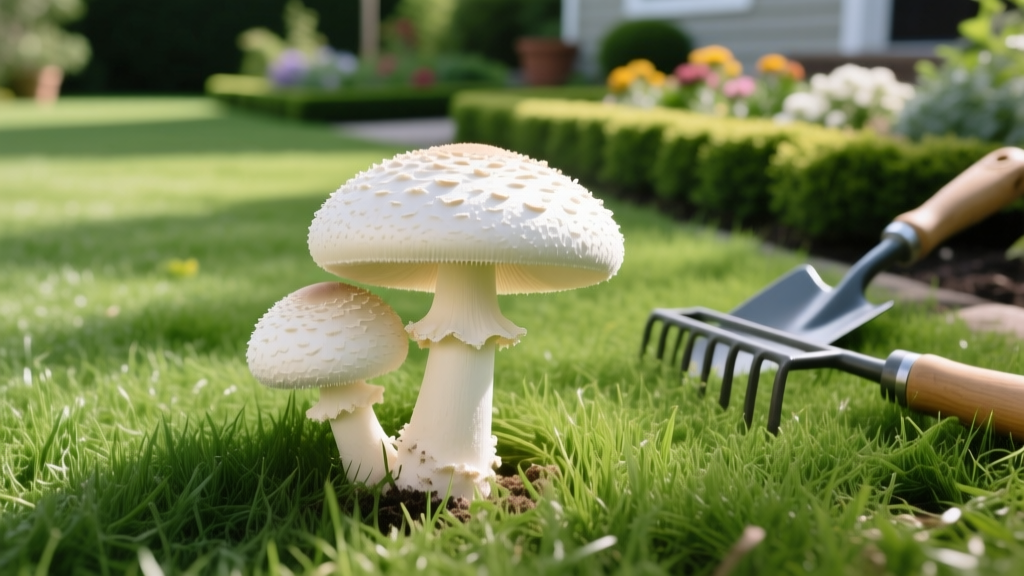
Big White Mushrooms in Yard: Identification and Safe Removal
The Sudden Eruption: Why Mushrooms Appear in Your Lawn
Waking up to find massive white fungi dotting your turf is a jarring experience for any homeowner. The presence of big white mushrooms in yard spaces is rarely a sign of a diseased lawn; rather, it is an indicator of intense biological decomposition occurring just beneath the soil surface. These mushrooms are the fruiting bodies of saprophytic fungi—organisms that consume dead organic matter. They do not parasitize living grass roots, meaning your turf is not being actively killed by the fungi themselves.
The sudden eruption of these fruiting bodies requires a specific convergence of environmental triggers: high soil moisture, ambient temperatures between 65°F and 80°F, and an abundant subterranean carbon food source. Common carbon sinks in residential lawns include buried construction lumber, decaying tree roots from recently removed stumps, and excessive thatch layers exceeding 0.75 inches in depth. When heavy rains saturate these carbon deposits, the dormant mycelial network rapidly produces mushrooms to release spores and propagate.
💡 The Fungus-Soil Connection: A single square foot of healthy topsoil can contain over 300 miles of microscopic fungal threads (hyphae). You are not fighting a surface weed; you are managing a subterranean biological engine. Surface-level removal only addresses the temporary fruiting body, not the underlying mycelial mat.
Identifying the Big White Mushrooms in Yard Spaces
Accurate identification is a critical safety prerequisite before attempting any physical removal or allowing pets and children to play in the affected zone. While many large white mushrooms are harmless decomposers, some possess lethal toxicity. Below is a morphological comparison of the three most common large white fungi found in North American residential landscapes.
| Species | Size & Shape | Key Identifying Features | Toxicity Profile |
|---|---|---|---|
| Giant Puffball (Calvatia gigantea) |
8–20 inches; perfectly spherical or slightly flattened. | No stem or gills. Smooth white exterior. Interior must be pure, marshmallow-white (yellow/brown indicates toxic spore maturity). | Edible when pure white inside; causes severe GI distress if spores have matured to yellow/brown. |
| Meadow Mushroom (Agaricus campestris) |
3–5 inches; classic umbrella cap with a distinct central stem. | White cap, but features distinctly pink-to-chocolate-brown gills underneath and a delicate ring on the stem. | Edible and highly sought after, but easily confused by beginners. |
| Destroying Angel (Amanita bisporigera) |
3–6 inches; elegant, upright cap with a slender stem. | Pure, stark white across cap, stem, AND gills. Features a sac-like cup (volva) buried at the base of the stem. | DEADLY TOXIC. Contains amatoxins causing irreversible liver and kidney failure. |
The Danger Zone: Recognizing Toxic Lookalikes
The most perilous mistake a homeowner can make is assuming all white mushrooms are benign. The Amanita genus, specifically the Destroying Angel, is responsible for the vast majority of fatal mushroom poisonings in North America. According to the North American Mycological Association (NAMA), amatoxins are not destroyed by cooking, freezing, or drying. If you observe a large white mushroom with pure white gills (not pink or brown) and a bulbous, sac-like structure at the base of the stem, do not touch it with bare hands. Put on nitrile gloves, extract the entire mushroom including the base, seal it in a plastic bag, and dispose of it in your municipal trash receptacle to prevent pets from ingesting it.
"Never attempt to forage or consume wild mushrooms based on internet photographs. The morphological differences between a delicious Meadow Mushroom and a lethal Destroying Angel can be microscopic to the untrained eye. When in doubt, eradicate and dispose." — Penn State Extension Plant Pathology Department
The Carbon-to-Nitrogen (C:N) Ratio: The Hidden Trigger
To permanently suppress mushroom fruiting, you must alter the soil's biochemistry. Fungi dominate environments with a high Carbon-to-Nitrogen (C:N) ratio—typically above 30:1. Buried pine roots, oak leaves, and thick thatch are massive carbon sinks. When soil nitrogen is depleted, bacteria starve, leaving fungi as the only organisms capable of breaking down the carbon.
By intentionally lowering the C:N ratio, you empower soil bacteria to outcompete the fungal network. This is achieved through targeted nitrogen applications. According to research published by Michigan State University Extension, applying a fast-release nitrogen source accelerates the bacterial decomposition of the buried wood or thatch, effectively destroying the fungus's food supply.
Calculating Your Nitrogen Application
To shift the C:N ratio and suppress fungal dominance, apply exactly 1.0 lb of actual nitrogen per 1,000 square feet. Do not use slow-release organic fertilizers for this specific intervention; you need an immediate bacterial bloom.
- Product Selection: Use a high-nitrogen synthetic fertilizer, such as a 29-0-4 formulation (e.g., Scotts Turf Builder).
- Math: If the bag is 29% nitrogen (0.29), divide 1.0 by 0.29. You need 3.4 lbs of product per 1,000 sq. ft.
- Timing: Apply during the active growing season of your specific turfgrass, watering it in immediately with 0.25 inches of irrigation to move the nitrogen into the root zone and thatch layer.
Step-by-Step Eradication and Cultural Control
Fungicides are largely ineffective against saprophytic lawn mushrooms. Systemic turf fungicides like azoxystrobin or propiconazole are engineered to target parasitic foliar diseases (like Brown Patch or Dollar Spot), not deep-soil decomposers. Relying on chemical sprays will waste money and harm beneficial soil biology. Instead, execute this four-step cultural control protocol:
- Physical Extraction (Day 1): Donning gloves, hand-pick the fruiting bodies. Twist and pull to remove the base. If dealing with Giant Puffballs, use a flat spade to slice them at the soil line. Compost non-toxic specimens in a hot compost pile (140°F+) to destroy spores, or bag them for municipal trash.
- Deep Core Aeration (Day 2): Rent a walk-behind core aerator (e.g., a Billy Goat aerator, typically $85-$120 for a 4-hour rental). Aerate the affected zone to a depth of 3 to 4 inches. This fractures compacted soil, improves drainage, and eliminates the prolonged surface moisture that triggers mushroom fruiting.
- Thatch Reduction (Day 7): Measure your thatch layer using a trowel. If it exceeds 0.5 inches, deploy a power dethatcher. Set the blades to penetrate 1/4 inch into the soil surface. Rake up the extracted organic matter. Removing this carbon blanket starves the mycelial network.
- Nitrogen Shock & Moisture Management (Day 10): Apply the calculated nitrogen dose outlined above. Adjust your irrigation schedule to deep, infrequent watering (e.g., 1 inch per week applied in a single morning session) rather than daily shallow sprinkling. Fungi require constant surface humidity to form fruiting bodies; drying the top 1 inch of soil halts spore production.
Frequently Asked Questions
Will applying lime or baking soda kill the mushrooms?
No. Altering soil pH with agricultural lime or sodium bicarbonate (baking soda) will not eradicate saprophytic fungi. Most turf-decomposing fungi thrive in a wide pH range (5.5 to 7.5). Applying lime without a prior soil test risks inducing iron chlorosis in your grass, turning your turf yellow while the mushrooms continue to fruit. Base any pH amendments strictly on a university soil lab analysis.
Are the mushrooms harming my grass roots?
Saprophytic mushrooms are entirely beneficial to the soil ecosystem, even if aesthetically displeasing. They break down complex lignins and cellulose in dead wood, eventually releasing locked-up nitrogen and phosphorus back into the soil for your grass to absorb. The only harm they cause is physical smothering of the grass blade if a massive cluster blocks sunlight, or the severe safety risk they pose if a toxic species is ingested by a toddler or pet.