
Home & Garden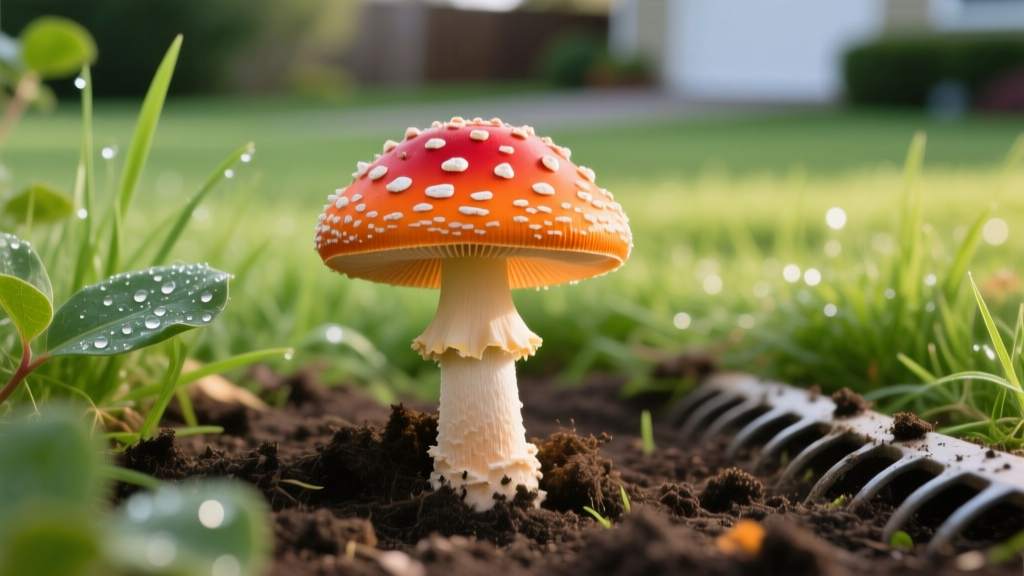
Orange Mushroom in Yard: Identification and Removal Guide
The Ecological Trigger: Why Orange Fungi Invade Your Turf
Finding an orange mushroom in yard spaces is rarely a sign of a turf disease; rather, it is a visible indicator of your soil's underlying ecology. Fungi are saprophytic organisms, meaning they survive by breaking down complex organic compounds like lignin and cellulose. When bright orange or yellow-orange fruiting bodies emerge through your grass, they are signaling the presence of decaying organic matter beneath the surface. This could be buried construction lumber, dead tree roots from a recently removed stump, or an excessive layer of hydrophobic thatch.
Unlike lawn pathogens that attack living grass blades, these mushrooms are recycling dead material. However, their presence often correlates with compacted soil, poor drainage, and acidic pH levels—conditions that simultaneously suffocate turfgrass root systems. To permanently eliminate the mushrooms, you must alter the soil environment rather than simply attacking the visible fruiting bodies.
⚠ Toxicity Warning for Pets and Children:
Never assume a brightly colored mushroom is harmless. While some orange species are benign, others contain severe gastrointestinal toxins or muscarine. If you have dogs, cats, or toddlers who play on the lawn, treat all unidentified fungi as toxic and restrict access to the area until physical removal is complete. Consult the North American Mycological Association for emergency protocols if ingestion occurs.
Field Guide: Identifying the 3 Most Common Orange Yard Mushrooms
Accurate identification dictates your management strategy. The three most frequently encountered orange fungi in residential landscapes vary wildly in their growth habits and toxicity profiles.
| Species (Common Name) | Physical Characteristics | Habitat & Growth Pattern | Toxicity / Edibility |
|---|---|---|---|
| Aleuria aurantia (Orange Peel Fungus) | Cup-shaped, irregular, 1-3 inches wide. Bright neon orange inside, pale outside. | Disturbed soil, clay paths, and thin turf. Grows scattered or in small clusters. | Non-toxic, but generally considered inedible due to thin, brittle flesh. |
| Omphalotus illudens (Jack O'Lantern) | Funnel-shaped cap, 3-8 inches. Deep orange with decurrent gills. Bioluminescent in dark. | Dense clusters at the base of dead trees or directly over buried decaying roots. | Highly Toxic. Contains muscarine; causes severe vomiting and cramps. |
| Leucocoprinus birnbaumii (Flowerpot Parasol) | Tall, slender, bright yellow-orange. Scaly, bell-shaped cap, 2-4 inches tall. | Mulch beds, potted plants, and heavily shaded, moist landscape borders. | Toxic. Causes gastrointestinal distress if ingested. |
The Spore Print Verification Method
If visual identification is ambiguous, perform a spore print. Carefully remove the mushroom cap and place it gill-side down on a piece of paper that is half black and half white. Cover it with a glass bowl to prevent drafts and leave it for 12 hours. Jack O'Lantern mushrooms (O. illudens) will drop a distinct white to pale cream spore print, while many harmless saprophytic cup fungi produce white or very faint prints that are best seen on the black half of the paper. According to Penn State Extension, spore color is a critical diagnostic tool that remains consistent regardless of the mushroom's age or environmental fading.
Step-by-Step Eradication and Cultural Control Protocol
Fungicides are largely ineffective and ecologically damaging when applied to saprophytic lawn mushrooms. The mycelium network lives deep in the soil profile, and surface chemicals will not eradicate it. Instead, implement this three-phase cultural control protocol to make your lawn inhospitable to fungal fruiting.
Phase 1: Immediate Physical Removal and Sanitation
Do not mow over the mushrooms. Mowing shreds the caps, dispersing millions of spores across your lawn and potentially spreading the mycelial network to new areas of thatch.
- Don PPE: Wear nitrile gloves and a particulate mask if dealing with large clusters of dry, spore-heavy specimens.
- Extract the Base: Grip the mushroom at the very base of the stipe (stem) and twist gently to pull the entire structure out of the soil. Leaving the stem allows for rapid regrowth.
- Bag and Trash: Place the specimens directly into a sealed plastic bag. Do not compost them; home compost bins rarely reach the 140°F (60°C) internal temperatures required to kill fungal spores.
- Clear Debris: Rake the immediate area to remove any rotting leaves, pet waste, or excessive grass clippings that are feeding the local mycelium.
Phase 2: Soil Chemistry and Thatch Remediation
Mushrooms thrive in acidic, compacted, and moisture-retentive environments. Altering these variables is the core of long-term prevention.
- Core Aeration: Rent a walk-behind core aerator to pull 3-inch soil plugs across the affected zone. This breaks up compaction, increases oxygen flow to grass roots, and accelerates the drying of the topsoil layer, which fungi despise.
- Dethatching: Use a power rake or heavy thatching rake if your thatch layer exceeds 0.5 inches. Thatch acts as a sponge, holding the exact moisture levels required for orange mushroom fruiting.
- pH Adjustment: Most turfgrasses prefer a pH between 6.2 and 6.8, while fungi often flourish in soils below 6.0. Conduct a soil test, and if acidic, apply pelletized dolomitic limestone at a rate of 40 to 50 lbs per 1,000 square feet to raise the pH. University of Minnesota Extension notes that adjusting soil alkalinity naturally suppresses many acid-loving fungal species while boosting nutrient availability for your grass.
Phase 3: Nitrogen Loading for Wood Decay Acceleration
If your orange mushrooms are feeding on buried wood or dead roots, you can speed up the decomposition process by introducing high levels of nitrogen. The bacteria that break down wood require nitrogen to multiply; by supplying it, you outcompete the fungi and exhaust their food source faster.
Apply a fast-release nitrogen fertilizer, such as Ammonium Sulfate (21-0-0). To deliver 1 lb of actual nitrogen per 1,000 square feet, you will need to apply approximately 4.76 lbs of the product per 1,000 square feet. Water it in immediately with 0.25 inches of irrigation to prevent turf burn and drive the nitrogen into the root zone where the decaying wood is located.
💡 Pro-Tip: Irrigation Auditing
Fungal fruiting is almost always triggered by a sudden spike in surface moisture. Audit your sprinkler system to ensure you are not watering daily. Shift to a deep-and-infrequent schedule: apply 0.5 inches of water twice a week, preferably between 4:00 AM and 6:00 AM. This allows the grass canopy to dry rapidly at sunrise, starving surface-level mycelium of the humidity needed to produce mushrooms.
Frequently Asked Questions
Will applying bleach or vinegar to the soil kill the orange mushrooms?
No. Pouring household bleach or horticultural vinegar on the soil is a common internet myth that will fail. These substances only kill the surface fruiting body and severely damage your turfgrass roots and beneficial soil microbes. The actual organism—the mycelium—lives inches below the surface and will simply produce new mushrooms the next time it rains. Stick to cultural controls like aeration and nitrogen loading.
Are orange mushrooms a sign of a dying lawn?
Not directly. The mushrooms are not parasitic to your grass; they are eating dead organic matter. However, the conditions that favor mushrooms (compaction, poor drainage, heavy shade) are the exact same conditions that cause turfgrass to thin out and die. Fixing the soil environment will simultaneously eliminate the mushrooms and revive the lawn.
How long does it take for the mycelium to die off naturally?
If the mushrooms are feeding on a buried tree root or construction debris, the mycelium will persist until that wood is entirely consumed. Depending on the size of the wood mass and local soil temperatures, this natural decay process can take anywhere from 2 to 5 years. Implementing the nitrogen loading protocol (Phase 3) can reduce this timeline by up to 40%.