
Home & Garden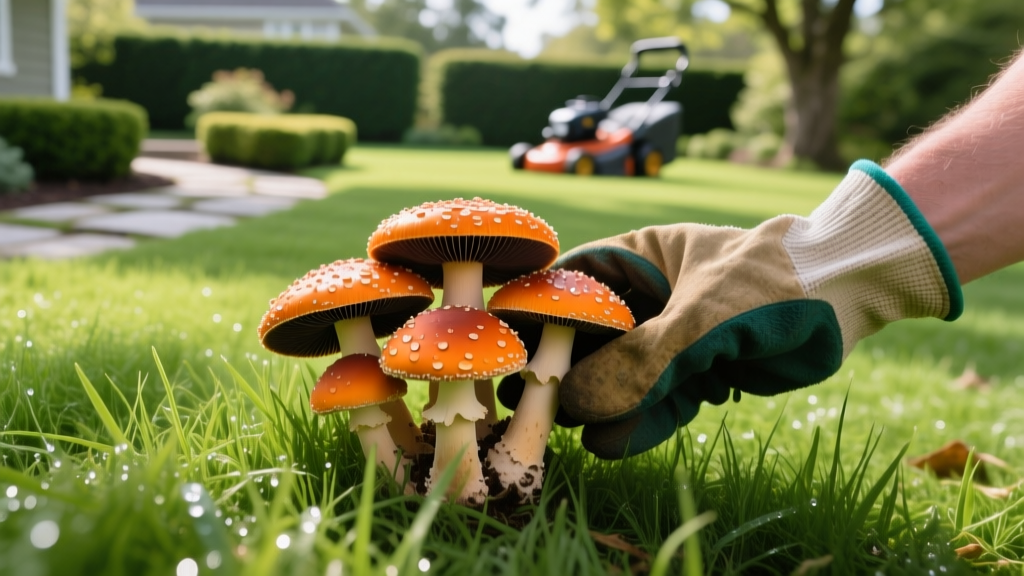
How to Identify and Remove a Toxic Yard Mushroom Safely
Why Is That Yard Mushroom Growing in My Grass?
Spotting a yard mushroom pushing through your turf is rarely a sign of a diseased lawn; rather, it is an indicator of high soil moisture and active decomposition of buried organic matter. Mushrooms are the fruiting bodies of vast subterranean mycelium networks that break down lignin and cellulose from decaying tree roots, buried construction debris, or excessive thatch. While most turfgrass fungi are ecologically beneficial, a toxic yard mushroom poses a severe risk to foraging pets and small children.
According to the ASPCA Animal Poison Control, ingestion of wild fungi is a leading cause of seasonal toxicological emergencies in dogs. Because mycelium networks can span hundreds of square feet beneath the soil surface, simply snapping off the caps is a temporary fix. Effective eradication requires a targeted approach that removes the fruiting body, extracts the underlying food source, and alters the soil microbiome to favor bacterial decomposition over fungal growth.
⚠️ Pet Toxicity Warning: Never allow dogs or cats to consume any unidentified yard mushroom. Species like Chlorophyllum molybrites (the false parasol) closely resemble edible grocery-store varieties but cause severe, acute gastrointestinal hemorrhaging in canines within two hours of ingestion.
4-Step Identification Guide for Common Lawn Fungi
Accurate yard mushroom identification relies on examining the cap texture, gill attachment, and spore print color. The North American Mycological Association strongly advises against relying on smartphone image-recognition apps for toxicity verification, as lighting and angle distortions frequently misidentify lethal species. Instead, use the morphological markers below to categorize common turf invaders.
| Species | Cap & Gill Characteristics | Toxicity Profile | Common Habitat |
|---|---|---|---|
| Chlorophyllum molybrites | White/scurfy cap, free gills that turn green with age | Highly toxic to dogs; causes severe GI distress in humans | Rich lawns, compost edges, fairy rings |
| Panaeolus foenisecii | Small brown cap, dark purple-brown spore print | Mildly toxic; contains trace psilocybin compounds | Standard suburban turf, especially after mowing |
| Amanita pantherina | Brown cap with white warts, white gills, bulbous base | Severe neurological toxicity; potentially fatal | Near oak, pine, or deciduous tree roots |
| Lycoperdon perlatum | Round, white, stemless puffball; turns brown/olive inside | Benign when pure white inside; toxic when spores mature | Decaying wood debris, heavy thatch layers |
How to Physically Remove a Yard Mushroom (Without Harming Grass)
Mowing over a yard mushroom is the most common mistake homeowners make. The mower blade shreds the cap, distributing millions of spores across the lawn and triggering a secondary flush of growth. To permanently remove the fruiting body and disrupt the local mycelium, follow this precise extraction protocol.
Step 1: Don Protective Gear and Isolate the Area
Wear heavy nitrile or leather gardening gloves. Keep pets indoors or tethered away from the work zone. Place a disposable paper bag or a dedicated plastic bucket near the extraction site to immediately contain the removed fungi.
Step 2: Extract the Entire Stipe and Volva
Do not pull the mushroom by the cap. Use a specialized soil knife, such as the Nisaku NJH650 Hori-Hori, to dig a 3-inch circumference around the base of the stipe (stem). Insert the blade at a 45-degree angle to sever the mycelial cords connecting the fruiting body to the underground network. Twist and lift the entire structure, ensuring the volva (the cup-like base) is fully removed.
Step 3: Excavate the Immediate Food Source
Inspect the 4-inch hole left behind. If you find buried wood, decaying roots, or a dense mat of hydrophobic thatch, excavate it. Fungi require carbon-rich organic matter to fruit. Removing the localized carbon source starves that specific node of the mycelium network.
Step 4: Backfill and Patch
Fill the void with a 70/30 mix of coarse silica sand and screened topsoil. Sand improves localized drainage, eliminating the damp microclimate that triggered the fruiting event. Tamp down gently and apply 1 ounce of grass seed matching your existing turf cultivar.
Long-Term Prevention: Altering the Soil Microbiome
You cannot kill a mycelium network with surface sprays, but you can outcompete it. Fungi dominate in soils with high carbon-to-nitrogen (C:N) ratios and low oxygen levels. Bacteria dominate in nitrogen-rich, well-aerated soils. By shifting the soil environment, you force bacteria to rapidly consume the decaying organic matter before fungi can establish fruiting bodies.
- Thatch Management: Measure your thatch layer using a soil probe. If the spongy brown layer exceeds 0.5 inches, rent a power dethatcher (set to a depth of 0.25 inches) to mechanically remove the fungal food source.
- Targeted Nitrogen Application: Apply a fast-release, high-nitrogen fertilizer (such as a 32-0-4 synthetic blend) at a rate of 1 lb of nitrogen per 1,000 square feet. This spikes bacterial activity, accelerating the decomposition of buried wood and roots.
- Deep Core Aeration: Use a core aerator to pull 3-inch plugs on a 3x3 inch grid. This breaks up soil compaction, introduces oxygen to the root zone, and disrupts the physical continuity of the mycelial mats.
- Irrigation Calibration: Fungi require prolonged surface moisture to fruit. Shift your irrigation schedule from daily light watering to twice-weekly deep soakings (delivering 0.75 inches per session). Water strictly between 4:00 AM and 6:00 AM so the grass blades dry completely before dusk.
What NOT to Do: Common Eradication Mistakes
The internet is saturated with DIY fungicidal remedies that will destroy your turf before they impact the subterranean fungi. Avoid these counterproductive practices:
🚫 The Bleach Myth: Pouring household bleach (sodium hypochlorite) onto a yard mushroom will scorch the grass blades and raise soil salinity, but it will not penetrate deep enough to kill the mycelium. You will be left with a dead patch of grass that the fungi will happily colonize next season.
🚫 Broad-Spectrum Fungicides: Applying systemic fungicides like propiconazole or azoxystrobin is ineffective against saprophytic (wood-decaying) mushrooms. These chemicals target pathogenic foliar diseases (like brown patch or dollar spot) and will unnecessarily harm beneficial soil organisms and earthworms.
🚫 Vinegar Soil Drenches: While 10% horticultural vinegar acts as a non-selective contact herbicide for weeds, drenching the soil with it to kill mushrooms will drastically lower your soil pH, locking up essential macronutrients and causing severe iron chlorosis in your turfgrass.
Frequently Asked Questions
Are fairy rings in my lawn dangerous?
Fairy rings are caused by expansive mycelium networks growing outward in a circle. While the mushrooms themselves may be toxic if ingested, the primary threat to your lawn is the hydrophobic mycelial mat, which repels water and causes the grass inside the ring to die of drought stress. Aerate the ring heavily and apply a soil surfactant (wetting agent) to restore water penetration.
Will removing the mushrooms stop them from coming back?
Physically removing a yard mushroom only eliminates the reproductive organ, not the organism itself. As long as buried wood, excessive thatch, and high moisture persist, the mycelium will continue to produce new caps. Permanent cessation requires removing the carbon food source and improving soil drainage.
Can I compost toxic yard mushrooms?
It is not recommended to home-compost toxic species like Amanita or Chlorophyllum. Most residential compost piles do not reach the sustained 140°F to 160°F required to fully denature complex mycotoxins. Place toxic yard mushrooms in sealed municipal yard waste bins destined for high-heat commercial composting facilities.
For comprehensive regional data on turfgrass diseases and fungal identification, consult the University of California Integrated Pest Management (IPM) program, which maintains updated, peer-reviewed guidelines on managing soil-borne organisms in residential landscapes.

