
Home & Garden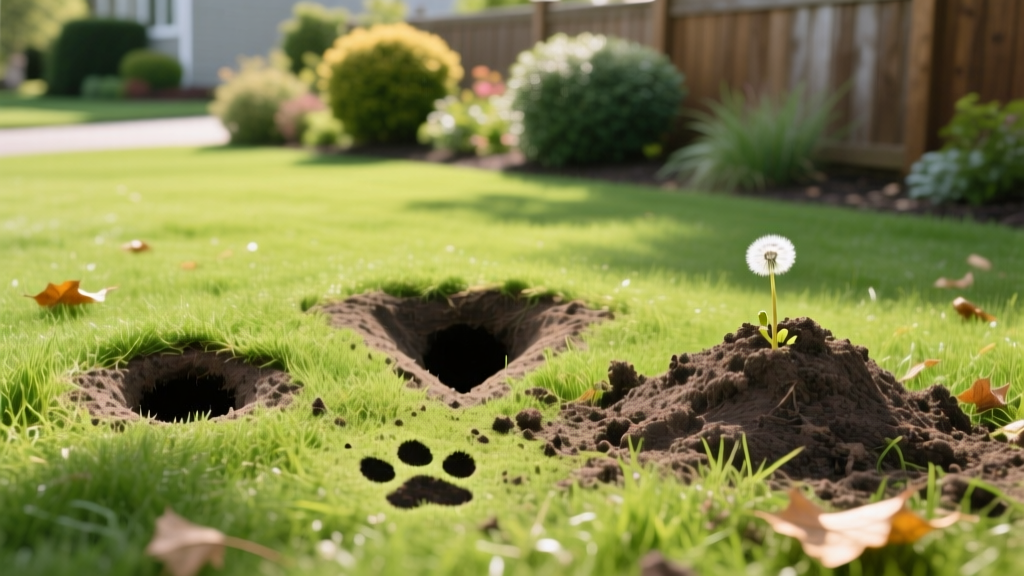
Identifying Animal Holes in Your Yard: Size, Shape, and Soil Clues
The Forensic Approach to Yard Burrows
Identifying animal holes in yard spaces requires analyzing three distinct metrics: aperture diameter, soil displacement geometry, and surface foraging patterns. Homeowners frequently misdiagnose vole damage as mole damage, leading to wasted money on ineffective traps and chemical repellents. A mole trap placed in a vole runway will never catch a pest, and applying grub control to deter skunks will not stop a groundhog from excavating a foundation trench. To accurately diagnose the intruder, you must treat your lawn like a forensic grid, measuring the physical evidence left behind at the point of excavation.
Quick-Reference Matrix: Hole Diameter vs. Culprit
The most reliable initial filter for identifying animal holes in your yard is measuring the width of the primary entrance. Use a standard tape measure to gauge the clear span of the opening, excluding the loose dirt of the surrounding mound.
| Animal | Hole Diameter | Mound Geometry | Surface Clues |
|---|---|---|---|
| Vole | 1.5 – 2 inches | No mound; flat surface | Visible 1-2 inch wide surface runways through grass |
| Mole | 2 – 3 inches (tunnel) | Symmetrical volcano / star-shaped | Raised surface ridges (feeding tunnels) across lawn |
| Pocket Gopher | 2.5 – 3.5 inches | Crescent / horseshoe shape; hole is plugged | Fresh fan of dirt; often kills plant roots instantly |
| Chipmunk | 1.5 – 2 inches | Small, clean, flat mound | Often located near rock walls, foundations, or woodpiles |
| Groundhog | 10 – 12 inches | Large, flat, fan-shaped mound | Multiple secondary exits; chewed garden vegetation |
| Skunk | N/A (Foraging pit) | Cone-shaped divots, 3 inches deep | Torn sod patches; strong musk odor at dawn |
Decoding the Dirt: Mound Shapes and Soil Displacement
The physics of excavation dictates the shape of the soil mound, which is the most critical visual cue when identifying animal holes in yard environments. Burrowing mammals have evolved distinct biomechanical methods for moving earth out of their tunnels.
The Volcano Mound (Moles)
Moles dig primarily by pushing soil straight up through vertical ventilation shafts. This creates a symmetrical, conical mound that resembles a small volcano. The hole itself is rarely visible at the peak because the mole pushes the dirt up and then seals the shaft behind it. If you see raised, vein-like ridges snaking across your turf connecting these mounds, you are dealing with a mole. These ridges are shallow foraging tunnels where the mole hunts earthworms.
The Horseshoe Mound (Pocket Gophers)
Unlike moles, pocket gophers dig laterally and push soil out of the main tunnel at a 45-degree angle. This creates a distinct crescent or horseshoe-shaped mound. The actual hole is usually located at the inner curve of the crescent and is almost always tightly plugged with a clod of dirt to keep predators and drafts out. According to the Internet Center for Wildlife Damage Management, gophers rarely create surface runways; they stay entirely subterranean, pulling plant roots down into their tunnels from below.
Warning: The Soil Texture Variable
Mound identification is heavily influenced by your local soil composition. In heavy clay soils, gopher and mole mounds hold their distinct geometric shapes. However, in sandy loam or highly aerated soils, the tunnels often collapse shortly after digging. A collapsed gopher tunnel in sandy soil will leave only a subtle, elongated depression rather than a classic horseshoe mound, making it easily confused with a mole run. In sandy regions, rely more on plant damage (gophers) versus surface ridge lifting (moles) for accurate identification.
Foraging Pits vs. True Subterranean Dens
Not every hole in your lawn indicates a permanent subterranean resident. Many nighttime holes are simply foraging pits created by animals hunting for soil-dwelling insects. Distinguishing between a den and a foraging pit prevents you from setting traps in empty holes.
- Skunks and Raccoons (Grub Hunters): If your lawn is dotted with 3-inch deep, cone-shaped divots, or if large sheets of sod have been rolled back like a carpet, you have a skunk or raccoon problem. They are digging for white grubs. The solution here is not trapping the mammal, but treating the lawn for Popillia japonica (Japanese beetle) grubs using beneficial nematodes (Heterorhabditis bacteriophora) applied in late summer.
- Squirrels (Cache Diggers): Squirrels dig shallow, 1-inch deep test holes to bury or retrieve acorns and nuts. These holes lack mounds entirely and are usually scattered randomly beneath the drip line of oak or hickory trees.
- Cicada Killers (Ground Wasps): In mid-to-late summer, you may find 1-inch holes surrounded by a small halo of fine, granular soil. These are solitary wasps. They are non-aggressive and beneficial pollinators; no remediation is required.
Actionable Eviction and Remediation Framework
Once you have accurately completed the process of identifying animal holes in yard spaces, you must move to targeted remediation. The USDA APHIS Wildlife Services recommends integrated pest management (IPM) strategies that prioritize exclusion and precision trapping over broad-spectrum chemical poisons, which pose severe risks to non-target pets and raptors.
Step 1: Confirm Occupancy (The Stick Test)
Before deploying traps or exclusion wire, verify the burrow is active. Animals frequently dig "test pits" or abandon tunnels when soil moisture drops.
- Insert a wooden dowel or a long zip-tie 12 inches into the suspect hole.
- Flatten the grass around the entrance and smooth out the dirt mound with a trowel.
- Check the site 24 hours later. If the dowel has been pushed out, the dirt is re-mounded, or the grass is disturbed, the tunnel is actively occupied.
Step 2: Precision Trapping and Exclusion Costs
Deploying the correct mechanical trap is vastly more effective than sonic spikes or castor oil sprays, which university extension studies consistently rate as ineffective. Budget for the following professional-grade tools:
- For Moles: The Victor Out O'Sight Mole Trap (Model 0645) retails for approximately $14.99. It must be set directly inside the main subterranean runway, not the raised surface feeding tunnels. Use a trowel to collapse a 6-inch section of the deep runway, place the trap, and cover it with a bucket to block light.
- For Pocket Gophers: The Cinch Original Gopher Trap costs around $38.00 for a two-pack. These are inserted directly into the lateral tunnel below the horseshoe mound. You must probe the mound with a fiberglass rod to locate the main tunnel depth (usually 6 to 12 inches down) before digging down to set the trap.
- For Groundhogs and Chipmunks (Exclusion): Live trapping is often illegal to relocate without a permit. Instead, install a physical barrier. Purchase 1/4-inch galvanized hardware cloth (approx. $2.50 to $4.00 per linear foot). Dig a trench 18 inches deep around your garden perimeter. Bury the wire, but leave the bottom 6 inches bent outward at a 90-degree angle (an "L" shape) facing away from the garden. Burrowing animals will dig down, hit the wire, and fail to dig under it.
Expert Insight: Never attempt to flood a burrow with a garden hose to force an animal out. In clay-heavy soils, this simply creates a mud pit that the animal will easily re-excavate once the water recedes. In sandy soils, it will collapse the tunnel entirely, trapping the animal inside to die and decompose, which attracts secondary scavengers like coyotes and flies to your yard.
Accurately identifying animal holes in yard environments is the prerequisite for any successful lawn restoration. By measuring the aperture, analyzing the soil displacement, and confirming active occupancy, you can deploy precise, cost-effective mechanical solutions that permanently resolve the damage without harming your turf's root system.