
Home & Garden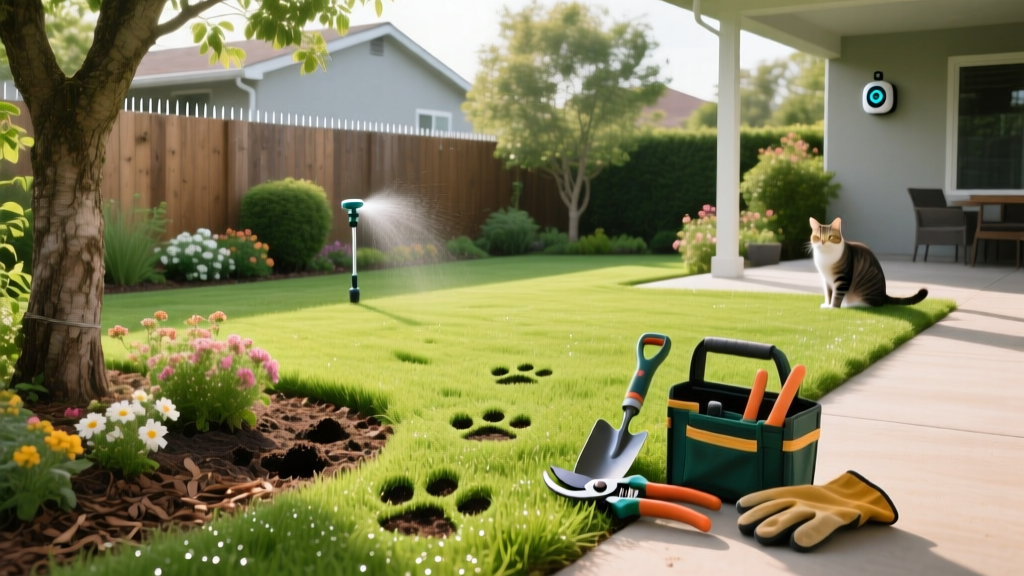
How to Keep Cats Away From Your House: Diagnostic Solutions
Diagnose the Feline Intrusion: Why Are They Here?
Before deploying deterrents, you must understand the specific feline behavior driving the intrusion. Cats do not wander into yards randomly; they are drawn by specific environmental triggers. Misdiagnosing the behavior leads to wasted money on ineffective repellents. When figuring out how to keep cats away from your house, categorize the nuisance into one of three primary behavioral drivers.
1. Territorial Marking (Spraying)
Unneutered male cats (and occasionally females) spray urine on vertical surfaces like siding, porch pillars, and foundation plantings. Cat urine contains felinine, a sulfur-containing amino acid that degrades into highly pungent thiol compounds. This scent acts as a beacon, attracting other cats to over-mark the same territory. If you notice a sharp, ammonia-like odor on your home's exterior, you are dealing with a territorial dispute, not a litter box issue.
2. Latrine Behavior (Digging and Eliminating)
Cats prefer loose, dry, finely textured soil for elimination. Freshly tilled garden beds, loose cedar mulch, and sandy soil beneath decks mimic the commercial cat litter they are trained to use. If you find shallow, uncovered divots in your mulch beds, the cat is using your landscaping as a communal latrine.
3. Hunting and Lounging Grounds
If your yard has a high population of voles, mice, or ground-feeding birds, cats will stalk the perimeter. Additionally, warm surfaces like composite decking, HVAC condenser pads, and sun-baked patio furniture attract cats seeking thermal regulation.
The Sensory Deterrent Matrix: What Actually Works?
Not all deterrents are created equal. The efficacy of a solution depends entirely on the cat's motivation. Below is a diagnostic matrix comparing the most common deterrent categories available in 2026.
| Deterrent Type | Mechanism of Action | Avg. Cost (2026) | Best Use Case | Primary Failure Mode |
|---|---|---|---|---|
| Motion-Activated Water | Sudden burst of water and mechanical click | $85 - $110 | Open lawns, garden perimeters | Battery drain; freezing in winter |
| Physical Sub-Surface Barriers | Prevents digging via uncomfortable paw contact | $15 - $30 | Mulch beds, planters, soft soil | Improper installation (edges exposed) |
| Enzymatic Odor Neutralizers | Protease enzymes break down felinine proteins | $18 - $25 | Foundation spraying, porch pillars | Washing away before enzymes fully cure |
| Ultrasonic Emitters | High-frequency sound (20-25 kHz) | $30 - $60 | Enclosed patios, deck undersides | Rapid habituation; blocked by solid fences |
| Scent Repellents (Citrus/Predator) | Olfactory overload and aversion | $12 - $20 | Temporary perimeter defense | Degrades after 0.5 inches of rain |
Targeted Solutions by Problem Zone
Zone 1: The Perimeter and Foundation (Stopping the Spray)
If cats are spraying your siding or foundation shrubs, standard water sprays will not work. You must eliminate the olfactory trigger first.
- Enzymatic Eradication: Use a commercial outdoor enzymatic cleaner like Nature’s Miracle Outdoor Pet Stain & Odor Remover (approx. $18 for 32oz). Do not just spray the surface; saturate the soil and porous concrete where the urine has pooled. The protease enzymes require 15 to 20 minutes of dwell time to break down the uric acid crystals.
- Texture Modification: Wrap the lower 18 inches of vulnerable wooden porch pillars or corner posts in smooth PVC piping or metal flashing. Cats cannot grip these surfaces to spray effectively.
- Vertical Scent Blocking: After cleaning, apply a citrus-based botanical repellent to the vertical surfaces. Cats possess a specialized vomeronasal organ (Jacobson's organ) that makes them highly averse to d-limonene, the primary compound in citrus oils.
Zone 2: Garden Beds and Loose Mulch (Stopping the Dig)
Scent repellents fail in garden beds because the soil absorbs the oils, and rain washes them away. You must alter the physical texture of the digging zone.
- Sub-Surface Poultry Netting: Lay 1-inch hexagonal galvanized chicken wire flat over the soil, then cover it with 2 inches of mulch. Cats despise the feeling of wire against their claws, but plant stems will easily grow through the 1-inch gaps. This is the single most effective, permanent solution for latrine behavior.
- Prickly Clippings: If you have holly, rose, or pyracantha bushes, save the pruned branches and lay them horizontally across exposed soil beds. This creates an impenetrable, biodegradable barrier that costs $0.
- Static Pulse Mats: For high-value raised beds, deploy a ScatMat (approx. $55). These mats deliver a harmless, static pulse (similar to a livestock fence) when stepped on, creating immediate negative reinforcement without causing physical harm.
Advanced Tech: Motion-Activated Deterrents Evaluated
When physical barriers are impractical, technology offers a hands-off approach. However, device placement is critical to avoid habituation.
Expert Recommendation: The Orbit 62100 Yard Enforcer Motion-Activated Sprinkler (approx. $89.99) remains the gold standard for 2026. It features a passive infrared (PIR) sensor that detects body heat up to 40 feet away. Pro-Tip: Set the dial to 'Night Only' mode. Cats are primarily crepuscular (active at dawn and dusk) and nocturnal. Running the device during the day wastes water and trains the cat that the device is inactive at night.
Failure Mode to Avoid: Do not leave motion-activated ultrasonic devices in the exact same spot for more than three weeks. Cats are highly intelligent and will eventually realize the high-pitched noise is not accompanied by a physical threat. Move ultrasonic emitters every 14 days to maintain the illusion of a dynamic threat.
What to Avoid: Ineffective and Harmful Methods
WARNING: Toxic and Illegal Deterrents
Never use mothballs (naphthalene or paradichlorobenzene) outdoors. According to the U.S. Environmental Protection Agency (EPA), using mothballs outside is a violation of federal law. They leach toxic chemicals into the groundwater, harm local wildlife, and pose severe respiratory risks to children and pets. Similarly, avoid scattering cayenne pepper or hot sauce; these can cause severe corneal damage to a cat's eyes and are easily blown back into your own face by the wind.
Never use mothballs (naphthalene or paradichlorobenzene) outdoors. According to the U.S. Environmental Protection Agency (EPA), using mothballs outside is a violation of federal law. They leach toxic chemicals into the groundwater, harm local wildlife, and pose severe respiratory risks to children and pets. Similarly, avoid scattering cayenne pepper or hot sauce; these can cause severe corneal damage to a cat's eyes and are easily blown back into your own face by the wind.
Additionally, avoid relying solely on predator urine (coyote or fox urine). While it may work for a few days, urban cats are often habituated to the scent of local coyotes, and the urine washes away after the first heavy rainstorm, requiring constant, expensive reapplication.
Frequently Asked Questions
Will feeding a stray cat in one corner of my yard keep it away from the house?
No. Feeding a cat establishes your property as a reliable resource zone. According to the Humane Society of the United States, providing food will actually increase the frequency of visits and attract additional neighborhood cats, exacerbating territorial spraying and latrine behaviors near your home.
How do I clean cat spray off vinyl siding without damaging it?
Mix a solution of 1 part white vinegar to 3 parts water, or use a dedicated outdoor enzymatic cleaner. Apply it with a soft-bristle brush and let it sit for 15 minutes before rinsing with a garden hose. Avoid pressure washing the spray, as the high PSI will drive the uric acid deeper into the microscopic pores of the vinyl.
Do ultrasonic cat repellents affect dogs or wildlife?
Yes. Most ultrasonic devices operate between 20 kHz and 25 kHz. While adult humans cannot hear this, dogs, pet rabbits, and beneficial wildlife like bats and certain bird species can. If you have outdoor dogs or live near a nature reserve, rely on physical barriers and motion-activated water instead of ultrasonic sound.

