
Home & Garden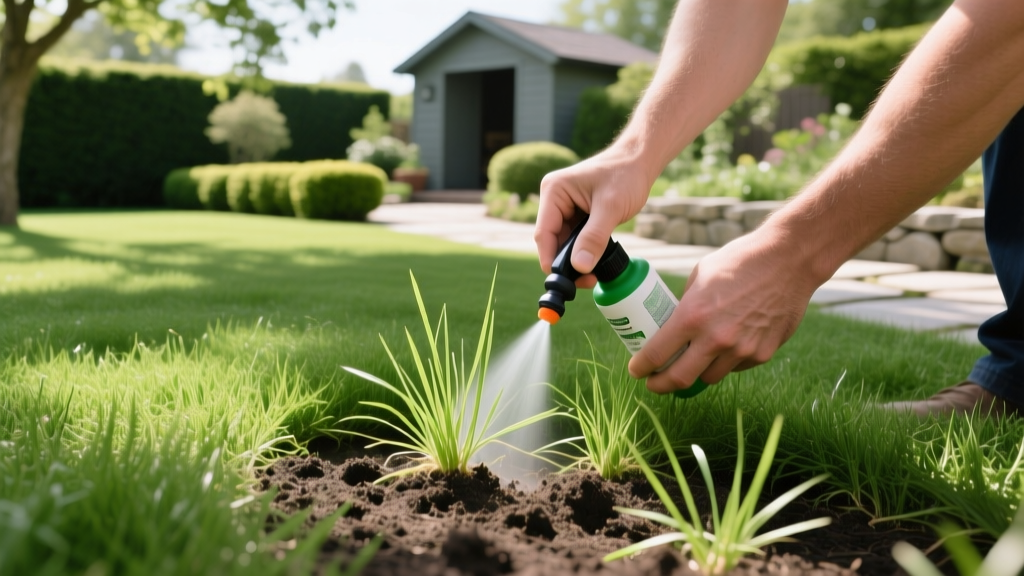
How to Kill Quackgrass: Spot-Treatment and Control Guide
Quackgrass (Elymus repens) is an aggressive, cool-season perennial weed that plagues residential lawns across northern climates. Unlike annual grassy weeds that die off in winter, quackgrass survives and expands via a complex underground network of rhizomes. Eradicating it requires precise identification, targeted chemical application, or exhaustive mechanical removal. Broadleaf herbicides like 2,4-D or dicamba have zero effect on this species, and standard lawn weed-and-feed products will only fertilize it, making the infestation worse.
The Auricle Test: Positive Identification
Before applying any non-selective herbicide, you must confirm the weed is actually quackgrass. It is frequently confused with tall fescue, crabgrass, or annual ryegrass. The definitive diagnostic feature is the presence of auricles—claw-like, finger-like appendages that clasp the stem at the collar region (where the leaf blade meets the sheath).
Quick ID Checklist
- Auricles: Present, prominent, and clasping the stem (crucial differentiator from tall fescue, which lacks auricles).
- Ligule: Very short, membranous.
- Leaf Blade: Flat, up to 1/2 inch wide, rough on the upper surface, often with a distinct bluish-green tint.
- Growth Habit: Upright, forming distinct, fast-growing patches that tower above the surrounding turf canopy within days of mowing.
According to turfgrass specialists at Penn State Extension, the auricle test is the most reliable field method for homeowners and lawn care professionals to separate Elymus repens from desirable cool-season turfgrasses.
The Rhizome Problem: Why Pulling Fails
Quackgrass spreads primarily through rhizomes (underground stems) rather than seed. These rhizomes are white, sharp-tipped, and can penetrate compacted soil to depths of 6 to 8 inches. They are highly brittle. If you pull the plant by hand, the rhizome snaps, leaving behind nodes capable of generating new shoots.
'A single quackgrass rhizome fragment containing just one viable node can regenerate into a fully established patch within a single growing season. Mechanical tilling or aggressive raking often fragments the rhizomes, inadvertently multiplying the infestation.'
— NC State Turfgrass Pathology
Herbicide Selection Matrix by Turf Type
There is no magic selective spray that kills mature quackgrass without harming cool-season turf (Kentucky bluegrass, fescues, ryegrass). Your treatment protocol depends entirely on your lawn's grass type.
| Turf Type | Active Ingredient | Selectivity | Expected Result |
|---|---|---|---|
| Cool-Season (Bluegrass, Fescue) | Glyphosate (41%) | Non-Selective | Complete kill (requires spot-treatment and overseeding) |
| Cool-Season (Bluegrass, Fescue) | Mesotrione (Tenacity) | Selective | Suppression/bleaching only; ineffective on mature rhizomes |
| Warm-Season (Bermuda, Zoysia) | Rimsulfuron (Certainty) | Selective | Effective selective control; safe for warm-season turf |
| Warm-Season (Bermuda, Zoysia) | Fluazifop (Fusilade II) | Selective | Effective on grassy weeds; requires multiple applications |
Precision Spot-Treatment Protocol (Glyphosate)
For the vast majority of homeowners with cool-season lawns, spot-treating with a glyphosate-based herbicide is the only viable chemical option. The goal is to apply the chemical strictly to the quackgrass blades while avoiding contact with desirable turf.
1. Formulation and Mixing
Purchase a concentrated 41% active ingredient (AI) glyphosate product (e.g., Compare-N-Save or Roundup Pro). Do not use consumer-grade 'ready-to-spray' wands, as they lack the concentration required to translocate down to the deep rhizomes.
- Mixing Ratio: 2 fluid ounces of 41% glyphosate concentrate per 1 gallon of water.
- Surfactant: Quackgrass leaves have a thick, waxy cuticle that repels water. You must add a Non-Ionic Surfactant (NIS) at a rate of 0.25% v/v (roughly 1/2 teaspoon per gallon). Without a surfactant, the herbicide will bead up and roll off the leaf.
2. Application Techniques
- The Wick Weeder Method: For patches intermingled with good grass, use a rope-wick applicator or a specialized sponge weed wand. Dip the sponge in the mixed solution and physically wipe it only onto the quackgrass blades, which naturally grow taller than the mowed lawn.
- The Shielded Spray Method: If the quackgrass has formed a solid, isolated patch (greater than 2 feet in diameter), use a pump sprayer equipped with a plastic spray shield cone. Keep the nozzle within 2 inches of the weed canopy to eliminate drift.
- The Paintbrush Method: For single, isolated blades emerging in high-value turf, dip a small foam brush into the solution and paint the leaves directly.
3. Timing and Patience
Apply glyphosate when the quackgrass is actively growing and soil moisture is adequate (early fall is optimal, as the plant is pulling carbohydrates down into the rhizomes for winter storage, taking the herbicide with it). Do not mow for 48 hours before or 72 hours after application. Glyphosate takes 10 to 14 days to show yellowing, and up to 21 days for complete rhizome kill. Do not reapply prematurely.
Mechanical Excavation: The 8-Inch Rule
If you maintain an organic lawn or refuse to use glyphosate, mechanical removal is your only option. Standard weeding tools like the Fiskars stand-up weeder or dandelion diggers are useless here. You must excavate the soil.
Warning: Tilling is Prohibited
Never use a rototiller or power rake on a lawn infested with quackgrass. The blades will chop the rhizomes into hundreds of 1-inch fragments, each containing a node. You will turn a 10-square-foot patch into a 1,000-square-foot infestation within three weeks.
Excavation Steps:
- Water the target area deeply 24 hours prior to digging to soften compacted subsoil.
- Using a sharp, flat spade, cut a perimeter around the infested patch, extending 6 inches beyond the visible outermost blades.
- Dig straight down to a depth of 8 inches. Quackgrass rhizomes rarely penetrate deeper than this in residential turf.
- Lift the sod slab and place it on a tarp. Use a hand rake to sift through the excavated soil, removing every white rhizome fragment.
- Backfill the void with a 50/50 mix of native soil and screened compost, then lay fresh sod or overseed immediately.
Post-Eradication Lawn Recovery and Prevention
Once the quackgrass is dead (turned completely brown and pulls away from the soil with zero resistance), you must repair the bare spots. Quackgrass produces allelopathic chemicals that can temporarily inhibit the germination of desirable grass seeds.
The Mesotrione Overseeding Strategy
To prevent dormant quackgrass seeds in the soil seedbank from germinating in your newly repaired patches, utilize a starter fertilizer containing Mesotrione (commonly sold as Tenacity or Scotts Triple Action Built for Seeding). Mesotrione is one of the few pre-emergent herbicides safe to use at the exact time of cool-season grass seeding. It will bleach and kill emerging quackgrass seedlings while allowing Kentucky bluegrass and tall fescue to establish safely.
- Wait Time: Wait at least 7 days after the quackgrass has completely browned from the glyphosate treatment before raking out the dead debris and dropping seed.
- Cost Expectation: Professional-grade mesotrione (4 oz bottle) costs approximately $60-$75 in 2026, but treats up to 4 acres, making it highly cost-effective for spot-treatment recovery.
- Mowing: Do not mow the newly seeded recovery patches until the new desirable turf has been mowed at least three times, ensuring the root system is anchored.
Consistent mowing at the highest recommended setting for your turf species (typically 3.5 to 4 inches for cool-season lawns) shades the soil surface, drastically reducing the photosynthetic capacity of any surviving quackgrass rhizomes attempting to push new shoots.

