Home & Garden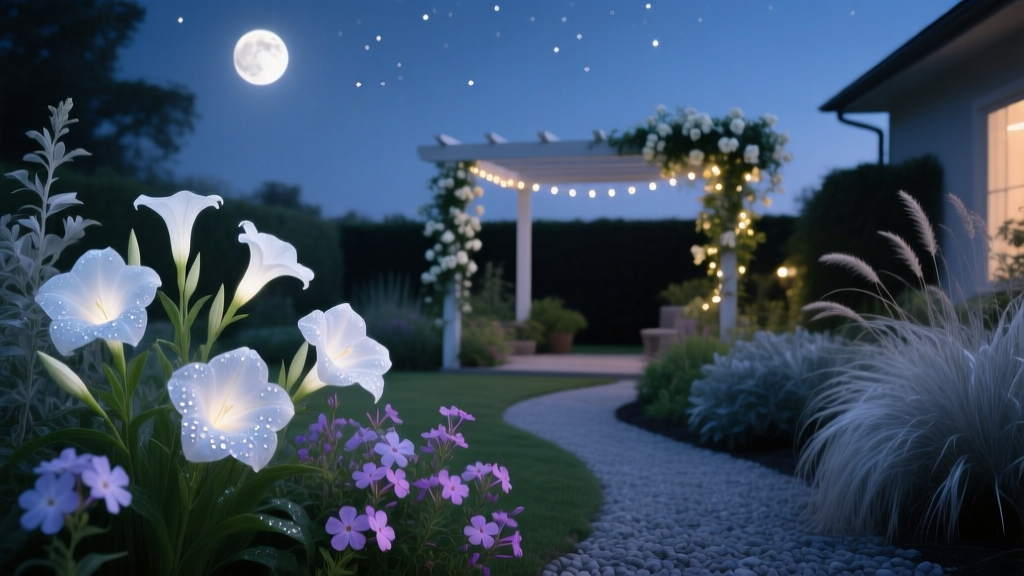
How to Grow Flowers That Blossom at Night: Moon Garden Guide
The Architecture of a Moon Garden
A moon garden shifts the sensory focus of your landscape from daylight visuals to nocturnal fragrance, texture, and sound. By selecting flora that blossom at night, you create a habitat that supports essential nocturnal pollinators like sphinx moths and nectar-feeding bats while providing a fragrant retreat for homeowners after sunset. Success requires more than just planting white flowers; it demands precise soil preparation, strategic hardscaping to reflect ambient moonlight, and specialized low-voltage lighting to enhance the blooms without disrupting local wildlife navigation.
Selecting Flora: Top Species That Blossom at Night
Not all white flowers open after dark. True night-bloomers have evolved to release heavy, sweet volatile organic compounds (VOCs) at dusk to attract specific pollinators. Below is a framework of reliable species categorized by their structural role in the garden.
| Botanical Name | Common Name | Hardiness Zone | Bloom Window | Mature Height | Pet Toxicity |
|---|---|---|---|---|---|
| Ipomoea alba | Moonflower | 9-11 (Annual elsewhere) | Dusk to Dawn | 15-20 ft (Vine) | Mild (Seeds) |
| Oenothera biennis | Evening Primrose | 4-9 | 6:00 PM - 6:00 AM | 3-5 ft | Non-Toxic |
| Cestrum nocturnum | Night-Blooming Jasmine | 8-11 | Dusk to Dawn | 8-12 ft (Shrub) | High (All parts) |
| Mirabilis jalapa | Four O'Clocks | 9-11 (Tuberous) | 4:00 PM - Morning | 2-3 ft | Moderate (Roots) |
| Brugmansia suaveolens | Angel's Trumpet | 10-12 | Evening Peak | 10-15 ft (Tree) | Severe (All parts) |
Expert Note on Sourcing: When purchasing Cestrum nocturnum, verify the cultivar. The standard species produces the highest concentration of nocturnal VOCs, whereas some dwarf hybrids bred for compact patio growth sacrifice up to 60% of their fragrance output.
Site Selection and Reflective Hardscaping
Plants that blossom at night rely on ambient light to be visible. A moon garden must be positioned away from competing streetlights or harsh security floodlights, which can confuse photoperiod-sensitive plants and delay blooming. Select a site that receives full sun during the day (minimum 6 hours) to fuel the energy-intensive nightly bloom cycle, but remains shaded from direct artificial light at night.
Soil Preparation and pH Balancing
Night-blooming heavy feeders like Moonflowers and Angel's Trumpet require well-draining loam. Test your soil to ensure a pH between 6.2 and 6.8. If the pH exceeds 7.2, nutrient lockout (particularly iron and manganese) will cause chlorosis, reducing the plant's energy reserves for flower production. Amend heavy clay soils with 3 inches of expanded shale and 2 inches of organic compost prior to planting to achieve a percolation rate of at least 1 inch per hour.
The Reflective Mulch Technique
To maximize moonlight reflection, avoid dark hardwood mulches. Instead, use light-colored hardscaping materials beneath your night-bloomers. Crushed white marble chips, decomposed granite, or pale pea gravel reflect up to 40% more ambient moonlight than organic bark, creating a glowing effect beneath the white petals. Maintain a 2-inch layer, keeping it 3 inches away from the base of woody shrubs like Night-Blooming Jasmine to prevent collar rot.
Step-by-Step Planting and Seed Scarification
Many night-blooming vines possess hard seed coats that require mechanical intervention to germinate successfully. Follow this precise protocol for Ipomoea alba (Moonflower) and similar hard-seeded species:
- Scarification: Use a nail file or fine-grit sandpaper to gently nick the seed coat of each Moonflower seed. Do not penetrate the endosperm; merely scratch the outer shell to allow moisture penetration.
- Hydration: Soak the scarified seeds in room-temperature water (68°F to 72°F) for exactly 24 hours. Seeds that float after 24 hours are typically non-viable and should be discarded.
- Sowing Depth: Plant seeds 1/4 inch deep in biodegradable peat pots. Night-bloomers with deep taproots, like Evening Primrose, resent transplanting and must be sown directly in their final garden location or in pots that will be planted whole.
- Thermal Mat Germination: Maintain a soil temperature of 75°F to 80°F using a seedling heat mat. Germination should occur within 7 to 14 days.
Integrating Nocturnal Pollinators
A garden featuring flowers that blossom at night is ecologically incomplete without supporting the fauna that pollinates them. Sphinx moths and bats are the primary vectors for these plants.
Bat House Placement Specs: To attract local bat populations for natural pest control and pollination, mount a multi-chamber bat house 12 to 15 feet above ground level on a south-facing pole or structure. The roost must receive a minimum of 6 hours of direct morning sunlight to maintain the internal temperature between 85°F and 100°F required for maternity colonies. Consult the Bat Conservation International guidelines for exact dimensional requirements and baffling to deter predators.
For moth attraction, avoid planting highly fragrant daytime bloomers (like certain hybrid tea roses) within 10 feet of your moon garden. Competing daytime fragrances can mask the specific pheromone-like VOC trails that moths use to locate night-blooming jasmine and moonflowers in the dark.
Landscape Lighting: Kelvin and Lumen Specifications
Supplemental lighting in a moon garden must enhance the space without triggering light pollution, which disrupts the circadian rhythms of both the plants and their pollinators. Never use cool-white (4000K-5000K) or daylight (6000K+) LEDs; the blue light spectrum suppresses melatonin in wildlife and washes out the subtle whites of the petals.
- Color Temperature: Exclusively use 2700K (warm white) or 2400K (amber) LED fixtures. These wavelengths mimic natural firelight and moonlight, preserving the nocturnal environment.
- Lumen Output: Restrict path and accent lighting to 100-200 lumens per fixture. High-lumen floodlights will cause the pupils of nocturnal wildlife to constrict, effectively blinding them and deterring them from visiting your garden.
- Moonlighting Technique: Mount downward-facing fixtures 20 to 30 feet high in the canopy of adjacent deciduous trees. This casts dappled, natural-looking shadows through the branches onto the white gravel and blooms below, simulating actual moonlight.
Maintenance and Nocturnal Pest Management
Gardens that thrive at night also attract nocturnal pests, primarily slugs and snails, which feed on the succulent foliage of plants like Four O'Clocks and Moonflowers. Avoid traditional metaldehyde slug baits, which are highly toxic to the very bats and ground-foraging birds you are trying to attract.
Instead, deploy iron phosphate-based baits (such as Sluggo) at a rate of 1 teaspoon per square yard, applied in the late evening just as the flowers begin to open. Iron phosphate is OMRI-listed for organic use and breaks down into natural soil nutrients if unconsumed. Additionally, inspect the undersides of Angel's Trumpet leaves weekly for spider mites, which thrive in the dry microclimates often found under the large, canopy-like leaves of these night-blooming trees.
Safety Warning: Plants like Brugmansia (Angel's Trumpet) and Cestrum nocturnum contain high levels of tropane alkaloids. All parts of these plants are severely toxic if ingested. If you have pets or small children, substitute these with non-toxic alternatives like Oenothera biennis (Evening Primrose). Always verify plant safety using the ASPCA Toxic and Non-Toxic Plants database before finalizing your landscape design.
By combining precise soil chemistry, reflective hardscaping, and ecologically responsible lighting, your moon garden will serve as a vibrant, fragrant sanctuary long after the sun goes down. For further cultivar selection and regional hardiness data, cross-reference your choices with the Missouri Botanical Garden Plant Finder to ensure your night-blooming selections are optimized for your specific microclimate.