
Home & Garden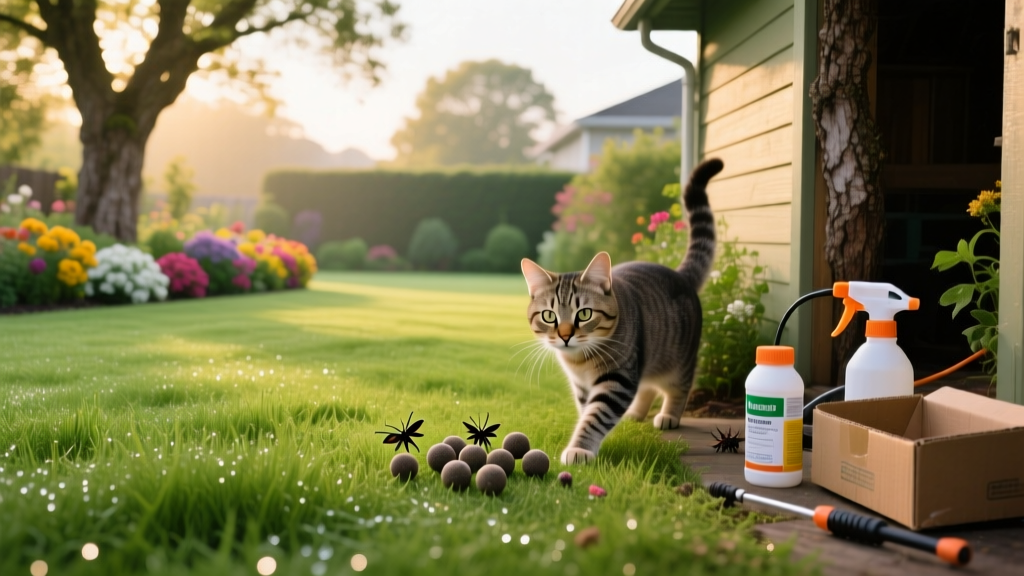
Mothballs and Cats: The Hidden Dangers of Yard Pest Control
Homeowners battling moles, voles, and stray rodents often turn to cheap, readily available chemical deterrents. One of the most persistent and dangerous myths in outdoor pest management is scattering mothballs across garden beds and lawn perimeters. While this practice is highly illegal and environmentally destructive, its most immediate threat is to domestic pets. The intersection of mothballs and cats is a frequent catalyst for severe veterinary emergencies, driven by a fundamental misunderstanding of feline biology and pesticide regulations.
Mothballs are not general-purpose repellents; they are regulated pesticides designed specifically for enclosed spaces to kill fabric-destroying insects. When deployed outdoors, they fail to repel mammals effectively while leaching toxic gases into the soil and air. For cats, whose metabolic pathways are uniquely vulnerable to aromatic hydrocarbons, even brief environmental exposure to these chemicals can trigger life-threatening hemolytic crises.
The Toxicology of Mothballs and Cats
To understand why mothballs are so lethal to felines, we must examine their active ingredients and how a cat's liver processes toxins. Modern mothballs primarily contain one of two chemicals: naphthalene or paradichlorobenzene (1,4-DCB). Both are solid pesticides that undergo sublimation, transitioning directly from a solid state into a toxic gas.
The Feline Metabolic Deficit
Cats lack sufficient levels of the enzyme UDP-glucuronosyltransferase. This enzyme is critical for glucuronidation, a Phase II liver detoxification pathway that binds to certain phenols and aromatic hydrocarbons, making them water-soluble so they can be excreted in urine. Because cats cannot efficiently glucuronidate these compounds, toxic metabolites accumulate rapidly in their bloodstream, leading to severe oxidative stress on red blood cells.
⚠️ EPA Regulatory Warning: The Environmental Protection Agency (EPA) strictly prohibits the outdoor use of mothballs. Using them in yards, gardens, or crawl spaces violates federal pesticide laws, contaminates local watersheds, and poses severe risks to wildlife, children, and pets.
Naphthalene vs. Paradichlorobenzene Toxicity
- Naphthalene: The most toxic variant to cats. Ingestion or heavy inhalation causes oxidative damage to hemoglobin, resulting in the formation of Heinz bodies (clumps of denatured hemoglobin on red blood cells). This leads to Heinz body anemia, hemolysis (rupture of red blood cells), and acute kidney failure.
- Paradichlorobenzene (1,4-DCB): While slightly less acutely lethal than naphthalene, it is a known carcinogen and causes severe central nervous system depression, vomiting, and hepatic (liver) necrosis in felines upon ingestion or chronic inhalation.
Recognizing Poisoning Symptoms in Felines
Because cats are fastidious groomers, they rarely need to ingest a whole mothball to be poisoned. Simply walking through an area where mothballs have been scattered, getting the chemical dust on their paws, and subsequently grooming themselves is enough to trigger toxicity. According to the Pet Poison Helpline, symptom onset can be delayed, making early detection critical.
| Symptom Category | Clinical Signs | Onset Timeframe |
|---|---|---|
| Gastrointestinal | Vomiting, diarrhea, anorexia, abdominal pain | 2 to 12 hours |
| Hematologic (Blood) | Pale or muddy-brown gums, lethargy, rapid heart rate | 24 to 72 hours |
| Neurological | Tremors, seizures, ataxia (loss of coordination) | 12 to 48 hours |
| Renal / Hepatic | Jaundice (yellowing of eyes/skin), decreased urination | 48 to 96 hours |
Why Homeowners Incorrectly Use Mothballs Outdoors
The misuse of mothballs stems from outdated gardening folklore. Homeowners mistakenly believe the strong odor creates an invisible barrier against burrowing pests. In reality, the concentration of gas required to repel a mammal like a vole or mole would need to be so high that it would immediately poison the surrounding topsoil and any animal breathing the air. Furthermore, rain and irrigation rapidly dissolve the pellets, driving concentrated naphthalene directly into the groundwater and root zones of your landscaping.
"There is no scientific evidence supporting the efficacy of mothballs as a mammalian or reptilian repellent in open-air environments. Their use outdoors is purely a hazardous placebo effect that results in environmental contamination and non-target wildlife poisoning."
Feline-Safe Yard Defense Alternatives
Effective insect and rodent yard defense requires targeting the specific biology and behavior of the pest, rather than broadcasting toxic gases. Below is a decision matrix for securing your yard without endangering your cats or local wildlife.
Rodent Control (Mice, Rats, Voles)
Open snap traps and loose poison pellets are just as dangerous to cats as mothballs. To secure your perimeter safely:
- Enclosed Bait Stations: Use heavy-duty, tamper-resistant stations like the Protecta LP Rat Bait Station (approx. $18-$25 per unit). These feature dual locking mechanisms and steel rods that secure the bait block, preventing cats from extracting the poison. Anchor them flush against fence lines where rodents travel.
- Modified PVC Snap Traps: If using traditional wooden or plastic snap traps (e.g., Victor Easy Set), place them inside a 12-inch length of 3-inch diameter PVC pipe. Cap one end and leave the other open. The 3-inch diameter allows mice and voles to enter and trigger the trap, but physically blocks a cat’s paw from reaching the strike zone.
Mole and Gopher Management
Moles feed on grubs, not plant roots. Eliminating their food source is the most effective, cat-safe deterrent.
- Beneficial Nematodes: Apply Heterorhabditis bacteriophora nematodes to your lawn using a hose-end sprayer. These microscopic organisms naturally hunt and destroy grub populations without harming mammals, birds, or earthworms. Cost is roughly $35 for a 50-million nematode package, treating up to 6,000 square feet.
- Castor Oil Repellents: Products like Tomcat Mole & Gopher Repellent utilize castor oil to coat the grubs and soil, making the environment unpalatable to moles. It is entirely non-toxic to cats, even if they dig in treated soil and groom their paws.
Emergency Protocol: Feline Mothball Exposure
If you suspect your cat has ingested a mothball or spent significant time in an area heavily treated with them, immediate action is required. Do not wait for symptoms to manifest, as Heinz body anemia can become irreversible once severe hemolysis begins.
- Isolate and Decontaminate: Bring the cat indoors immediately. If the mothball dust or residue is on their fur, bathe them using a mild dish soap (like Dawn) and lukewarm water to prevent further ingestion during grooming. Wear gloves to protect yourself.
- Do NOT Induce Vomiting: Never administer hydrogen peroxide to a cat. Cats do not possess the physiological mechanism to safely vomit on command via peroxide, and it causes severe hemorrhagic gastritis and risks fatal aspiration pneumonia.
- Contact Toxicology Experts: Call the ASPCA Animal Poison Control (888-426-4435) or the Pet Poison Helpline (855-764-7661) immediately. Have the mothball packaging ready to provide the exact active ingredient and concentration.
- Transport to Emergency Veterinary Care: Bring the packaging with you. Veterinary treatment typically involves intravenous fluid diuresis, oxygen therapy, and potentially blood transfusions if the packed cell volume (PCV) drops below 20% due to hemolysis.
Protecting your yard from pests should never come at the cost of your pet's life or environmental integrity. By abandoning archaic, illegal chemical deterrents in favor of targeted, mechanical, and biological controls, you maintain a thriving landscape that is safe for every member of your household.