Home & Garden
What Zone Is NY? The Complete USDA Hardiness Guide for New York
The Short Answer: What Zone Is NY?
New York is not a single planting zone. Because of its vast geographic diversity—ranging from the high peaks of the Adirondacks to the coastal shores of Long Island—the state spans USDA Hardiness Zones 3b through 7b. When gardeners ask, 'what zone is ny,' they are usually looking for a single number, but successful landscaping in this state requires understanding a 40-degree Fahrenheit spread in extreme minimum winter temperatures.
Following the USDA Plant Hardiness Zone Map update, roughly half of New York shifted a half-zone warmer. Areas of the Hudson Valley and Finger Lakes previously classified as 5b are now 6a, and parts of the NYC metro area solidified into 7a and 7b. However, relying solely on the broad map is a common failure point for New York gardeners. To select the right turfgrass, perennials, and trees, you must cross-reference your official USDA zone with local microclimates, soil drainage, and wind exposure.
Quick Zone Reference
- Zones 3b-4b (-35°F to -20°F): Adirondacks, North Country, high elevations.
- Zones 5a-5b (-20°F to -10°F): Southern Tier, western NY, parts of the Catskills.
- Zones 6a-6b (-10°F to 0°F): Hudson Valley, Finger Lakes, Capital Region.
- Zones 7a-7b (0°F to 10°F): New York City, Long Island, coastal enclaves.
The New York Hardiness Zone Breakdown
The table below details the exact temperature thresholds and primary regions for each zone found within New York State. Use this to verify your specific county's baseline hardiness.
| USDA Zone | Extreme Min Temp | Primary NY Regions | Example Cities |
|---|---|---|---|
| 3b | -35 to -30°F | High Adirondacks | Old Forge, Lake Placid (elevated) |
| 4a/4b | -30 to -20°F | North Country, Northern Catskills | Plattsburgh, Malone, Tupper Lake |
| 5a/5b | -20 to -10°F | Southern Tier, Western NY, Central | Buffalo, Rochester, Syracuse, Binghamton |
| 6a/6b | -10 to 0°F | Hudson Valley, Capital Region, Finger Lakes | Albany, Poughkeepsie, Ithaca, Kingston |
| 7a/7b | 0 to 10°F | NYC Metro, Long Island, Coastal | Manhattan, Brooklyn, Montauk, Riverhead |
Microclimates: Why the Map Isn't the Whole Story
The USDA map measures ambient air temperature, but it does not account for localized environmental modifiers. In New York, microclimates frequently override the baseline zone, dictating whether a marginal plant survives a February deep freeze or suffers complete root failure.
The Urban Heat Island (UHI) Effect
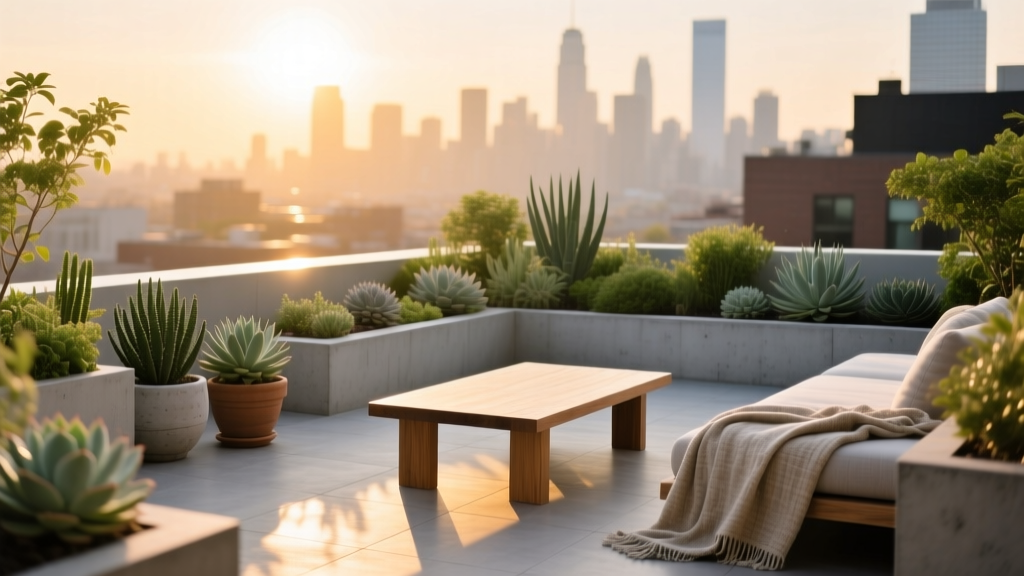
New York City and its immediate inner suburbs (like Yonkers and Hoboken) benefit from the UHI effect. Concrete, asphalt, and building mass absorb solar radiation during the day and release it at night. A rooftop garden in Manhattan (Zone 7a) may experience minimum winter temperatures 4°F to 6°F warmer than a rural field just 30 miles north in Westchester County (Zone 6b). This allows NYC gardeners to successfully overwinter borderline Zone 7 plants like Lagerstroemia indica (Crape Myrtle) and Magnolia grandiflora 'Bracken's Brown Beauty' that would die in the Hudson Valley.
Lake Effect and Wind Desiccation
Western New York (Buffalo, Erie) sits in Zone 5b/6a, but the heavy lake-effect snow actually acts as an insulating blanket for dormant turf and perennials. Conversely, the Hudson Valley and the Champlain Valley are notorious for 'frost pockets.' Cold, dense air drains down mountain slopes and settles in valleys, creating localized temperature drops that can be 5°F to 8°F colder than the surrounding hillsides. Furthermore, winter winds sweeping across open plains cause desiccation (winter burn) on broadleaf evergreens like rhododendrons, killing the plant through moisture loss even if the air temperature never breaches the plant's hardiness threshold.
Turfgrass and Plant Selection by NY Region
Selecting the right grass and foundational plants requires matching the cultivar to both your hardiness zone and your soil profile. New York's soils range from heavy, poorly drained glacial clay in the central regions to sandy, fast-draining loam on Long Island.
Zones 3 & 4: The Adirondacks and North Country
Winters are brutal, and the growing season is short (often less than 120 frost-free days).
- Turfgrass: Avoid warm-season grasses entirely. Use Hard Fescue (cultivars like 'Discovery' or ' Spartan II') for low-maintenance, shade-tolerant areas. For high-traffic sunny zones, use a cold-hardy Kentucky Bluegrass blend featuring 'Kenblue' or 'Award'.
- Trees & Shrubs: Paper Birch (Betula papyrifera), Tamarack (Larix laricina), and Rugosa Rose (Rosa rugosa). Avoid Japanese Maples, which will suffer fatal cambium splitting in -30°F snaps.
Zones 5 & 6: Central NY, Southern Tier, and Hudson Valley
This is the classic 'transition zone' where winter cold and summer humidity both test plant limits. Soil here is often heavy clay, which retains water and causes root heaving during freeze-thaw cycles.
- Turfgrass: Turf-Type Tall Fescue is the undisputed champion here. Cultivars like 'Mustang IV' and 'Titan Ultra' possess deep root systems that penetrate clay and survive summer droughts. Mix with 10% Kentucky Bluegrass ('Midnight') for rhizome spreading and self-repair.
- Trees & Shrubs: Hydrangea paniculata ('Limelight' or 'Fire Light'), Serviceberry (Amelanchier), and Ginkgo biloba 'Autumn Gold'.
Zone 7: NYC and Long Island
Mild winters and hot, highly humid summers. Long Island's sandy soil drains rapidly, requiring drought-tolerant selections, while NYC's compacted soil requires aeration and resilient species.
- Turfgrass: You can successfully grow warm-season grasses here. Zoysia grass (cultivars 'Zenith' or 'Meyer') thrives in Long Island's sandy loam and handles summer heat effortlessly, though it will go dormant and turn brown from late October to April. If you prefer year-round green, use a Rhizomatous Tall Fescue (RTF) blend.
- Trees & Shrubs: Southern Magnolia, Crape Myrtle ('Natchez'), and Windmill Palm (Trachycarpus fortunei) in sheltered NYC courtyards.
Expert Insight: According to Cornell University's Cooperative Extension, the single biggest cause of winter plant death in Zones 5 and 6 is not the cold itself, but wet soil combined with the cold. Amending heavy clay with expanded shale or planting in raised berms increases root-zone drainage and effectively boosts a plant's cold hardiness by one half-zone.
Troubleshooting Zone Pushing and Winter Kill
'Zone pushing' is the practice of planting a species rated for a warmer zone (e.g., planting a Zone 7 plant in a Zone 6b garden). While climate change and the updated USDA map make this slightly more viable, it carries severe risks.
The Danger of Root Hardiness vs. Shoot Hardiness
Nursery tags often list the hardiness of the plant's above-ground shoots. However, the root system is almost always less cold-hardy. A Japanese Maple might have shoots that survive -15°F (Zone 5b), but its roots may die at 5°F. If you are zone pushing in a container or above-ground planter in Brooklyn, the roots are fully exposed to ambient air temperatures. You must insulate above-ground planters with rigid foam board or move them to an unheated garage to prevent root-system failure.
Frequently Asked Questions
What planting zone is Albany, NY?
Albany and the immediate Capital Region are primarily in Zone 6a (-10°F to -5°F), with some outlying elevated areas dipping into 5b. When buying perennials in Albany, prioritize plants rated for Zone 5 to ensure survival during anomalous polar vortex events.
What zone is Upstate New York?
'Upstate' is geographically massive. Syracuse and Rochester sit in Zone 5b/6a, while the deep North Country (e.g., Massena) is Zone 4a. Always check your specific zip code on the USDA interactive map rather than relying on the broad 'Upstate' label.
Can I grow Zoysia grass in the Hudson Valley?
Technically, yes, in the southernmost parts of the Hudson Valley (Zone 6b/7a). However, Zoysia requires a long, hot summer to establish and will remain dormant and brown for nearly 7 months of the year in this latitude. Turf-type tall fescue remains the superior aesthetic and functional choice for the Hudson Valley.
For localized planting dates and pest management strategies tailored to your specific county, consult your local Cornell Cooperative Extension office, which provides hyper-local data that broad national maps cannot capture.