
Home & Garden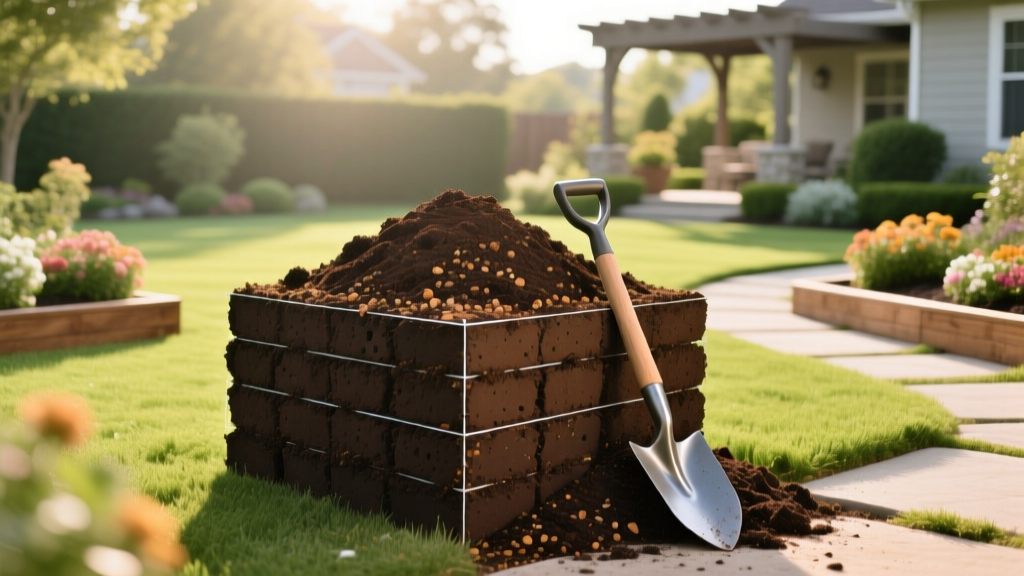
How Much Is One Cubic Yard? Coverage, Weight & Cost Guide
The Anatomy of a Cubic Yard
When ordering landscape materials, guessing the volume leads to either paying for unnecessary dump truck fees or making a second trip to the garden center. To answer the fundamental question of how much is one cubic yard, you must visualize a three-dimensional cube measuring exactly 3 feet long, 3 feet wide, and 3 feet high. Mathematically, this equals 27 cubic feet. However, translating that geometric fact into real-world coverage across your lawn or garden beds requires understanding material density, depth requirements, and settling rates.
Visualizing the Volume:
One cubic yard is equivalent to roughly 13.5 standard 2-cubic-foot bags of mulch, or about 9 standard 3-cubic-foot bags of topsoil. If you are using a standard contractor-grade wheelbarrow (which holds roughly 3 to 4 cubic feet when heaped), expect to move between 7 and 9 full loads to equal a single cubic yard.
One cubic yard is equivalent to roughly 13.5 standard 2-cubic-foot bags of mulch, or about 9 standard 3-cubic-foot bags of topsoil. If you are using a standard contractor-grade wheelbarrow (which holds roughly 3 to 4 cubic feet when heaped), expect to move between 7 and 9 full loads to equal a single cubic yard.
Coverage Rates: How Far Does One Cubic Yard Spread?
Coverage is entirely dictated by the depth of the material you intend to lay down. Different materials serve different purposes and require specific thicknesses to function properly. For instance, applying mulch too thickly can suffocate plant roots and harbor pests, while laying gravel too thinly will allow weeds to penetrate and the base to shift.
According to guidelines published by the University of Minnesota Extension, organic mulches should generally be maintained at a depth of 2 to 3 inches to effectively retain soil moisture and suppress weeds without causing root rot.
| Target Depth | Square Feet Covered | Best Use Case |
|---|---|---|
| 1 Inch | 324 sq. ft. | Topdressing lawns with compost or fine sand |
| 2 Inches | 162 sq. ft. | Refreshing existing mulch beds, laying topsoil for seeding |
| 3 Inches | 108 sq. ft. | New mulch installations, perennial garden beds |
| 4 Inches | 81 sq. ft. | Gravel pathways, drainage rock, heavy weed suppression |
| 6 Inches | 54 sq. ft. | Deep French drains, heavy-duty driveway bases |
The Weight Factor: Why Material Density Matters
Understanding how much is one cubic yard in terms of physical weight is arguably more critical than knowing its volume, especially if you plan to transport the material yourself. A cubic yard of feathers and a cubic yard of gravel occupy the exact same space, but their impact on your vehicle's suspension is drastically different.
Material Weight Breakdown
- Dry Wood Mulch: 400 to 800 lbs. per cubic yard. (Safe for most half-ton pickup trucks).
- Compost: 1,000 to 1,400 lbs. per cubic yard. (Depends heavily on moisture content).
- Topsoil: 2,000 to 2,200 lbs. per cubic yard. (Approaching the maximum payload of a standard F-150 or Silverado 1500).
- Wet Mud / Heavy Clay: Up to 2,800 lbs. per cubic yard.
- Gravel / Crushed Stone: 2,800 to 3,000+ lbs. per cubic yard. (Will exceed the payload capacity of almost all consumer half-ton trucks).
⚠️ Vehicle Payload Warning:
Never load a full cubic yard of gravel, stone, or wet topsoil into a standard half-ton pickup truck. The average payload capacity for a modern half-ton truck is between 1,500 and 2,200 pounds. Exceeding this limit can cause catastrophic suspension failure, blown tires, and loss of braking control. Always opt for professional dump truck delivery for heavy aggregates.
Never load a full cubic yard of gravel, stone, or wet topsoil into a standard half-ton pickup truck. The average payload capacity for a modern half-ton truck is between 1,500 and 2,200 pounds. Exceeding this limit can cause catastrophic suspension failure, blown tires, and loss of braking control. Always opt for professional dump truck delivery for heavy aggregates.
Bulk vs. Bagged: 2026 Cost Comparison
Buying in bulk is almost always more cost-effective per cubic foot, but it requires a minimum delivery fee and a place to dump the material. Bagged products offer precision and ease of transport but come at a premium.
Hardwood Mulch Pricing
- Bulk: $30 to $45 per cubic yard + $65 to $125 delivery fee.
- Bagged (2 cu. ft. bags): $4.50 to $6.00 per bag. You need 13.5 bags to equal one yard, totaling $60.75 to $81.00 (plus tax and the physical labor of moving 40+ bags).
Screened Topsoil Pricing
- Bulk: $25 to $50 per cubic yard + delivery fee.
- Bagged (1 cu. ft. bags): $3.00 to $4.50 per bag. You need 27 bags to equal one yard, totaling $81.00 to $121.50.
For comprehensive data on how organic matter like compost and topsoil interacts with native earth to improve water retention, refer to the research databases at Cornell University Soil Health. Their guidelines emphasize that bulk blending is vastly superior for large-scale soil amending projects.
How to Calculate Your Exact Order
Do not rely on rough estimates. Use this precise mathematical formula to calculate your exact needs before calling the landscape supply yard.
- Measure the Area: Measure the length and width of your garden bed in feet. (e.g., 20 feet long by 10 feet wide = 200 square feet).
- Determine Depth: Decide your target depth in inches. (e.g., 3 inches for new mulch).
- Convert Depth to Feet: Divide the depth in inches by 12. (e.g., 3 ÷ 12 = 0.25 feet).
- Calculate Cubic Feet: Multiply Length × Width × Depth in feet. (e.g., 20 × 10 × 0.25 = 50 cubic feet).
- Convert to Cubic Yards: Divide the total cubic feet by 27. (e.g., 50 ÷ 27 = 1.85 cubic yards).
The 10% Settling Rule for Organic Materials
When ordering organic materials like mulch, compost, or peat-heavy topsoil blends, you must account for natural decomposition and mechanical settling. Landscape supply yards measure bulk materials using front-end loaders, which compress the material slightly in the bucket. Furthermore, once spread and watered, organic matter will immediately begin to settle.
"Always add a 10% overage buffer when ordering organic bulk materials. If your math dictates you need exactly 3.0 cubic yards of hardwood mulch, order 3.3 or 3.5 yards. Inorganic materials like crushed gravel or river rock do not settle and can be ordered to the exact decimal."
Frequently Asked Questions
How many wheelbarrows are in a cubic yard?
It depends on the wheelbarrow size and how heavily you load it. A standard residential wheelbarrow holds about 2 cubic feet when filled to a safe working level, meaning it will take roughly 13 to 14 trips to move one cubic yard. A heavy-duty contractor wheelbarrow holds closer to 3 or 4 cubic feet, reducing the trips to 7 to 9.
Will a cubic yard of dirt fit in a standard pickup truck?
Volume-wise, a standard 6.5-foot truck bed holds roughly 2 to 2.5 cubic yards if filled to the top of the bed rails. However, weight-wise, a single cubic yard of dense topsoil weighs over 2,000 pounds, which maxes out the payload capacity of most half-ton trucks. You can safely haul one yard of dry topsoil, but never more than that, and never haul a full yard of gravel or wet clay.
How much is one cubic yard of river rock?
River rock is exceptionally dense. One cubic yard of 1-to-3-inch river rock typically weighs between 2,600 and 2,800 pounds. In terms of coverage, at a standard 3-inch depth, one cubic yard will cover approximately 108 square feet. Pricing generally ranges from $50 to $90 per cubic yard in bulk, excluding delivery.