
Home & Garden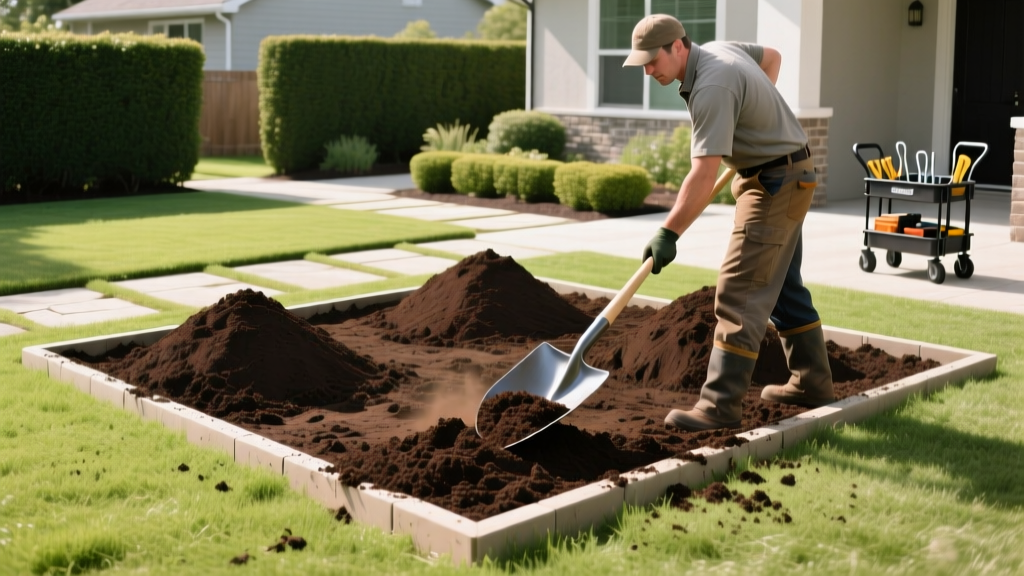
Ordering 3 Cubic Yards of Topsoil: Coverage, Costs, and Spreading Guide
The Math: What Does 3 Cubic Yards of Topsoil Actually Cover?
Ordering bulk soil requires precise volume-to-area calculations. One cubic yard equals 27 cubic feet, meaning a 3-yard load delivers exactly 81 cubic feet of material. The total square footage this covers depends entirely on your target depth. For lawn topdressing, you typically need a shallow layer, while building raised beds or filling deep ruts requires significant volume.
| Target Depth | Square Feet Covered | Best Use Case |
|---|---|---|
| 1 Inch | 972 sq. ft. | Lawn topdressing, light leveling |
| 2 Inches | 486 sq. ft. | Overseeding prep, garden bed refresh |
| 3 Inches | 324 sq. ft. | New lawn establishment, deep grading |
| 6 Inches | 162 sq. ft. | Filling raised beds, deep hole repair |
| 12 Inches | 81 sq. ft. | Tall raised garden beds (e.g., 9x9) |
CRITICAL WEIGHT WARNING: A single cubic yard of topsoil weighs between 2,000 and 2,700 pounds depending on moisture content. A 3-yard load will weigh up to 8,100 pounds. This vastly exceeds the payload capacity of standard half-ton pickup trucks (like the Ford F-150 or Chevy Silverado 1500), which max out around 1,500 to 2,200 pounds. Attempting to haul 3 yards in a standard truck will destroy your suspension and void your insurance. Always opt for professional delivery for a 3-yard order.
Budgeting: Delivery and Material Costs
Purchasing bulk topsoil is exponentially more cost-effective than buying bagged equivalents, provided you have the space for a dump truck to unload. In 2026, the economics of bulk soil heavily favor delivery for quantities over 1.5 yards.
Cost Breakdown: Bulk vs. Bagged
- Bulk Topsoil (3 Yards): $25 to $45 per yard = $75 to $135 for the material.
- Delivery Fee: $60 to $150 depending on local fuel surcharges and mileage.
- Total Bulk Cost: $135 to $285 delivered to your driveway.
- Bagged Equivalent: One cubic yard requires roughly 27 standard 1-cubic-foot bags. For 3 yards, you need 81 bags. At $3.50 per bag, the material alone costs $283.50, excluding the immense logistical headache of transporting 81 heavy bags from the store.
According to the USDA Natural Resources Conservation Service, sourcing high-quality local topsoil preserves regional soil biology and prevents the introduction of invasive weeds often found in poorly processed bagged soils.
Prepping the Site Before the Dump Truck Arrives
A 3-yard pile of dirt is roughly 10 feet wide and 4 feet high. If dropped directly onto an asphalt driveway in July, the heat and weight can soften and stain the pavement. If dropped on grass, it will smother the turf within 48 hours. Proper preparation is non-negotiable.
- Call 811: Before any digging or heavy grading associated with your soil project, call 811 to mark underground utilities.
- Lay a Heavy-Duty Tarp: Use a 10x12 foot, 16-mil thick poly tarp. Standard 6-mil painter's tarps will tear under the friction of dumping soil.
- Clear the Drop Zone: Ensure a 12-foot wide clearance for the truck. Dump trucks require about 25 feet of vertical clearance to raise their hydraulic beds fully. Check for overhead power lines and tree limbs.
- Mark the Perimeter: Use landscaping spray paint to mark exactly where the soil needs to go, preventing the pile from spreading into unwanted areas during the dump.
Spreading and Grading: Moving 8,000 Pounds of Dirt
Moving 3 cubic yards of soil by hand is a grueling task that requires the right ergonomic tools to prevent lower back injuries. Ditch the standard garden rake; you need grading equipment.
The Essential Tool Kit
- Wheelbarrow: A 6-cubic-foot contractor-grade steel wheelbarrow with pneumatic tires (e.g., Jackson 6 cu. ft. Steel Wheelbarrow). Do not use plastic residential models; they will crack under the lateral stress of wet soil.
- Transfer Shovel: A D-handle, 14-gauge steel transfer shovel with a flat blade. The flat blade cuts into the pile cleanly, unlike pointed digging spades.
- Landscape Rake: A 48-inch aluminum landscape rake (such as the Leonard 48-inch Professional Landscape Rake). The wide head allows you to grade large swaths of soil in a single pass.
Pro Spreading Technique: Never pull the soil toward your body. Stand at the edge of the pile, throw the soil forward with the shovel, and then use the landscape rake to push and pull the material outward. Work in concentric circles, moving the pile outward layer by layer to maintain a consistent grade.
Amending vs. Filling: Should You Mix It?
Raw topsoil is excellent for structural filling, grading, and topdressing, but it is rarely ideal as a standalone planting medium for heavy-feeding vegetables or ornamental beds. The University of Minnesota Extension notes that optimal garden soil requires an organic matter content of 4% to 5% to maintain proper Cation Exchange Capacity (CEC) and water retention.
If your 3-yard topsoil order is destined for a vegetable garden or perennial bed, you must amend it.
| Application Goal | Soil Strategy | Required Additives for 3 Yards |
|---|---|---|
| Lawn Leveling / Topdressing | 100% Screened Topsoil | None. Screen to 1/4 inch to prevent smothering grass crowns. |
| Raised Bed Filling | 60% Topsoil, 30% Compost, 10% Coir | 1.5 yards compost, 0.5 yards coconut coir or peat moss. |
| Heavy Clay Soil Amendment | Topdressing with Incorporation | Mix 2 inches of topsoil into existing clay via rototilling; add 1 yard of expanded shale for drainage. |
Frequently Asked Questions
How long can 3 cubic yards of topsoil sit in a pile before I spread it?
Uncovered topsoil piles will begin to compact and lose their aerobic soil biology within 3 to 4 weeks. If heavy rain hits, the pile will turn into a dense, anaerobic clay-like mass that is nearly impossible to spread evenly. If you cannot spread the soil within 48 hours of delivery, cover the pile tightly with a waterproof tarp and weigh down the edges with cinder blocks to prevent wind uplift and moisture intrusion.
Will the delivery truck drive onto my lawn to drop the soil?
Most professional landscaping supply companies strictly prohibit their drivers from leaving the driveway or paved surfaces. A fully loaded 3-yard dump truck weighs upwards of 25,000 pounds. Driving onto a residential lawn will cause severe soil compaction, crush underground irrigation lines, and leave deep rutting that requires extensive mechanical aeration and grading to repair. Always ensure your drop zone is on a hard, stable surface.