
Home & Garden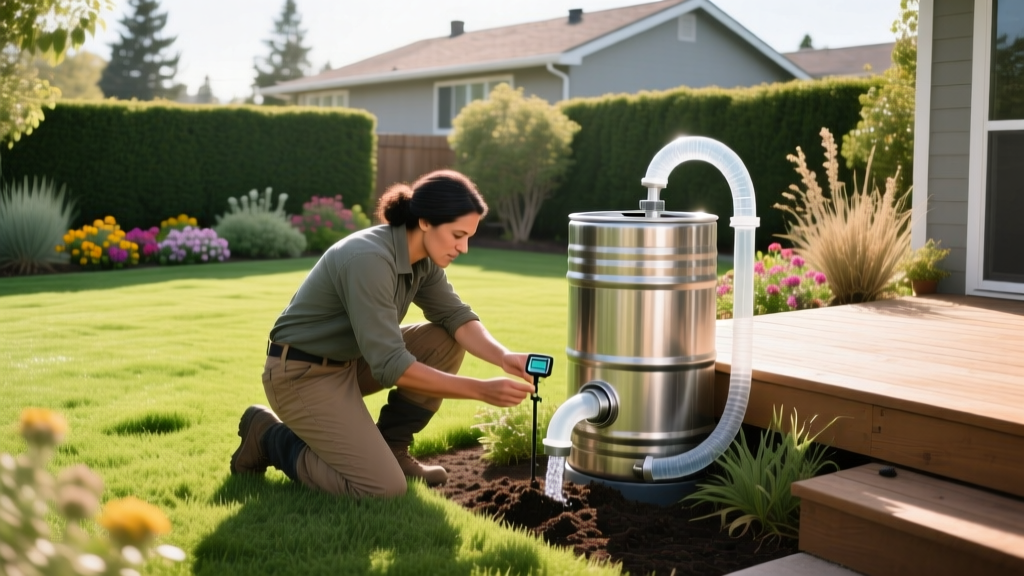
Is It Illegal to Collect Rainwater in Oregon? Legal Guide & Setup Tips
The Short Answer: Is Rainwater Harvesting Illegal in Oregon?
No, it is not illegal to collect rainwater in Oregon. In fact, the state actively encourages residential rainwater harvesting to reduce stormwater runoff and ease the burden on municipal water treatment facilities during the wet winter months. According to the Oregon Water Resources Department (OWRD), homeowners can legally capture and store rainwater without a water right permit, provided the collection system meets specific structural and usage criteria.
However, the legality hinges entirely on where you collect the water and how you intend to use it. While catching rain from your existing asphalt shingle or metal roof is fully exempt from water rights permitting, constructing a dedicated ground-based catchment pond or damming a seasonal creek on your property requires strict regulatory oversight and formal water rights.
Oregon Rainwater Collection Laws: The Legal Matrix
To understand the boundaries of Oregon water law regarding residential collection, review the compliance matrix below. This framework distinguishes between exempt residential activities and regulated commercial or agricultural operations.
| Collection Method | Primary Use Case | Legal Status in Oregon | OWRD Permit Required? |
|---|---|---|---|
| Existing Residential Roof | Landscape irrigation, non-potable | Fully Legal & Exempt | No |
| Existing Residential Roof | Indoor potable (drinking) | Legal (Subject to DEQ/County health codes) | No (Water Right), Yes (Health) |
| Ground-based Swale/Pond | Agricultural or large-scale storage | Regulated | Yes (Water Right & Dam Safety) |
| Detached Garage/Shop Roof | Non-potable outdoor use | Fully Legal & Exempt | No |
| Temporary Tarp Canopy | Emergency catchment | Gray Area (Not a 'constructed roof') | Technically No, but discouraged |
The Roof-Catchment Exemption Explained
Oregon law provides a clear exemption for rainwater harvested from the roof of an existing, constructed building. The key legal phrase here is "constructed building." The OWRD defines this as a permanent structure with a solid roof. You cannot string a 40x40 foot polyethylene tarp between four oak trees, claim it is a "roof," and legally capture thousands of gallons of water without potentially infringing on existing downstream water rights. Stick to your home, garage, or permitted shed roofs to remain entirely compliant.
Sizing Your System for the Pacific Northwest Climate
Oregon's climate is defined by distinct wet and dry seasons. The western part of the state (including the Willamette Valley and Portland metro) receives between 35 to 45 inches of rain annually, with the vast majority falling between November and April. Sizing your catchment system requires balancing winter overflow management with summer drought resilience.
💡 The 600-Gallon Rule: For every 1 inch of rain that falls on 1,000 square feet of roof space, you can harvest approximately 600 gallons of water. A standard 2,000 sq. ft. Oregon home can capture 1,200 gallons from a single half-inch rainstorm.
To handle this volume, standard 50-gallon decorative rain barrels are often insufficient for Oregon winters. Experienced homeowners opt for 275-gallon or 330-gallon IBC (Intermediate Bulk Container) totes. These food-grade, UV-protected polyethylene tanks cost between $120 and $180 when sourced from local agricultural suppliers, offering a vastly superior cost-per-gallon ratio compared to $90 decorative barrels that hold a fraction of the volume.
Installation Blueprint: Compliant Setup Steps
Installing a system that complies with local municipal codes and protects your home's foundation requires precise component selection. Follow this sequence for a robust setup:
- Upgrade to 5-Inch K-Style Gutters: Standard 4-inch gutters easily overflow during heavy Pacific Northwest downpours. Upgrade to 5-inch or 6-inch seamless aluminum gutters to ensure maximum capture efficiency.
- Install Stainless Steel Mesh Gutter Guards: Oregon's Douglas fir and bigleaf maple trees drop needles and leaves that quickly clog standard screens. Use micro-mesh stainless steel guards to keep organic debris out of your storage tanks.
- Integrate a First-Flush Diverter: The first 10 to 15 gallons of runoff contain bird droppings, pollen, and roof grit. Install a PVC first-flush diverter on your downspout to route this contaminated water away from your main storage tank, ensuring cleaner water for your garden.
- Deploy BTI Mosquito Dunks: Standing water is a breeding ground for pests. Drop a quarter of a Bti (Bacillus thuringiensis israelensis) dunk into your IBC tote every 30 days during the summer. Bti is highly targeted and safe for plants and pets.
- Engineer a Safe Overflow Route: Your tank will overflow in January. Connect a 2-inch PVC overflow pipe near the top of the tank and route it at least 10 feet away from your home's foundation into a dry well or a designated stormwater swale.
Municipal Nuances: Portland, Eugene, and Beyond
While state law permits collection, local municipalities have their own stormwater management incentives and plumbing codes. The EPA WaterSense program highlights how local programs often supplement state laws.
- Portland (BES): The Bureau of Environmental Services offers the Downspout Disconnection Program. While they no longer provide direct cash rebates for rain barrels, they offer technical guidance and permit exemptions for homeowners who disconnect downspouts from the combined sewer system to reduce basement backups.
- Eugene: The city's stormwater management guidelines encourage on-site retention. Homeowners installing large-scale cisterns (over 1,000 gallons) may qualify for reduced stormwater utility fees, provided the system includes an automated bleed-down valve to create empty storage capacity before forecasted atmospheric river events.
- Rural Counties (Deschutes, Jackson): In drier, eastern and southern counties, rainwater collection is viewed as a critical fire-safety measure. Some rural fire districts recommend maintaining a dedicated 500-gallon "drafting tank" specifically for emergency structure defense, which is fully legal and often coordinated with local fire marshals.
Common Legal Pitfalls and How to Avoid Them
Even though the state permits collection, homeowners frequently run into secondary legal and safety issues:
1. Cross-Connection with Municipal Drinking Water
If you plan to pump harvested rainwater into your home for flushing toilets or running laundry, Oregon plumbing code strictly prohibits any physical cross-connection between your rainwater system and the municipal potable water supply. You must install a verified, testable Reduced Pressure Zone (RPZ) backflow preventer and, in many counties, secure a separate purple-colored piping system to visually distinguish non-potable lines from drinking water lines.
2. HOA Aesthetic Restrictions
Oregon Revised Statutes (ORS 94.650) strictly limit Homeowner Associations from banning solar panels and drought-resistant landscaping. However, rain barrels are not explicitly granted the same sweeping statutory protections against aesthetic regulation. If you live in an HOA, they can legally dictate the color, placement, and screening of your rain barrels. To avoid fines, place IBC totes behind privacy fencing or use cedar lattice screens to integrate them into your landscape design.
3. Winter Freeze Damage
While not a legal issue, failing to winterize your system leads to catastrophic property damage and neighbor disputes. Water expands by 9% when it freezes. An IBC tote left full during a 15°F cold snap in the Willamette Valley will rupture, flooding your property and potentially your neighbor's. By November 15th, drain your tanks, leave the bottom spigot open, and disconnect the downspout diverter to allow winter runoff to bypass the system entirely.
Frequently Asked Questions
Can I use collected rainwater for drinking in Oregon?
Technically yes, but it requires navigating a complex web of county health department regulations. You must install a multi-stage filtration system including a 5-micron sediment filter, an activated carbon block, and a high-dose UV sterilization unit. Furthermore, your county health department will require annual water testing for coliform bacteria and heavy metals. For most homeowners, the cost of permitting and testing far exceeds the benefit, making irrigation the most practical use case.
Do I need to pay taxes or fees on the water I collect?
No. The water falling on your roof is considered a natural precipitation event. Because you are intercepting it before it reaches the ground and becomes part of the state's regulated surface or groundwater systems, the OWRD does not assess volumetric taxes, fees, or usage charges on residential roof catchment.
What is the best roofing material for clean catchment?
Standing seam metal roofs are the gold standard for rainwater harvesting. They shed debris easily, do not leach asphalt chemicals, and yield the highest water quality. If you have a standard asphalt composite shingle roof, the water is perfectly safe for ornamental plants and lawns, but the Oregon State University Extension Service recommends avoiding using raw, unfiltered asphalt-roof runoff directly on root vegetables or leafy greens due to potential trace hydrocarbon leaching.

