
Home & Garden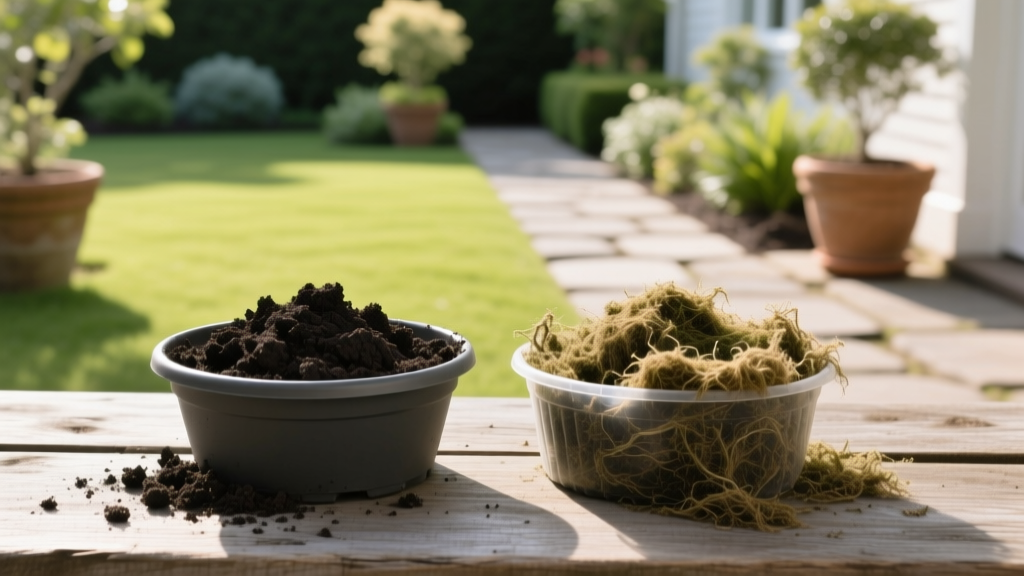
Peat Dirt vs Peat Moss: What to Buy for Garden Soil Amendments
Walk into any garden center and you will likely encounter bags labeled as 'peat soil', 'peat humus', or colloquially, 'peat dirt'. For homeowners looking to amend heavy clay or nutrient-poor sandy soil, the terminology can be deeply confusing. Is peat dirt the same as the compressed bales of sphagnum peat moss used by professional horticulturists? The short answer is no. Understanding the exact physical and chemical differences between these products is critical for soil structure, moisture retention, and long-term plant health.
This guide breaks down the horticultural reality of peat-based amendments, outlines the environmental shifts impacting peat availability in 2026, and provides exact application ratios for transforming your garden beds.
The Terminology Trap: What is Peat Dirt Really?
In commercial horticulture, 'peat dirt' is not a recognized scientific classification. It is almost always a marketing colloquialism used for one of three distinct products. Confusing them can lead to disastrous pH imbalances or soil compaction.
1. Sphagnum Peat Moss
Harvested from the living, fibrous upper layers of peat bogs, pure peat moss is highly acidic (pH 3.5 to 4.5) and possesses an exceptional water-holding capacity—up to 20 times its dry weight. It contains virtually no nutritional value (N-P-K is near zero) and is used strictly as a physical soil conditioner to improve aeration and moisture retention.
2. Peat Soil (or Peat Dirt)
Often sold in heavy, damp bags, peat soil is typically a blend of decomposed peat humus (harvested from the lower, older layers of the bog), mineral topsoil, and sometimes sand. It is heavier, darker, and less acidic than pure peat moss (pH 5.0 to 6.0). While it adds organic matter, it lacks the structural fluffiness required to break up heavy clay.
3. Peat Humus
This is the highly decomposed, bottom-layer material of a peat bog. It is dark, heavy, and holds less water than peat moss. It acts more like traditional compost but is highly acidic and breaks down much slower.
Amendment Comparison Matrix
Before purchasing bulk soil amendments, compare the physical properties and current 2026 market pricing to ensure you are selecting the right material for your specific soil profile.
| Amendment Type | Average pH | Water Retention | Cation Exchange Capacity (CEC) | Approx. Cost (per cu. ft.) |
|---|---|---|---|---|
| Pure Sphagnum Peat Moss | 3.5 - 4.5 | Very High (20x weight) | High (100-200 meq/100g) | $4.50 - $6.00 |
| Bagged 'Peat Dirt' / Peat Soil | 5.0 - 6.0 | Moderate | Moderate (50-80 meq/100g) | $2.00 - $3.50 |
| Buffered Coco Coir | 5.5 - 6.5 | High (10x weight) | Moderate (90-100 meq/100g) | $3.50 - $5.00 |
| Composted Pine Bark Fines | 4.5 - 5.5 | Low to Moderate | Low (20-40 meq/100g) | $1.50 - $2.50 |
The Hydrophobic Effect: A Critical Warning
Warning: The Dry Peat Problem
Pure peat moss becomes severely hydrophobic (water-repellent) once it dries out completely. If you apply dry peat dirt or peat moss directly to a garden bed and water it from above, the water will simply run off the surface or channel down the sides of the root ball, leaving the core dry. The Fix: Always pre-hydrate peat-based amendments in a wheelbarrow with warm water and a few drops of natural surfactant (like yucca extract) before incorporating them into your soil.
How to Amend Specific Soil Profiles
According to soil science research from the University of Wisconsin-Madison Extension, the effectiveness of peat-based amendments depends entirely on your native soil texture. Here is how to engineer your soil structure using precise volumetric ratios.
Amending Heavy Clay Soil
Clay soil suffers from poor drainage and severe compaction. Adding 'peat dirt' (which is already heavy and dense) will only make clay worse. You need the structural lift of pure peat moss or composted pine bark.
- Calculate Volume: For a 100-square-foot bed, you need to amend the top 6 inches of soil. This requires roughly 50 cubic feet of total amendment mix.
- The Ratio: Mix 30% pure sphagnum peat moss, 30% coarse compost, and 40% native clay soil.
- pH Buffering: Because peat moss is highly acidic, you must add 5 to 7 pounds of pelleted calcitic lime per 100 square feet to neutralize the pH back to a plant-friendly 6.5.
- Incorporation: Use a rear-tine tiller to blend the mixture to a depth of 6 to 8 inches. Do not over-till, or you will destroy the soil aggregates.
Amending Sandy Soil
Sandy soil drains too quickly and leaches nutrients. Here, the high Cation Exchange Capacity (CEC) and water-holding properties of peat soil and peat moss are highly beneficial.
- The Ratio: Blend 40% peat moss or peat soil, 40% organic compost, and 20% native sand.
- Moisture Locking: The fibrous nature of the peat will act like a sponge, trapping water and dissolved fertilizers that would otherwise wash past the root zone.
- Top Dressing: Sandy soils require annual replenishment. Apply a 1-inch layer of peat-compost mix every spring to maintain organic matter levels.
Environmental Realities and Peat Alternatives
The environmental impact of peatland harvesting has become a major focal point for global conservation efforts. Peat bogs are massive carbon sinks; when harvested, they release centuries of stored carbon into the atmosphere. Organizations like the International Peatland Society emphasize the need for responsible management, while regions like the UK have pushed aggressive timelines for banning the sale of peat-based composts to retail gardeners, a trend influencing global supply chains and prices in 2026.
For eco-conscious homeowners, or those facing localized peat shortages, modern alternatives offer comparable physical properties without the carbon footprint.
1. Buffered Coco Coir
Made from the husks of coconuts, coir is the premier sustainable alternative to peat moss. Unlike raw coir, which is high in sodium, buffered coir has been treated with calcium and magnesium to displace salts. It wets much faster than peat moss and does not become hydrophobic when dry. Expect to pay roughly $15 for a 10-pound compressed brick, which expands to about 2.5 cubic feet.
2. Composted Rice Hulls
Parboiled rice hulls are an excellent, lightweight amendment for improving drainage in heavy soils. They break down slower than peat, providing long-term aeration, and are generally a byproduct of the agricultural industry, making them highly sustainable.
3. Leaf Mold
If you have mature deciduous trees, leaf mold is a free, highly effective alternative to peat soil. While it takes 12 to 18 months to break down in a dedicated wire bin, the resulting fungal-rich humus mimics the forest floor and provides incredible moisture retention and soil biology support.
Frequently Asked Questions
Can I use peat dirt for starting seeds indoors?
No. Bagged 'peat dirt' or peat soil is too heavy, dense, and potentially harbors soil-borne pathogens. Seed starting requires a sterile, lightweight, soilless mix. Use pure, milled sphagnum peat moss blended with coarse vermiculite and perlite (the classic 1:1:1 Peat-Lite mix) for optimal germination and root penetration.
Does peat moss expire or go bad?
Peat moss does not expire. Because it is highly acidic and anaerobic, it resists decomposition. A dry, compressed bale stored in a garage for five years will perform exactly the same as a fresh bale, provided it is thoroughly rehydrated before use.
How do I know if my soil needs peat or compost?
Use compost when your soil lacks nutrients and biological activity. Use peat moss when your soil lacks physical structure (poor water retention in sand, or poor aeration in clay). For most residential garden beds, a combination of both yields the best results.