
Home & Garden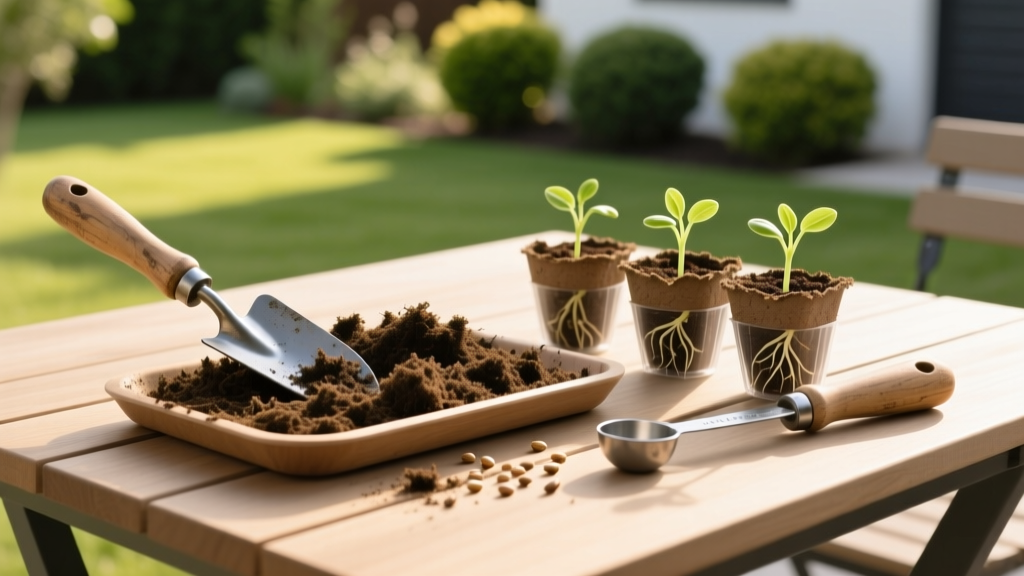
Practical Peat Moss Uses for Soil Amendment and Seed Starting
The Science of Sphagnum: Why Peat Moss Works
Sphagnum peat moss is the partially decomposed remains of sphagnum moss, harvested primarily from northern bogs in Canada and the northern United States. Unlike surface mulches, peat moss is a structural soil amendment designed to be incorporated into the root zone. Its unique cellular structure gives it unparalleled physical and chemical properties that synthetic alternatives struggle to replicate.
Core Chemical & Physical Data
- pH Level: 3.0 to 4.5 (highly acidic)
- Cation Exchange Capacity (CEC): 100 to 150 meq/100g (excellent nutrient retention)
- Water Holding Capacity: Holds 10x to 20x its dry weight in moisture
- Carbon-to-Nitrogen (C:N) Ratio: 50:1 to 100:1
According to the Soil Science Society of America, a high CEC is critical for sandy soils that naturally leach nutrients. Peat moss acts as a molecular sponge, holding onto positively charged ions (like calcium, magnesium, and potassium) and releasing them to plant roots on demand.
Primary Peat Moss Uses in the Home Garden
1. Lowering Soil pH for Acid-Loving Plants
Because sphagnum peat moss naturally sits at a pH of 3.0 to 4.5, it is the premier organic amendment for acidifying alkaline or neutral soils. Plants like blueberries, azaleas, rhododendrons, and hydrangeas require a soil pH between 4.5 and 5.5 to properly absorb iron and manganese.
Application Protocol: To lower the pH of a loam soil by roughly 1.0 point, incorporate 2.5 pounds of dry peat moss per 10 square feet of bed space. For heavy clay soils, increase this to 3.5 pounds per 10 square feet, as clay's high buffering capacity resists pH changes. Till the peat into the top 6 to 8 inches of soil at least four weeks before planting to allow the acidity to integrate and stabilize.
2. Moisture Retention in Sandy and Fast-Draining Soils
Sandy soils drain too quickly, leaving shallow-rooted vegetables and annuals drought-stressed. Incorporating peat moss increases the soil's field capacity. When amending a new vegetable bed with sandy loam, apply a 2-inch layer of peat moss over the surface and rototill it into the top 6 inches. This yields a 25% by-volume amendment ratio, drastically reducing irrigation frequency during peak summer heat.
Formulating Seed Starting and Potting Mixes
Peat moss is the backbone of commercial and DIY propagation mixes. Its fine texture (specifically H1 to H2 grade milled peat) provides excellent seed-to-soil contact while remaining light enough to allow delicate radicles (embryonic roots) to penetrate easily.
The Master Seed-Starting Recipe
Ratio: 1/3 Sphagnum Peat Moss (H2 grade) | 1/3 Coarse Perlite | 1/3 Fine Vermiculite
Cost Analysis (2026): A 3.0 cu. ft. bale of Canadian Sphagnum retails for $22–$28. Combined with perlite and vermiculite, this yields roughly 45 gallons of premium seed-starting mix for under $45, compared to $120+ for equivalent volumes of bagged commercial mixes.
Crucial Step: Peat moss contains no inherent nutrients. You must water the mix with a half-strength liquid kelp emulsion or a diluted 10-10-10 water-soluble fertilizer once the first true leaves emerge.
Critical Application Mistakes and Failure Modes
Despite its benefits, improper use of peat moss leads to severe horticultural failures. Avoid these common edge cases:
Warning: The Hydrophobic Failure Mode
When peat moss dries out completely, the waxy coatings on the sphagnum cell walls make it highly hydrophobic (water-repellent). If you top-dress a garden bed with dry peat, water will simply run off the surface.
The Fix: Never apply dry peat directly to a garden bed. Pre-moisten the peat in a wheelbarrow before application. For a standard 3.0 cu. ft. bale, add 4 to 5 gallons of warm water mixed with 1 teaspoon of non-antibacterial liquid dish soap. The soap acts as a surfactant, breaking the water's surface tension and forcing it into the dry peat fibers. Let it sit for 30 minutes before incorporating.
The Nitrogen Tie-Up Phenomenon
Because peat moss has a high C:N ratio (up to 100:1), soil microbes will consume available soil nitrogen to break down the carbon. If you incorporate raw peat moss into an established vegetable garden without supplemental nitrogen, your plants will suffer acute chlorosis (yellowing leaves) due to nitrogen starvation. Always add a fast-acting nitrogen source—such as blood meal (12-0-0) at a rate of 2 lbs per 1,000 sq ft—when tilling raw peat into active garden beds.
Peat Moss vs. Alternatives: A Decision Matrix
While the Royal Horticultural Society heavily promotes peat-free alternatives for environmental conservation, North American gardeners still rely on Canadian sphagnum, which is harvested under strict provincial sustainability regulations. Use this matrix to choose the right amendment for your specific scenario:
| Amendment | Natural pH | Best Use Case | Primary Drawback |
|---|---|---|---|
| Sphagnum Peat Moss | 3.0 - 4.5 | Acidifying soil, seed starting, moisture retention | Hydrophobic when dry; causes N tie-up |
| Coco Coir | 5.5 - 6.8 | Neutral pH amendment, hydroponics, container gardens | High salt content if unwashed; poor aeration alone |
| Pine Bark Fines | 4.5 - 5.5 | Long-term structural aeration, orchid mixes, shrub beds | Very low water retention; slow to break down |
| Leaf Mold | 6.0 - 7.0 | Woodland gardens, fungal-dominated soil food webs | Takes 2 years to compost; low CEC |
Quick Reference: Peat Moss Application Rates
Use the following baseline measurements when incorporating H3-grade (general purpose) peat moss into existing garden beds. Rates assume a target incorporation depth of 6 inches.
| Soil Type | Application Rate (per 100 sq ft) | Expected pH Shift | Supplemental N Required |
|---|---|---|---|
| Sandy Loam | 15 lbs (approx. 2.5 cu ft) | -1.2 pH points | 1.5 lbs actual N |
| Silt Loam | 25 lbs (approx. 4.0 cu ft) | -1.0 pH points | 2.0 lbs actual N |
| Heavy Clay | 35 lbs (approx. 5.5 cu ft) | -0.6 pH points | 2.5 lbs actual N |
By understanding the precise chemical behavior of sphagnum peat moss, you can move beyond generic gardening advice and engineer soil environments that perfectly match the physiological needs of your specific plant palette.

