
Home & Garden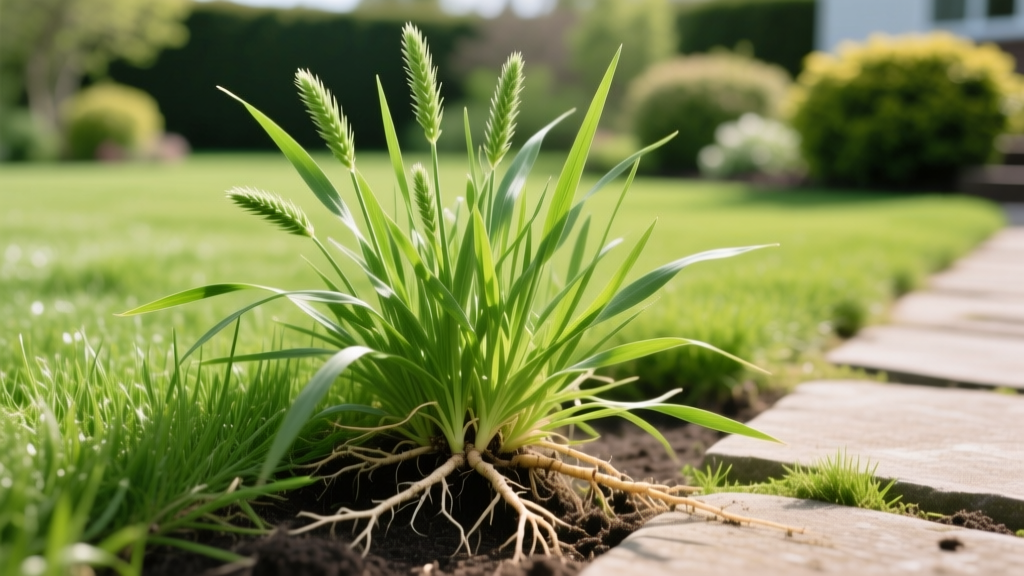
Quackgrass Images and Identification: Spot-Treatment Guide
Why Quackgrass Images Are Critical for Proper Identification
Homeowners frequently search for quackgrass images because Elymus repens is notoriously difficult to distinguish from desirable cool-season turfgrasses like tall fescue or perennial ryegrass. Misidentification is the primary reason eradication attempts fail; applying a broadleaf herbicide like 2,4-D to quackgrass will not harm it, while applying a standard crabgrass pre-emergent will not stop its perennial rhizomes from spreading. Before purchasing any herbicide, you must visually confirm the weed using the specific morphological markers detailed below.
The Collar Region: The Ultimate Diagnostic Zone
When examining quackgrass images or inspecting your lawn, pull a single stem upward to expose the collar (the junction between the leaf blade and the sheath). Quackgrass possesses distinct auricles—slender, claw-like appendages that clasp the stem. This is the most reliable visual differentiator. Additionally, the ligule (the membrane at the inner collar) is very short and truncate, and the vernation (how new leaves emerge) is rolled, not folded.
| Morphological Trait | Quackgrass (Elymus repens) | Crabgrass (Digitaria) | Tall Fescue (Festuca arundinacea) |
|---|---|---|---|
| Auricles | Prominent, claw-like, clasping | Absent | Absent or very rudimentary |
| Vernation | Rolled | Folded | Rolled |
| Ligule | Short, membranous, truncate | Long, membranous, jagged | Short, membranous, rounded |
| Growth Habit | Upright, spreads via rhizomes | Prostrate, spreads via stolons | Bunch-type, minimal spread |
The Biology Behind the Problem: Rhizome Networks
According to Penn State Extension, quackgrass is an aggressive perennial that spreads primarily through an extensive network of underground rhizomes, not just seed. These white, scaly rhizomes can penetrate compacted soil up to 6 inches deep and extend horizontally several feet from the mother plant.
Warning: The Pulling Trap
Never attempt to hand-pull or rototill quackgrass. The rhizomes are brittle; a single node measuring just 1/2 inch can regenerate into a fully mature plant within 14 days. Mechanical disruption actually multiplies the infestation by chopping the rhizomes into dozens of viable propagules.
Spot-Treatment Protocols by Lawn Type
Because quackgrass is a grassy weed invading a grassy lawn, selective control is highly complex. The treatment protocol depends entirely on your turfgrass species.
Cool-Season Lawns (Kentucky Bluegrass, Fescue, Ryegrass)
There is no highly effective, fully selective post-emergent herbicide for quackgrass in cool-season turf that leaves the desirable grass completely unharmed. You have two primary chemical options:
Option 1: Glyphosate Spot-Wiping (The Gold Standard)
Use a non-selective herbicide containing 41% glyphosate (e.g., Ranger Pro or Compare-N-Save). Mix at a 2% solution rate: 2.6 fluid ounces of product per gallon of water. Instead of spraying, use a sponge-tipped wiper applicator or a small paintbrush to coat only the quackgrass blades. This minimizes collateral damage to surrounding fescue or bluegrass. Expect complete necrosis in 7 to 10 days. Cost: Approximately $35 per gallon, which will last a homeowner a decade for spot treatments.
Option 2: Mesotrione Suppression (Tenacity)
If the infestation is too widespread for wiping, mesotrione (brand name Tenacity) can be used. It inhibits photosynthesis, turning the quackgrass stark white while leaving cool-season turf largely green. Mix at 1 teaspoon per gallon of water, adding 1 teaspoon of a non-ionic surfactant. Apply three times at 14-day intervals. Note that this suppresses and weakens the weed but rarely eradicates deep rhizomes entirely without overseeding competition.
Warm-Season Lawns (Bermudagrass, Zoysia, Centipede)
Warm-season turf managers have a distinct advantage. The active ingredient sulfosulfuron (brand name Certainty) provides excellent selective control of quackgrass in dormant or fully green Bermudagrass and Zoysia. Apply at a rate of 1.25 ounces per acre (roughly 0.03 ounces per 1,000 square feet) with a methylated seed oil (MSO) surfactant. Because Certainty is often restricted to commercial applicators, homeowners may need to hire a licensed professional or look for smaller, legally permissible generic sulfosulfuron formulations online.
Step-by-Step Eradication and Lawn Repair
Following the University of Minnesota Extension guidelines for perennial weed management, follow this timeline for complete lawn restoration after chemical application:
- Day 1: Apply glyphosate via spot-wiping on a calm day with temperatures between 65°F and 85°F. Do not mow for 48 hours prior or 48 hours after to ensure maximum leaf surface area for herbicide absorption.
- Day 14: The quackgrass should be completely brown and dead. Rake out the necrotic thatch and debris down to bare soil.
- Day 15: Core aerate the bare patches to disrupt any remaining shallow rhizome fragments and improve seed-to-soil contact.
- Day 16: Overseed with a matching turfgrass cultivar. For tall fescue lawns, use a premium blend like Titan Ultra at a rate of 8 lbs per 1,000 square feet. Top-dress with 1/4 inch of screened compost.
- Day 17: Apply a starter fertilizer (e.g., 10-18-10 NPK) to fuel rapid germination and outcompete any late-emerging quackgrass shoots.
Frequently Asked Questions
Can I use pre-emergent herbicides to stop quackgrass?
No. Pre-emergents like prodiamine or dithiopyr only prevent seeds from germinating. Because quackgrass spreads primarily via established underground rhizomes, pre-emergents will not stop an existing infestation from expanding laterally beneath the soil surface.
Will vinegar or organic herbicides kill quackgrass?
Horticultural vinegar (20% acetic acid) is a contact burn-down agent. It will scorch the top growth of quackgrass within hours, but it lacks the systemic translocation required to reach and kill the deep rhizome network. The weed will reliably resprout from the roots within two weeks, making organic burn-downs a waste of time and money for this specific species.
How long does glyphosate take to reach the rhizomes?
Glyphosate is a systemic herbicide. Once absorbed through the leaf cuticle, it takes roughly 5 to 7 days to translocate down through the phloem into the rhizome nodes. This is why you must not mow or pull the dead leaves prematurely; the plant needs time to pull the chemical into its root system.

