
Home & Garden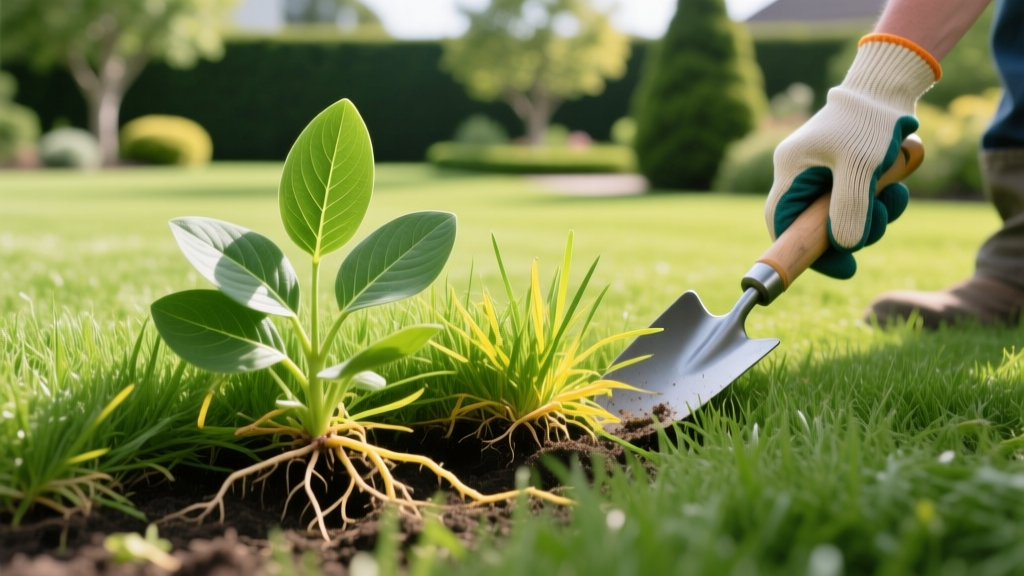
Quackgrass Pictures, Identification, and Spot-Treatment Guide
The Visual Guide: Quackgrass Pictures and Key Identifiers
Searching for quackgrass pictures online often leads to confusion. Because Elymus repens (formerly Agropyron repens) is a cool-season perennial grass, it visually mimics desirable turfgrasses like Kentucky bluegrass and tall fescue from a distance. Relying solely on leaf blade width or color is a primary reason homeowners fail to identify it until it has colonized large sections of the yard. To accurately identify quackgrass, you must examine the micro-structures of the plant, specifically the collar region and the root system.
The 'Pull Test' Diagnostic: Grab a handful of the suspect grass and pull upward. If it snaps cleanly at the soil line, it is likely an annual weed or a bunch-type turfgrass. If it yields long, white, segmented, and sharply pointed underground stems (rhizomes) that smell faintly of ginger or sweet earth, you have confirmed quackgrass.
Critical Botanical Markers
- Auricles: This is the definitive identifier. Look at the collar (where the leaf blade meets the sheath). Quackgrass possesses distinct, claw-like auricles that wrap around the stem. Tall fescue and crabgrass lack these entirely.
- Ligule: The membrane at the inner junction of the leaf and sheath is very short, blunt, and membranous.
- Vernation: Young leaves emerge rolled (rolled vernation) rather than folded.
- Rhizomes: White to pale yellow, capable of growing up to 6 inches deep and extending several feet laterally. Each node on the rhizome contains a viable bud capable of generating a new shoot.
Quackgrass vs. Tall Fescue vs. Crabgrass: A Comparison Matrix
Misidentification leads to ineffective chemical applications. Use this matrix to cross-reference your lawn's intruders before purchasing herbicides.
| Trait | Quackgrass (Elymus repens) | Tall Fescue (Desirable) | Crabgrass (Annual Weed) |
|---|---|---|---|
| Auricles | Present (Claw-like) | Absent | Absent |
| Root System | Extensive white rhizomes | Deep fibrous bunch roots | Shallow fibrous roots |
| Growth Habit | Aggressive lateral spread | Upright bunch-type | Prostrate, star-shaped |
| Pre-Emergent Control | Ineffective (Perennial) | N/A (Desired Turf) | Highly Effective |
Why Spot-Treating Quackgrass is Notoriously Difficult
The primary challenge with Elymus repens is its rhizomatous reproduction and allelopathic properties. When you attempt to dig or till quackgrass, the mechanical action chops the rhizomes into fragments. According to Penn State Extension, a single rhizome fragment containing just one node can regenerate a fully established plant within weeks. Tilling a quackgrass patch effectively multiplies the problem, turning one colony into dozens.
Furthermore, quackgrass exhibits allelopathy—it exudes biochemicals from its roots that inhibit the germination and growth of competing plants, including your desirable turfgrass and garden ornamentals. This creates a monoculture patch where nothing else can easily establish, making post-eradication recovery a specific challenge.
Step-by-Step Spot-Treatment Protocol
Because quackgrass is a grassy weed growing within a grassy lawn, selective post-emergent herbicides that are safe for cool-season lawns are virtually non-existent for homeowners. Products containing Fenoxaprop-p-ethyl (Acclaim Extra) can suppress young quackgrass but are largely restricted to professional applicators. Mesotrione (Tenacity) will temporarily bleach and suppress it, but will not eradicate the rhizome network. Therefore, targeted non-selective eradication is required.
Phase 1: The Wick Applicator Method (For Lawn Patches)
Spraying non-selective herbicide over a lawn patch will kill your desirable turf. Instead, use a targeted application technique.
- Prepare the Solution: Mix a 41% Glyphosate concentrate (e.g., Roundup Pro Concentrate or Compare-N-Save) at a rate of 3 to 4 fluid ounces per gallon of water. Add a non-ionic surfactant if not included in the product.
- Load the Wick: Pour the solution into a sponge-tipped wick applicator or a specialized rope-wick weeding tool.
- Targeted Painting: Wearing nitrile gloves, physically wipe the sponge directly onto the quackgrass blades. The herbicide must contact the foliage to translocate down into the rhizomes.
- Patience is Mandatory: Do not mow for 48 hours before application, and do not mow or water for 7 days post-application. The plant needs time to pull the systemic chemical into the root nodes.
Warning: Ornamental Bed Treatments
If quackgrass has invaded flower beds, do NOT use glyphosate near desirable plants. Instead, use a selective grassy-weed killer containing Fluazifop-p-butyl (e.g., Ortho Grass-B-Gon for Landscapes). This chemical kills grassy weeds but is safe for broadleaf ornamentals. Note: Fluazifop is NOT safe for use on lawn turf.
If quackgrass has invaded flower beds, do NOT use glyphosate near desirable plants. Instead, use a selective grassy-weed killer containing Fluazifop-p-butyl (e.g., Ortho Grass-B-Gon for Landscapes). This chemical kills grassy weeds but is safe for broadleaf ornamentals. Note: Fluazifop is NOT safe for use on lawn turf.
Phase 2: The Smother and Solarize Method (For Severe Infestations)
If a patch exceeds 100 square feet, chemical painting becomes impractical. The University of Minnesota Extension recommends physical smothering for large-scale organic eradication.
- Mow the infested area as low as your mower deck allows (scalping it down to 1 inch).
- Cover the area with overlapping layers of heavy, uncoated cardboard.
- Top the cardboard with 3 to 4 inches of heavy organic mulch or compost.
- Leave the barrier in place for a minimum of one full growing season. The rhizomes will eventually exhaust their carbohydrate reserves and die.
The Pre-Emergent Myth
A common point of failure in lawn care routines is relying on spring pre-emergent herbicides like Prodiamine (Barricade) or Dithiopyr (Dimension) to stop quackgrass. These chemicals create a chemical barrier at the soil surface that inhibits the cell division of germinating seeds. Because quackgrass spreads primarily through established underground rhizomes pushing up from deep within the soil profile, pre-emergents offer zero protection against it. Save your pre-emergent budget for annual weeds like crabgrass and goosegrass.
Post-Eradication Lawn Recovery and Soil Repair
Once the quackgrass is dead and the rhizomes are no longer viable, you must repair the bare spots before opportunistic weeds take over.
- Rake and Remove: Vigorously rake out the dead thatch and debris left by the dead quackgrass.
- Neutralize Allelopathy: Apply a thin layer (1/4 inch) of high-quality compost over the bare soil. The microbial activity in the compost helps break down the residual allelopathic compounds left in the soil by the quackgrass roots.
- Overseed with Competitive Cultivars: Select aggressive, rhizomatous turfgrasses to outcompete future weed incursions. For cool-season lawns, Turf-Type Tall Fescue (TTTF) blends or improved Kentucky Bluegrass cultivars (like 'Midnight' or 'Award') provide a dense canopy that shades out weed seeds.
Frequently Asked Questions
Can I just pull quackgrass out by hand?
Hand-pulling is only effective if the soil is heavily saturated and you can extract the entire rhizome network intact. In typical soil conditions, the rhizomes will snap at the nodes. Every node left behind in the soil will generate a new shoot, often resulting in two or three new plants replacing the one you pulled.
Will vinegar or boiling water kill quackgrass?
Horticultural vinegar (20-30% acetic acid) and boiling water are contact burners. They will instantly desiccate the leaf blades you can see, but they do not translocate into the root system. The rhizomes will simply push up new shoots within 10 to 14 days. Systemic herbicides or long-term smothering are the only viable eradication methods.
Is quackgrass safe for livestock or compost?
While Elymus repens is not highly toxic to livestock, it is a host for various crop diseases and nematodes. Never put quackgrass rhizomes or seed heads into a home compost pile unless your composting method consistently reaches and sustains temperatures above 145°F (62°C) for several weeks. Otherwise, you will simply be cultivating and redistributing the weed across your garden beds.

