
Home & Garden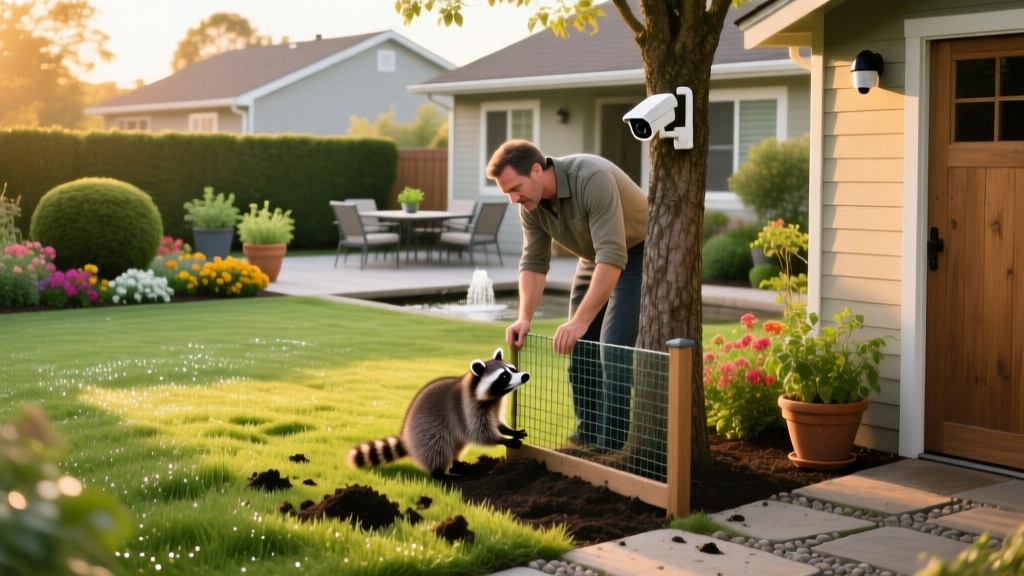
How to Get Rid of Raccoons in Your Yard: A Proven Playbook
Raccoons (Procyon lotor) are not just nuisance scavengers; they are highly intelligent, dexterous mammals with problem-solving capabilities comparable to primates. When learning how to get rid of raccoons in your yard, standard repellents and scare tactics will fail within 48 hours as the animals habituate to the stimuli. A successful removal strategy requires a multi-layered playbook focused on habitat modification, physical exclusion, and targeted sensory deterrents.
⚠️ Health & Safety Warning: Raccoons are primary vectors for rabies and Baylisascaris procyonis (raccoon roundworm). According to the Minnesota Department of Natural Resources, raccoon feces can contain millions of roundworm eggs that remain viable in soil for years. Never clean raccoon latrines without an N95 respirator, heavy rubber gloves, and a 10% bleach solution.
Phase 1: Habitat Modification (Starve Them Out)
Raccoons possess a 5.0/20 visual acuity and rely heavily on their highly sensitive front paws to forage. If your yard provides a high-calorie food source, no physical barrier will keep them out. You must eliminate the caloric incentive.
Securing Waste Receptacles
Standard bungee cords are useless; raccoons can manipulate hooks and loops. Upgrade to a 65-gallon Toter Bear-Resistant cart featuring a gravity-latch lid mechanism, or retrofit your existing bins with an Animal Stopper lid lock ($35-$45). These locks require opposable thumbs and downward twisting pressure that raccoons cannot replicate.
Modifying Bird Feeders
Raccoons will drain standard bird feeders overnight. Switch to safflower seed, which is less appealing to mammals, or use hot pepper-treated suet. Birds lack the TRPV1 receptor that binds capsaicin, meaning products like Cole's Hot Meats will deter raccoons and squirrels without affecting cardinals, woodpeckers, or chickadees. Bring all pet food indoors by 6:00 PM, as nocturnal feeding guarantees raccoon visitation.
Phase 2: Physical Exclusion & Fencing Specs
If habitat modification does not stop the intrusion, you must physically block access to denning sites and garden beds. Raccoons can climb chain-link, wood, and brick, and they can squeeze through gaps as small as 4 inches.
Deck and Porch Skirting
To prevent raccoons from denning under your deck, do not use chicken wire (they will rip it apart). Use 16-gauge, 1/2-inch galvanized hardware cloth. Dig a 1-inch wide, 12-inch deep trench around the perimeter. Insert the hardware cloth into the trench, bend the bottom 6 inches outward into an 'L-shape' to prevent digging, and backfill with soil. Secure the top edge with landscape staples every 24 inches.
Chimney and Roof Access
Install a stainless steel chimney cap with a 24x24 inch base and 1/2-inch mesh. Ensure the cap is bolted to the chimney crown, not just resting on top, as raccoons can easily dislodge friction-fit caps to access the flue for nesting.
Phase 3: Active Deterrents (Sensory Warfare)
When exclusion is impossible (e.g., protecting a large vegetable garden or water feature), active deterrents must be randomized to prevent habituation. The Internet Center for Wildlife Damage Management notes that static deterrents like fake owls or static ultrasonic emitters lose effectiveness within a week.
| Deterrent Type | Specific Product / Spec | Cost Range | Effectiveness & Edge Cases |
|---|---|---|---|
| Motion-Activated Sprinkler | Orbit 62100 Yard Enforcer | $75 - $90 | Highly effective. Set to 'Night Only' mode. Use a 9V lithium battery; alkaline batteries fail in cold weather. |
| Predator Urine | Coyote Urine Granules | $20 - $35 | Moderate. Degrades rapidly under UV light. Must be reapplied every 14-21 days and after heavy rain. |
| Ultrasonic Repellent | Generic 25kHz-50kHz Emitters | $30 - $50 | Low. Studies show raccoons quickly ignore high-frequency sounds if no physical threat is present. |
| Taste/Smell Aversive | Capsaicin-based sprays (Miller Hot Sauce) | $25 - $40 | Good for gardens. Apply to plant foliage. Must be reapplied after irrigation or rainfall. |
Phase 4: Trapping and Relocation (The Legal Reality)
Live trapping using a Havahart 1045 Two-Door Trap ($60-$80) is often viewed as the ultimate solution, but it is fraught with legal and ecological complications. According to UF/IFAS Extension wildlife biologists, relocating raccoons is strictly illegal in many jurisdictions (including California, New York, and Colorado) because they are classified as rabies vector species.
If you trap a raccoon, the law typically mandates that you either release it on the exact property where it was caught (which solves nothing) or humanely euthanize it. Furthermore, trapping a mother in the spring often leaves orphaned kits hidden inside your attic or crawl space, leading to severe structural damage as the starving young attempt to chew their way out.
Professional Wildlife Control: If the infestation involves an attic or structural den, hire a licensed wildlife removal service. Expect to pay $300 to $600 for a complete exclusion and removal job, which includes installing one-way doors that allow the animals to exit but prevent re-entry.
Decision Matrix: Which Tactic Should You Use?
Use this framework to determine your immediate next steps based on the specific raccoon behavior you are observing.
- If raccoons are raiding trash cans: Install Animal Stopper lid locks immediately. Do not rely on weight or bungee cords.
- If raccoons are digging up sod for grubs: Apply beneficial nematodes (Heterorhabditis bacteriophora) to the lawn to eliminate the grub food source, and deploy the Orbit Yard Enforcer sprinkler at dusk.
- If raccoons are denning under a shed or deck: Install 16-gauge hardware cloth skirting in an L-shape. Do this in autumn or winter when kits are not present.
- If raccoons are in the attic: Do NOT trap. Locate the entry point, install a one-way exclusion door, and wait 3-4 days. Once empty, seal the hole with 1/2-inch hardware cloth and steel wool.
By systematically removing food sources, fortifying physical barriers with the correct gauge materials, and utilizing randomized sensory deterrents, you can permanently reclaim your yard without resorting to ineffective gimmicks or illegal relocation practices.