
Home & Garden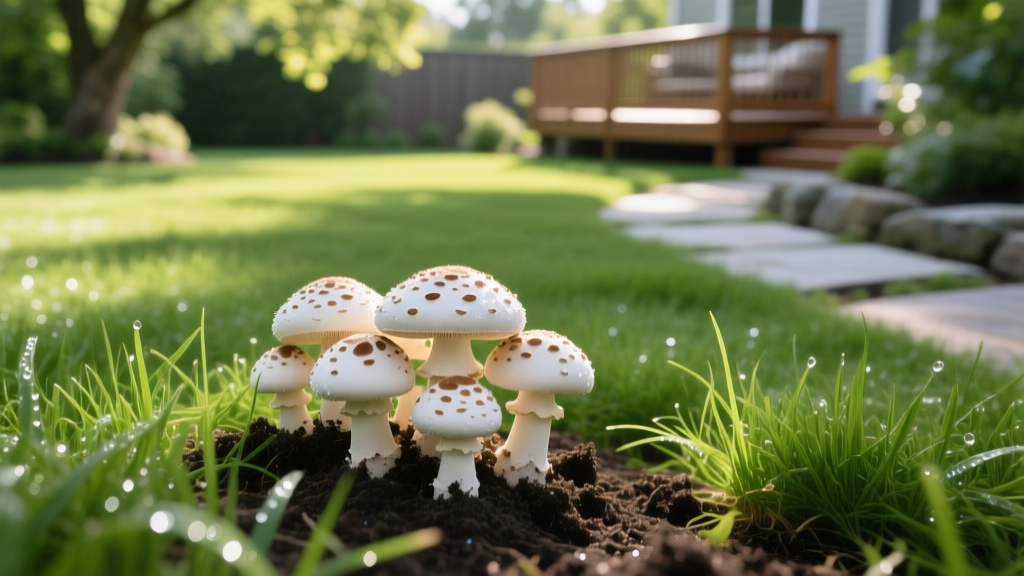
Found a Cluster of Mushrooms in Yard? Safe Removal Guide
Spotting a sudden cluster of mushrooms in yard spaces often triggers immediate concern for homeowners. While these fungal fruiting bodies are a natural part of the soil ecosystem, their sudden appearance above the turfgrass canopy signals specific underlying soil conditions—namely, excessive moisture, decaying organic matter, and compacted soil profiles. Mushrooms are merely the visible reproductive structures of a vast, subterranean mycelial network that can extend several feet deep and wide beneath your lawn.
Understanding the exact species and the soil mechanics driving their growth is the first step toward effective management. This guide provides a diagnostic framework and a step-by-step soil remediation protocol to eliminate the conditions that allow fungal clusters to thrive, without relying on ineffective or environmentally harmful chemical fungicides.
The Biology Behind the Bloom
Mushrooms emerge when subterranean mycelium accumulates enough energy and encounters the right environmental triggers to produce fruiting bodies. According to the University of Minnesota Extension, the primary triggers are prolonged soil moisture, temperatures between 60°F and 80°F, and an abundance of buried carbon-rich organic matter.
Expert Insight: The mycelium network breaking down organic matter in your soil is actually performing a vital ecological service by releasing locked-up nitrogen and phosphorus back into the soil profile. The goal is not to eradicate the fungus entirely, but to manage the thatch and moisture levels so the fruiting bodies stop emerging in high-traffic turf areas.
When you see a cluster of mushrooms in yard environments, it is usually tied to one of three subterranean food sources: a thatch layer exceeding 0.5 inches, buried construction debris (like tree stumps or wood scraps left by builders), or heavy applications of undecomposed organic mulch.
Fungal Identification and Treatment Matrix
Not all mushroom clusters require the same intervention. Identifying the growth pattern and physical characteristics of the cluster will dictate your remediation strategy.
| Fungal Type | Visual Characteristics | Underlying Cause | Primary Treatment Strategy |
|---|---|---|---|
| Fairy Rings (Chlorophyllum molybdes) | Circular or arc-shaped clusters; often accompanied by a ring of dark green, fast-growing grass or dead brown turf. | Decaying thatch or old root systems; hydrophobic soil layers. | Core aeration, soil wetting agents, and targeted nitrogen masking. |
| Ink Caps (Coprinus spp.) | Tall, slender, white-to-gray caps that dissolve into black ink-like liquid within 24 hours. | Buried wood debris, mulch, or decaying tree roots. | Physical removal of buried wood; improving soil drainage. |
| Mycorrhizal Clusters (Amanita spp.) | Classic toadstool shape; often white, yellow, or red with white spots; found near tree drip lines. | Symbiotic relationship with living tree roots (oaks, pines). | Do not treat; these benefit tree health. Simply mow over them. |
The 4-Step Soil Remediation Protocol
If the cluster is causing aesthetic issues or poses a risk to pets, you must alter the soil environment to make it inhospitable for fruiting. Follow this precise remediation sequence.
Step 1: Physical Disruption and Removal
Do not attempt to pull mushrooms by hand, as this leaves the mycelium intact and can spread spores. Instead, set your lawn mower deck to 2.5 inches and mow over the cluster, utilizing the bagger attachment to capture the spore-laden clippings. Dispose of the clippings in your municipal yard waste bin, not your home compost pile, as most residential compost bins do not reach the 140°F threshold required to destroy fungal spores.
Step 2: Thatch Reduction and Core Aeration
Measure your thatch layer using a soil probe or a flat spade. If the spongy, brown organic layer between the soil and the green grass blades exceeds 0.5 inches, it is trapping moisture and feeding the mycelium.
- Dethatching: For cool-season grasses (Kentucky Bluegrass, Fescue), use a power dethatcher (like the Billy Goat HLR-18H) in early fall. For warm-season grasses (Bermuda, Zoysia), dethatch in late spring.
- Core Aeration: Rent a walk-behind core aerator to pull 3-inch deep soil plugs spaced 3 to 4 inches apart. This breaks up hydrophobic soil layers often associated with fairy rings, allowing water to penetrate deeply rather than pooling in the top 2 inches where mycelium thrives.
Step 3: Moisture Calibration
Over-irrigation is the most common catalyst for fungal blooms. Turfgrass generally requires 1 to 1.5 inches of water per week, including rainfall. Switch your irrigation controller to a 'cycle and soak' method: apply 0.25 inches of water, wait 45 minutes for absorption, and repeat. This prevents surface saturation. Furthermore, ensure your soil grade slopes away from the house at a minimum 2% drop (1/4 inch per foot) to prevent low-lying moisture traps.
Step 4: Nitrogen Masking and Surfactants
For persistent fairy rings that cause localized dry spots (Type II fairy rings), the mycelium creates a hydrophobic barrier. Apply a soil wetting agent containing alkylpolyglycosides (such as Aqua-Aid or Lesco HydroWet) at a rate of 3 oz per 1,000 square feet to break the surface tension.
To mask the visual contrast of the dark green fairy ring against the rest of the lawn, apply a fast-release nitrogen fertilizer. Using a synthetic 16-4-8 blend at a rate of 6.25 lbs per 1,000 square feet will deliver exactly 1 lb of actual nitrogen, greening up the surrounding turf to match the ring. The University of Wisconsin-Madison Extension notes that consistent nitrogen applications accelerate the breakdown of the thatch layer by stimulating soil microbes that outcompete the fungi.
⚠️ Toxicity and Pet Safety Warning
Never attempt to identify wild mushrooms using visual guides alone. Species like Amanita phalloides (Death Cap) and Galerina marginata (Deadly Skullcap) can grow in residential yards and are fatal to dogs and humans if ingested. If you have pets or toddlers that roam the yard, physically remove all clusters immediately by mowing and bagging, and restrict access to the area until the mycelium is starved of excess moisture. For definitive identification of a suspicious cluster, contact your local county cooperative extension office or a certified mycologist.
Long-Term Turf Management for Fungal Prevention
Preventing the return of a cluster of mushrooms in yard spaces requires a shift from reactive treatments to proactive soil management. The University of California Integrated Pest Management (IPM) program emphasizes that healthy, vigorously growing turfgrass naturally suppresses fungal fruiting by outcompeting the mycelium for resources and shading the soil surface.
Implement these long-term cultural practices:
- Deep, Infrequent Watering: Water only when the turf shows signs of wilting (footprints remain visible after walking). This encourages deep root growth and allows the topsoil to dry out between irrigation cycles.
- Annual Topdressing: Apply a 1/4-inch layer of coarse, washed river sand over the lawn after core aeration. Sand improves drainage in heavy clay soils and dilutes the thatch layer, making it harder for mycelium to establish a continuous network.
- Grub Control: Grubs feed on grassroots, creating dead patches that invite secondary fungal decomposers. Apply a preventative grub control containing chlorantraniliprole (such as Scotts GrubEx1) in late spring to protect the root system.
By addressing the subterranean environment—reducing thatch, alleviating compaction, and calibrating moisture—you effectively remove the biological triggers that cause mushrooms to fruit. While the mycelium may remain dormant in the soil profile, it will no longer disrupt the aesthetic or safety of your outdoor living space.