Home & Garden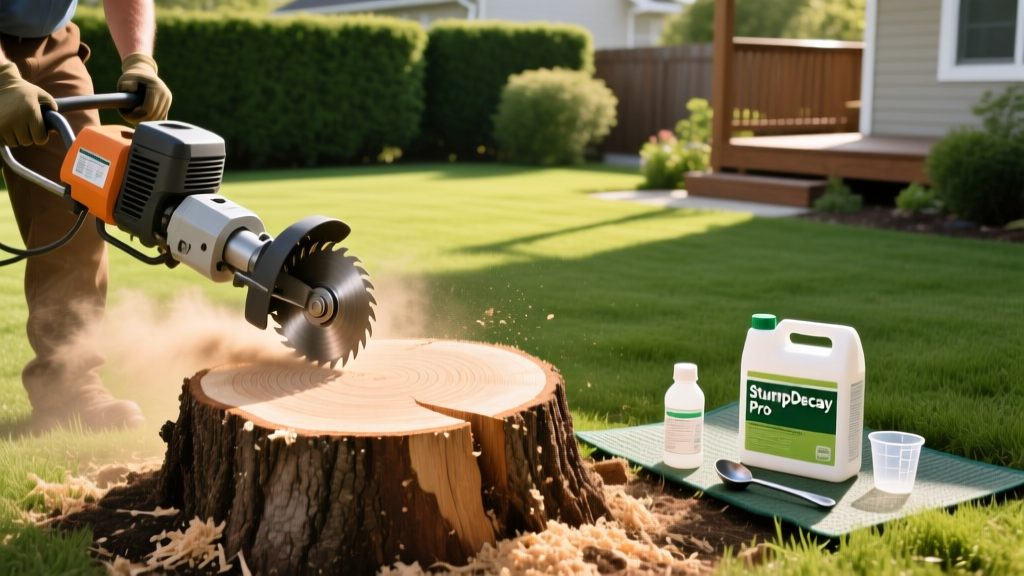
Removing Stumps: Mechanical Grinding vs. Chemical Decay Cost Guide
The Reality of Stump Removal: Setting Expectations
Once a tree is felled, the remaining stump and its subterranean root network present a distinct landscaping challenge. Homeowners generally face two primary DIY pathways for removing stumps: mechanical grinding and chemical decay acceleration. Both methods yield a clear yard, but their cost structures, labor requirements, and completion timelines differ drastically. Selecting the wrong method for your specific stump diameter, soil composition, and schedule often results in abandoned projects or unnecessary equipment rental fees.
⚠ Critical Safety Prerequisite: Before breaking ground or operating heavy machinery, you must call 811 to have local utility lines marked. Hitting a shallow gas or fiber-optic line with a stump grinder cutting wheel can cause catastrophic damage and severe injury. The International Society of Arboriculture (ISA) mandates utility clearance as the non-negotiable first step in any stump management protocol.
Mechanical Stump Grinding: Immediate Eradication
Mechanical grinding physically shreds the stump and the immediate surface roots into woodchips using a high-speed rotating cutting wheel equipped with carbide-tipped teeth. This is the only viable method if you need to replant in the exact same location or lay sod immediately.
Equipment Specifications and Rental Economics
For residential DIY projects, walk-behind stump grinders like the Barreto 25SGRTW or Vermeer SC18 are the industry standards available at major rental yards. As of 2026, expect to pay between $160 and $240 for a full-day rental, plus a mandatory $35 to $50 damage waiver and fuel costs. These machines typically feature 9 to 12 horsepower engines and cutting wheels that sweep in a 40-inch arc.
- Professional Alternative: Hiring an insured arborist costs between $3.50 and $6.00 per inch of stump diameter. A 24-inch oak stump will cost roughly $85 to $145 to have professionally ground, which is often more economical than renting a machine for a single large stump once transport and fuel are factored in.
- Consumable Costs: If you rent a grinder and dull or break the carbide teeth on hidden rocks, rental agreements stipulate you must replace them. Greenteeth or equivalent carbide cutters cost $8 to $14 per tooth, and a single wheel holds 12 to 16 teeth.
Execution Technique and Depth Requirements
Effective grinding requires a systematic sweeping motion. Engage the cutting wheel at the outer edge of the stump and sweep laterally, lowering the wheel 1 to 2 inches per pass. According to the University of Minnesota Extension, you must grind a minimum of 4 to 6 inches below the surrounding soil grade to prevent future tripping hazards and allow for adequate topsoil replacement. Failure to reach this depth will result in the remaining wood rotting unevenly, causing the soil above it to subsidence and sink over the next two years.
Chemical Decay Acceleration: The Slow Burn
Chemical removal does not dissolve wood like an acid. Instead, products labeled as "stump removers" rely on Potassium Nitrate (KNO3) to rapidly feed the fungi and bacteria responsible for wood decay. This method is highly effective for budget-conscious homeowners who have 6 to 12 months before the area needs to be replanted.
Product Selection and Application Protocol
Products like Spectracide Stump Remover or generic 99% Potassium Nitrate granules cost approximately $10 to $15 per 16-ounce bottle. A single bottle treats one average-sized stump (up to 18 inches in diameter).
- Preparation: Cut the stump as close to the soil line as possible using a reciprocating saw with a pruning blade. Fresh cuts absorb chemicals more readily than weathered, sealed wood.
- Drilling Pattern: Using a 1-inch spade bit, drill vertical holes 10 to 12 inches deep into the stump. Space the holes exactly 3 inches apart in a grid pattern across the entire surface. Drill additional holes at a 45-degree angle around the perimeter to intersect the lateral roots.
- Saturation: Fill each hole to the brim with KNO3 granules. Slowly pour warm water into the holes to dissolve the chemical and carry it deep into the root vascular system.
- Incubation: Cover the stump with a heavy black plastic tarp, securing the edges with landscape staples. This traps moisture and heat, creating an ideal greenhouse environment for decay fungi.
💡 Expert Tip: The Nitrogen Balance
Potassium nitrate accelerates fungal growth, but fungi also require nitrogen to break down lignin. After 4 weeks, pull back the tarp and pour a high-nitrogen liquid fertilizer (such as a 32-0-0 urea solution) over the stump before recovering it. This dual-chemical approach can reduce the total decay time of a hardwood stump from 12 months down to 5 months.
Potassium nitrate accelerates fungal growth, but fungi also require nitrogen to break down lignin. After 4 weeks, pull back the tarp and pour a high-nitrogen liquid fertilizer (such as a 32-0-0 urea solution) over the stump before recovering it. This dual-chemical approach can reduce the total decay time of a hardwood stump from 12 months down to 5 months.
Comparative Analysis: Grinding vs. Chemical Decay
Choosing the right method requires weighing your budget against your timeline. The matrix below outlines the operational realities of both approaches for a standard 20-inch diameter hardwood stump.
| Metric | Mechanical Grinding (DIY Rental) | Chemical Decay (KNO3) |
|---|---|---|
| Total Upfront Cost | $195 - $290 (Rental, fuel, waiver) | $25 - $40 (Chemicals, drill bits, tarp) |
| Time to Completion | 2 to 4 hours active labor | 5 to 9 months passive waiting |
| Labor Intensity | Extreme (Heavy lifting, vibration, debris management) | Low (Drilling and periodic watering) |
| Site Reusability | Immediate (Can replant or sod same day) | Delayed (Soil remains toxic to new roots until flushed) |
| Waste Byproduct | 3 to 5 cubic feet of usable woodchip mulch | Spongy, degraded wood that must be chopped out |
Hidden Variables: Soil Subsidence and Root Networks
A frequently overlooked consequence of removing stumps is the secondary soil subsidence. When a stump and its primary anchor roots are ground out, the resulting void is filled with loose woodchips and aerated soil. Over the next 18 to 24 months, as the remaining deep taproots and lateral roots naturally decay, the soil above them will compact and sink, sometimes creating depressions 4 to 8 inches deep.
To mitigate this, always overfill the grinding crater with a 50/50 mix of native soil and organic compost, mounding it 2 inches above the surrounding grade. If you are installing sod over the site, lay a geotextile fabric over the woodchips before adding topsoil to prevent the new grass roots from sinking into the decaying chip layer, which can cause localized nitrogen deficiency and yellowing in the turf.
Frequently Encountered Edge Cases
- Rocky or Clay-Heavy Soil: Mechanical grinders will bounce off subterranean rocks, damaging the carbide teeth. In areas with heavy glacial till or shallow bedrock, chemical decay or professional excavation with a mini-excavator is significantly safer and more cost-effective.
- Stumps on Slopes or Retaining Walls: Walk-behind grinders weigh upwards of 300 pounds and possess a high center of gravity. Operating them on slopes exceeding a 15-degree grade poses a severe tip-over risk. In these scenarios, chemical decay or hiring a professional with a tracked, remote-controlled stump grinder (like a Vermeer RTX450) is mandatory.
- Multi-Stem Clusters: Trees like Birch or Crepe Myrtle often leave behind a cluster of 4 to 6 interconnected stumps. Grinding these individually is inefficient. Treat the entire cluster as a single mass, trenching the perimeter and grinding the central root ball in one continuous sweep.