
Home & Garden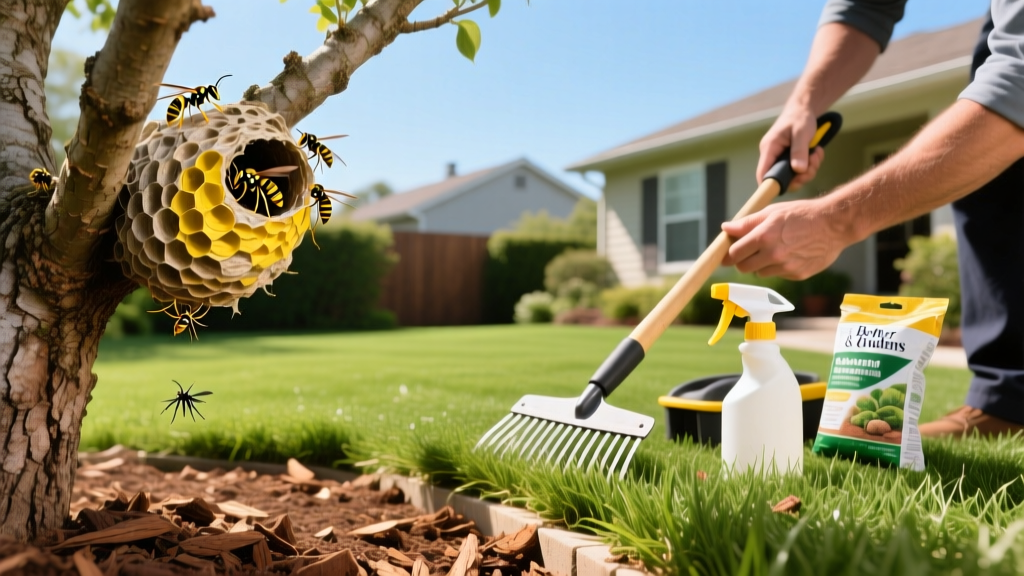
Rescue Guide: Choosing the Right Yellow Jacket Killer by Nest Type
Diagnosing the Threat: Is It Actually a Yellow Jacket?
Before deploying a yellow jacket killer, accurate symptom diagnosis is critical. Homeowners frequently misidentify honeybees, bald-faced hornets, or paper wasps as yellow jackets, leading to ineffective treatments and unnecessary ecological harm. Yellow jackets (Vespula and Dolichovespula species) are aggressive, hard-bodied scavengers characterized by stark black and bright yellow banding, a distinct narrow waist, and a lack of the dense body hair seen on honeybees.
The most vital diagnostic symptom is nest location and foraging behavior. While paper wasps build open, umbrella-shaped combs under eaves, yellow jackets construct enclosed, paper-like nests that are either hidden in structural voids or buried underground. In late summer and early fall, colonies peak in population (often exceeding 5,000 workers) and shift their foraging focus from protein to sugars, making them highly aggressive around outdoor dining areas and trash receptacles.
| Symptom / Trait | Yellow Jackets | Paper Wasps | Honeybees |
|---|---|---|---|
| Nest Structure | Enclosed paper envelope; underground or in wall voids | Open, inverted umbrella comb; under eaves/overhangs | Exposed wax combs; in tree cavities or managed hives |
| Aggression Level | Extremely high; will swarm and sting repeatedly | Moderate; only aggressive if nest is directly touched | Low; dies after stinging once (barbed stinger) |
| Foraging Diet | Insects (spring/summer), human food/sugar (fall) | Caterpillars and insects exclusively | Nectar and pollen exclusively |
Ground vs. Aerial Nests: Why Your Current Treatment is Failing
The most common reason DIY eradication fails is a mismatch between the product chemistry and the nest architecture. According to Penn State Extension's yellow jacket management protocols, ground-dwelling species like the Western yellow jacket (Vespula pensylvanica) utilize abandoned rodent burrows that can extend up to three feet deep and span several feet horizontally.
CRITICAL FAILURE MODE: Never use liquid aerosol sprays or soapy water on a ground nest. Liquids only penetrate the top two inches of soil, failing to reach the deep queen chamber. Worse, the liquid collapses the primary entrance tunnel, trapping thousands of agitated workers underground. They will quickly excavate a secondary exit, often emerging inside your home's foundation or directly behind you during the treatment.
To successfully eliminate a colony, the chosen yellow jacket killer must utilize a transfer effect, where foraging workers carry the active ingredient deep into the nest to infect the queen and brood.
Rescue Protocol 1: Eradicating Ground Nests with Insecticidal Dust
For subterranean nests, insecticidal dust is the undisputed gold standard. Dusts cling to the bodies of the yellow jackets as they enter and exit the burrow, carrying the lethal dose deep into the colony. The two most effective professional-grade products available to consumers are Bayer Tempo 1% Dust (active ingredient: Cyfluthrin) and Delta Dust (active ingredient: Deltamethrin). Expect to pay between $18 and $24 for a 1-pound shaker bottle, which is sufficient to treat multiple large ground nests.
Step-by-Step Ground Nest Application
- Locate the Entrances at Mid-Day: Mark the primary entrance holes with small flags or stones while the sun is up and foragers are active. Maintain a safe distance of at least 15 feet.
- Wait for Nightfall and Temperature Drop: Treat the nest only between 9:00 PM and 11:00 PM. Yellow jackets are largely inactive at night, and temperatures below 60°F significantly slow their metabolism and flight response.
- Use Red Lighting: Yellow jackets lack red photoreceptors. Use a headlamp equipped with a red LED filter to illuminate the work area without triggering a defensive swarm response.
- Apply the Dust: Using a specialized bulb duster or the product's built-in applicator snout, gently puff a small cloud of Tempo or Delta Dust directly into the entrance hole. Do not pack the hole with dirt or seal it. The workers must be able to walk through the dust to carry it inside.
- Retreat Immediately: Leave the area quickly and avoid the zone for 48 hours. The colony will typically collapse within 24 to 36 hours as the dust reaches the queen.
Rescue Protocol 2: Knocking Down Aerial Nests with Jet Aerosols
If your diagnosis reveals an aerial nest hanging from a tree branch, shrub, or structural eave, insecticidal dust will not adhere properly. For these scenarios, you need a high-pressure, jet-stream aerosol formulated with rapid-knockdown pyrethroids. The JT Eaton Wasp-Freeze ($12-$15 per can) and Spectracide Wasp & Hornet Killer ($8-$10) are industry staples. These products utilize Prallethrin and Cypermethrin to instantly paralyze the insects' nervous systems, preventing them from taking flight and stinging.
The primary advantage of Wasp-Freeze is its discharge range, which shoots a concentrated stream up to 15 feet. This allows you to maintain a critical safety buffer. When treating aerial nests, always ensure you have a clear, unobstructed escape route behind you. Spray the nest thoroughly from the bottom up, completely soaking the paper envelope until it drips, then immediately leave the area. Return the following evening to physically knock down the dead nest and dispose of it in a sealed trash bag.
"Attempting to knock down an active aerial nest with a broom or burning it with a torch are the leading causes of severe, multi-sting anaphylactic incidents in residential settings. Chemical knockdown must always precede physical removal." — EPA's guidelines on stinging insects and structural pest management safety.
Triage and Population Control: When to Use Bait Traps
It is vital to understand the difference between nest eradication and population triage. If you cannot locate the nest, or if yellow jackets are simply foraging heavily in your yard from a neighbor's property, a yellow jacket killer spray will not solve the problem. Instead, you must deploy behavioral traps.
The Rescue Yellowjacket Trap ($12 for the reusable cylinder, plus $6 for replacement bait vials) is widely considered the most effective commercial trap. Unlike generic sugar-water traps that accidentally catch beneficial honeybees, the Rescue trap utilizes a synthetic chemical lure called heptyl butyrate. This specific ester mimics the fermentation odors that yellow jackets seek out in late summer, while remaining entirely unappealing to honeybees and most beneficial pollinators.
Optimal Trap Placement Strategy
- Perimeter Deployment: Hang traps at the outer property lines, at least 20 feet away from your home, patio, or outdoor dining areas. You want to draw the foragers away from human activity zones, not toward them.
- Height Matters: Suspend the traps approximately 4 to 5 feet off the ground, hanging from tree branches or shepherd's hooks. This matches the natural flight cruising altitude of foraging yellow jackets.
- Timing the Deployment: Deploy traps in early spring to catch emerging queens before they establish colonies, and again in mid-August to intercept the massive fall foraging waves.
Post-Treatment Safety and Nest Removal
Once 72 hours have passed since your dust or aerosol treatment, observe the nest entrance or structure from a safe distance during peak daytime hours. If you see zero flight activity, the colony is dead. For ground nests, fill the void with soil and topseed with grass to prevent other pests from claiming the burrow. For aerial nests, use a long pole to dislodge the paper structure. While the dead larvae inside the nest pose no stinging threat, the paper envelope can harbor mold and bacteria as it decays, so prompt removal and disposal in an outdoor bin is recommended.
By accurately diagnosing the nest location and matching the specific chemistry of your yellow jacket killer to the colony's architecture, you can safely and permanently resolve the infestation without the $250 to $450 expense of hiring a professional exterminator.