
Home & Garden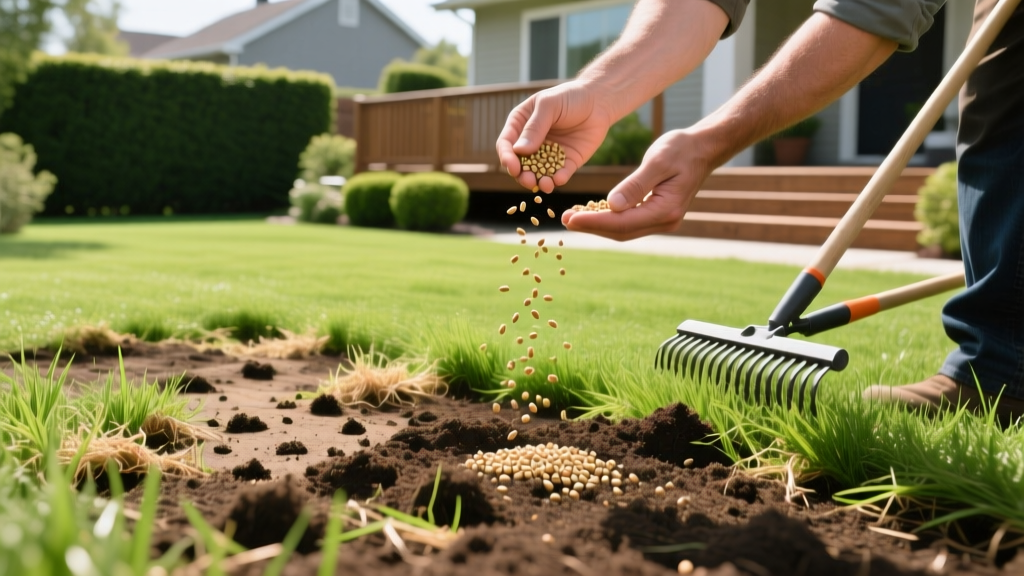
Reseed Definition Explained: Diagnosing Lawn Failure and Recovery
The Strict Agronomic Reseed Definition
In turfgrass management, the reseed definition is frequently misunderstood by homeowners who conflate it with overseeding or spot-patching. Agronomically, reseeding (often termed "complete lawn renovation") is defined as the total eradication of existing vegetation, followed by soil fracturing, amendment, and the sowing of new seed into a bare-soil seedbed. Unlike overseeding—which introduces new grass cultivars into an existing, living turf canopy to increase density—reseeding requires starting from scratch.
Understanding this distinction is critical for problem diagnosis. If your lawn suffers from severe soil compaction, systemic fungal pathogens, or an overwhelming infestation of invasive weeds like crabgrass and Poa annua, simply overseeding will result in seedling failure. The existing thatch and weed competition will choke out new germination. According to the University of Minnesota Extension, complete renovation via reseeding is the only viable solution when a lawn's turfgrass coverage drops below 50%.
The 50% Threshold Rule
Before purchasing seed, conduct a visual audit. If more than 50% of your lawn's surface area is composed of bare dirt, dead thatch, or broadleaf/grassy weeds, the agronomic reseed definition applies to your situation. You must kill the existing vegetation and reseed. If your lawn is 60% or more healthy turf, you only need to overseed.
Diagnostic Matrix: Reseeding vs. Overseeding vs. Sodding
To accurately diagnose your lawn's needs, cross-reference your current yard conditions with the recovery matrix below.
| Lawn Condition | Weed / Bare Coverage | Soil Health | Required Action |
|---|---|---|---|
| Thin but mostly green | < 30% | Good, minor compaction | Overseed & Aerate |
| Patchy, heavy weed invasion | 50% - 80% | Poor, heavily compacted | Reseed (Full Renovation) |
| Complete erosion or mud | > 80% | Severe grading issues | Sod or Hydroseed |
| Isolated dead spots | < 10% (localized) | Variable (pet urine, grubs) | Spot Patch & Treat |
Diagnosing the Root Cause of Turf Failure
Executing a full reseed without diagnosing why the original lawn died guarantees a repeat failure. The UC Statewide Integrated Pest Management Program identifies several primary drivers of total turf collapse that must be remediated during the reseeding preparation phase:
- Subsurface Compaction: If water pools for more than 30 minutes after a heavy rain, your soil's bulk density is too high for root penetration. A core aerator is insufficient; you must use a rear-tine rototiller to fracture the hardpan.
- Grub Destabilization: If the dead turf rolls back like a loose carpet, white grubs (Japanese beetle or June beetle larvae) have severed the root system. Apply a preventative grub control containing chlorantraniliprole during the new seeding establishment phase.
- pH Lockout: Turfgrass cannot uptake nutrients if soil pH drops below 5.5 or exceeds 7.8. Conduct a laboratory soil test (not a cheap liquid home kit) to determine exact lime or elemental sulfur amendment rates before tilling.
The Complete Reseeding Protocol: Step-by-Step
Once you have confirmed that your yard meets the reseed definition criteria, follow this exact agronomic protocol. Timing is critical: perform this in early fall (late August to mid-September) for cool-season grasses, or late spring (April to May) for warm-season grasses.
Step 1: Total Vegetation Eradication
Apply a non-selective systemic herbicide containing 41% Glyphosate active ingredient. Do not mow for 48 hours prior to application to maximize leaf surface area. Wait a full 14 days for the translocation of the chemical into the root systems. The existing lawn must be completely brown and desiccated before moving to Step 2.
Step 2: Soil Fracturing and Amendment
Use a rear-tine rototiller to break the soil to a depth of 4 to 6 inches. During this pass, incorporate 1 cubic yard of screened, aged compost per 1,000 square feet. This lowers the bulk density and increases the Cation Exchange Capacity (CEC), allowing the soil to hold onto applied fertilizers.
Step 3: Grading and Seed Selection
Rake the tilled soil smooth, ensuring a gentle 2% slope away from your home's foundation. Select a seed blend based on your microclimate. In 2026, premium Tall Fescue blends (like Titan Ultra or Rhambler) cost between $8 and $12 per pound and require a seeding rate of 8 to 10 lbs per 1,000 square feet. Kentucky Bluegrass requires only 2 to 3 lbs per 1,000 square feet due to its smaller seed size and aggressive rhizomatous spreading.
Step 4: Sowing and Starter Nutrition
Use a rotary broadcast spreader, applying half the seed walking north-to-south, and the other half east-to-west to prevent striping. Immediately follow with a starter fertilizer high in phosphorus (e.g., a 10-18-10 NPK ratio) at a rate that delivers exactly 0.5 lbs of nitrogen per 1,000 square feet to fuel rapid root development.
Troubleshooting Reseeding Failure Modes
Even with perfect execution, environmental variables can disrupt germination. Use this troubleshooting matrix to diagnose and correct issues during the critical 21-day establishment window.
| Symptom | Diagnosis / Cause | Corrective Solution |
|---|---|---|
| Seed washes into driveway or low spots | Improper grading or heavy rainfall immediately after sowing without mulch. | Re-grade low spots. Apply a hydromulch or weed-free wheat straw at 1 bale per 1,000 sq ft to anchor seed. |
| Seedlings emerge, turn yellow, and collapse | "Damping off" disease (Pythium fungus) caused by overwatering and poor air circulation. | Reduce watering frequency from 3x daily to 1x daily. Apply a preventative bio-fungicide containing Bacillus subtilis. |
| Patchy germination with bare streaks | Spreader overlap error or seed buried deeper than 1/4 inch in the soil. | Lightly rake bare areas, re-apply seed, and roll with a half-filled water lawn roller to ensure seed-to-soil contact. |
| Seeds disappear overnight | Bird predation or rodent foraging, common in un-mulched renovations. | Cover the area with bird-netting or apply a thicker layer of straw mulch to hide the seed from visual predators. |
By strictly adhering to the agronomic reseed definition and treating your lawn renovation as a structural soil-rebuilding project rather than a simple cosmetic upgrade, you establish a deep-rooted, drought-tolerant turf that will resist the failure modes that destroyed your previous lawn.

