
Home & Garden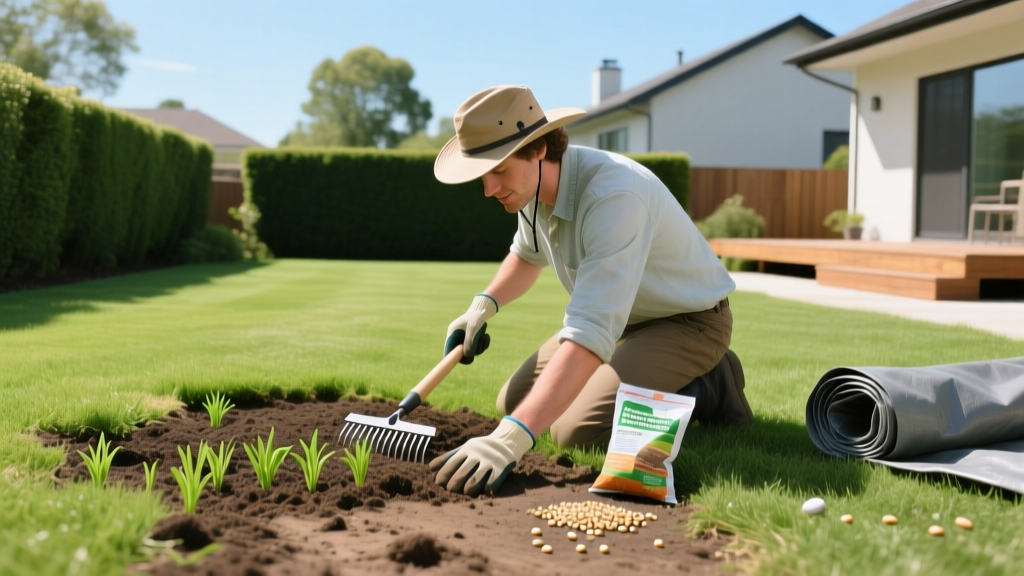
Choosing the Right Reseed Location: A Beginner's Lawn Guide
Successfully patching a damaged lawn requires more than just scattering seed over bare dirt. The most critical, yet frequently overlooked, step in lawn renovation is properly evaluating your reseed location. Every bare patch, thinning zone, or high-traffic corridor in your yard possesses a unique microclimate dictated by sunlight exposure, soil compaction, drainage patterns, and tree root competition. Treating a heavily shaded, poorly draining reseed location the same way you treat a sun-baked, sandy slope guarantees patchy germination and wasted money.
This beginner-friendly guide breaks down the exact diagnostic steps required to evaluate your reseed location, match the correct grass cultivar to the environment, and prepare the soil bed for maximum seed-to-soil contact. By understanding the micro-environment of your specific bare spots, you can transition from guesswork to precision lawn care.
Mapping Sunlight and Microclimates at the Reseed Location
Before purchasing any seed, you must quantify the daily sunlight your reseed location receives. Grass species have strict photosynthetic requirements, and planting a full-sun cultivar in a dappled-shade location will result in weak, disease-prone turf that thins out within a single growing season. Track the specific patch over a 12-hour period during peak summer to determine its exact light category.
- Full Sun Locations: Receive 8 or more hours of direct, unfiltered sunlight daily. Ideal for high-drought-tolerance species.
- Partial Shade Locations: Receive 4 to 6 hours of direct sunlight, or all-day dappled light filtering through tree canopies.
- Dense Shade Locations: Receive fewer than 4 hours of direct sunlight. These are the most challenging reseed locations and often require alternative groundcovers if turfgrass fails.
Grass Cultivar Selection by Reseed Location
According to turfgrass research published by NC State TurfFiles, matching the seed cultivar to the microclimate is the primary determinant of long-term turf survival. Use the matrix below to select the appropriate seed for your specific reseed location.
| Reseed Location Type | Recommended Grass Species | Top Performing Cultivars | Seeding Rate (per 1,000 sq ft) |
|---|---|---|---|
| Full Sun / High Traffic | Tall Fescue (Cool-Season) or Bermuda (Warm-Season) | 'Rebel IV' (Tall Fescue), 'TifTuf' (Bermuda) | 6–8 lbs (Fescue) / 1–2 lbs (Bermuda) |
| Partial Shade / Transition | Kentucky Bluegrass or Fine Fescue Blend | 'Midnight' (KBG), 'Shoreline' (Creeping Red Fescue) | 2–3 lbs (KBG) / 5 lbs (Fine Fescue) |
| Dense Shade / Moist | Rough Bluegrass or Shade-Tolerant Fine Fescue | 'Sabre III' (Chewings Fescue) | 5–6 lbs |
Soil and Drainage Diagnostics at the Reseed Location
Sunlight is only half the equation. The physical structure of the soil at your reseed location dictates how water, oxygen, and nutrients reach the developing root zone. Compacted soil suffocates germinating seeds, while heavy clay depressions drown them.
The 12-Inch Percolation Test
To evaluate drainage, dig a hole 12 inches deep and 12 inches wide at the center of your reseed location. Fill it with water and let it drain completely to saturate the surrounding soil. Refill the hole to the top and measure how long it takes for the water level to drop one inch.
- Ideal Drainage: 1 to 2 inches per hour. Proceed with standard seedbed preparation.
- Poor Drainage (Under 1 inch/hour): Heavy clay compaction. You must amend the top 4 inches of soil with expanded shale or compost, or install a French drain before reseeding.
- Excessive Drainage (Over 4 inches/hour): Sandy soil. Incorporate peat moss or sphagnum to increase water retention before seeding.
Warning: Pre-Emergent Herbicide Conflict
If you applied a standard pre-emergent herbicide (like Prodiamine or Dithiopyr) to your lawn in early spring, it creates a chemical barrier that stops all seeds from germinating, including your grass seed. If your reseed location was treated, you must wait 8 to 12 weeks before planting, or switch to a seed-safe active ingredient like Mesotrione (Tenacity) which can be applied directly at the time of seeding.
If you applied a standard pre-emergent herbicide (like Prodiamine or Dithiopyr) to your lawn in early spring, it creates a chemical barrier that stops all seeds from germinating, including your grass seed. If your reseed location was treated, you must wait 8 to 12 weeks before planting, or switch to a seed-safe active ingredient like Mesotrione (Tenacity) which can be applied directly at the time of seeding.
Step-by-Step Preparation for Your Specific Reseed Location
Once you have mapped the sunlight and tested the drainage, execute these precise preparation steps to create an optimal seedbed. The University of Minnesota Extension emphasizes that seed-to-soil contact is the most critical factor in germination success.
- Clear and Scalp: Mow the existing grass around the reseed location as low as your mower allows (down to 1.5 inches). Rake away all dead thatch, leaves, and debris until bare soil is visible.
- Core Aerate or Slice: For patches larger than 50 square feet, run a core aerator over the area to pull 3-inch soil plugs. For smaller spots, use a garden fork to pierce the soil every 2 inches, loosening the top 3 inches of dirt to relieve compaction.
- Amend and Level: Spread a 1/4-inch layer of screened topsoil or high-quality compost over the bare area. Use a leveling rake to smooth the surface, ensuring the reseed location is perfectly graded to prevent water pooling.
- Apply Starter Fertilizer: Use a high-phosphorus starter fertilizer (look for an N-P-K ratio like 10-18-10). Phosphorus is vital for early root development. Apply at the exact rate specified on the bag using a drop spreader for precise coverage.
- Sow and Rake: Broadcast your chosen seed at the recommended rate. Lightly drag a leaf rake upside-down over the area to push the seeds into the top 1/4 inch of soil. Never bury grass seed deeper than 1/2 inch, or it will exhaust its energy reserves before reaching the surface.
- Mulch and Protect: Cover the reseed location with a thin layer of certified weed-free straw or pelletized paper mulch (like Penn Mulch). This retains moisture and prevents birds from eating the seed.
Common Reseed Location Mistakes Beginners Make
Even with the right seed, poor execution at the site level leads to failure. Avoid these frequent errors when addressing bare patches:
- Ignoring Tree Root Competition: A reseed location directly beneath a mature oak or maple tree isn't just shaded; it's starved of water and nutrients by aggressive surface roots. In these zones, use a shade-tolerant Fine Fescue and increase your watering frequency by 20% to compensate for root theft.
- Overwatering the Seedbed: Beginners often drown their reseed locations with heavy hose streams, washing the seeds into clumps or burying them in mud. Use a fine mist sprinkler to keep the top 1 inch of soil consistently moist without creating puddles.
- Mowing Too Early: Wait until the new grass at the reseed location reaches at least 3.5 inches tall before the first mow. Cutting it at 2 inches prematurely shocks the shallow, unestablished root system and pulls the seedlings out of the soil.
FAQ: Troubleshooting Problematic Reseed Locations
Why did the seed germinate but then die after two weeks?
This phenomenon, known as 'damping off,' is usually caused by a fungal pathogen thriving in overly wet, poorly ventilated reseed locations. Ensure you are watering lightly (10 minutes, 3 times a day) rather than soaking the area once a day, and avoid seeding during periods of heavy, continuous rain.
Can I reseed a location where my dog frequently urinates?
Dog urine creates highly acidic, nitrogen-burned patches. Before reseeding this specific location, flush the bare soil with 2 gallons of water to dilute the residual uric acid salts. Once flushed, plant a urine-resistant cultivar like Tall Fescue ('Rebel IV'), which has a deeper root system and higher tolerance to nitrogen spikes than Kentucky Bluegrass.
What soil temperature is required for my reseed location?
For cool-season grasses (Fescue, KBG, Ryegrass), the soil temperature at a 2-inch depth must be consistently between 50°F and 65°F. Use a digital soil probe thermometer to verify the temperature at your reseed location before sowing. If the soil is below 50°F, the seed will remain dormant and rot before germinating.