
Home & Garden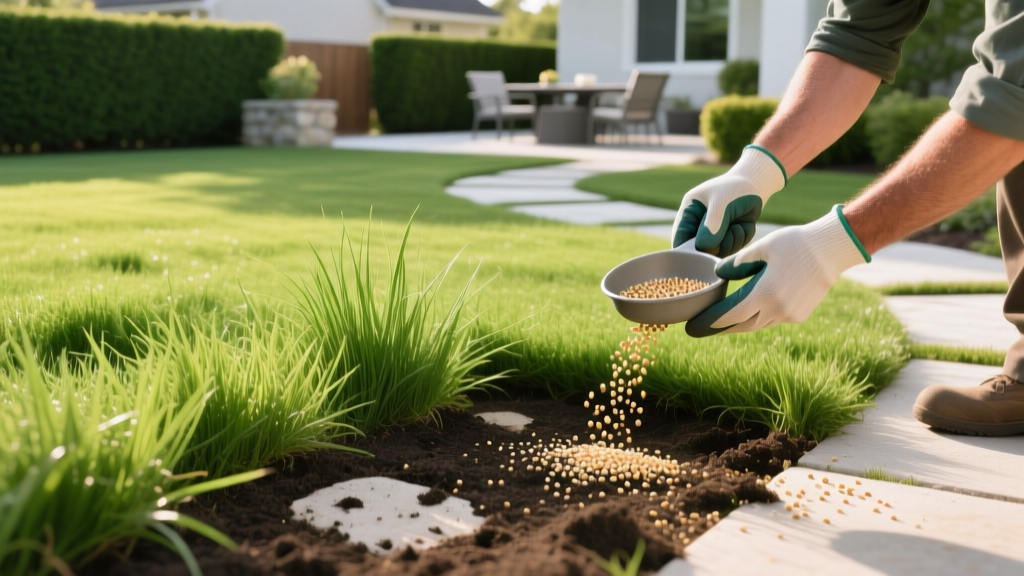
How to Reseed a Thinning Tall Fescue Lawn: Step-by-Step Guide
Assessing Lawn Damage: When Reseeding is Necessary
Before purchasing seed or renting equipment, you must accurately diagnose the state of your turf. Tall fescue (Festuca arundinacea) is a bunch-type cool-season grass that does not spread laterally via rhizomes or stolons like Kentucky bluegrass. When tall fescue thins out due to summer heat stress, fungal pathogens, or heavy foot traffic, the bare spaces will not fill in naturally. You must reseed to restore turf density.
Perform the "tug test" on brown or thin patches. If the grass pulls up easily with no white root resistance, the crown is dead and the area requires reseeding. If the roots hold firm but the blades are brown, the grass may simply be dormant from summer drought and will recover with autumn rain and cooler temperatures.
The 50% Rule for Renovation: If your lawn is less than 50% healthy, existing turf, it is generally more cost-effective and time-efficient to kill the entire lawn with glyphosate, perform a complete soil amendment, and start from scratch. If the lawn is 50% or more healthy, overseeding and reseeding bare patches is the correct agronomic approach.
Essential Equipment and Material Costs (2026 Pricing)
Reseeding requires specific tools to ensure seed-to-soil contact, which is the primary driver of germination success. Below is a realistic budget for a standard 5,000 square foot lawn area.
| Item | Purpose | Estimated Cost |
|---|---|---|
| Walk-Behind Core Aerator (Rental) | Relieves compaction, creates seed pockets | $85 - $120 / day |
| Drop Spreader (e.g., Scotts Classic) | Precise seed and fertilizer application | $55 - $75 |
| Tall Fescue Seed (20 lbs) | Turf establishment (Jonathan Green Black Beauty or similar) | $80 - $110 |
| Starter Fertilizer (24-25-4) | High phosphorus for root development | $35 - $45 |
| Screened Topsoil or Peat Moss (3 cu ft) | Seed covering and moisture retention | $15 - $25 |
Phase 1: Soil Preparation and Core Aeration
According to Penn State Extension, seed-to-soil contact is the most critical variable in lawn renovation. Seed left sitting on top of thatch or compacted soil will desiccate and fail to germinate.
Mowing and Thatch Management
Lower your mower deck to 1.5 inches—significantly shorter than the standard 3.5-inch maintenance height for tall fescue. Bag all clippings to expose the soil surface. If your thatch layer exceeds 0.5 inches, you must rent a power dethatcher (vertical mower) before aerating. Excessive thatch acts as a physical barrier, preventing water and seed from reaching the soil profile.
Core Aeration Specifications
Rent a core aerator that pulls actual soil plugs, not a spike aerator. Spike aerators merely push soil to the sides, increasing lateral compaction.
- Plug Depth: Ensure the tines penetrate at least 3 inches deep. If the soil is heavily compacted clay, water the lawn deeply 24 hours prior to aeration to soften the ground.
- Spacing: Make two passes over the lawn in perpendicular directions (e.g., North-South, then East-West) to achieve a plug density of roughly one hole every 2 to 3 inches.
- Plug Management: Leave the extracted soil cores on the lawn. They will break down over the next two weeks, depositing beneficial soil microorganisms back into the thatch layer to accelerate decomposition.
Phase 2: Seed Selection and Application Rates
When selecting tall fescue seed, avoid generic "contractor mixes" which often contain cheap annual ryegrass as a nurse crop. Annual ryegrass germinates quickly but dies off after one season, competing with your fescue seedlings for water and nutrients during the critical establishment phase.
Look for NTEP (National Turfgrass Evaluation Program) rated cultivars. Premium blends like Jonathan Green Black Beauty Ultra or Scotts Turf Builder Tall Fescue Mix contain multiple endophyte-enhanced cultivars (such as Falcon IV or Mustang IV) that provide natural resistance to surface-feeding insects like chinch bugs and sod webworms.
Warning: Pre-Emergent Herbicide Conflict
If you applied a standard spring pre-emergent (like prodiamine or dithiopyr) within the last 4 to 6 months, your fescue seed will not germinate. These chemicals create a vapor barrier that stops all seed germination. If you must reseed in an area treated with standard pre-emergents, use a liquid application of mesotrione (Tenacity) at a rate of 1/3 teaspoon per 1,000 sq ft. Mesotrione suppresses weeds like crabgrass during seedling establishment without harming germinating tall fescue.
If you applied a standard spring pre-emergent (like prodiamine or dithiopyr) within the last 4 to 6 months, your fescue seed will not germinate. These chemicals create a vapor barrier that stops all seed germination. If you must reseed in an area treated with standard pre-emergents, use a liquid application of mesotrione (Tenacity) at a rate of 1/3 teaspoon per 1,000 sq ft. Mesotrione suppresses weeds like crabgrass during seedling establishment without harming germinating tall fescue.
Application Technique
Calibrate your drop spreader to deliver 5 to 6 pounds of seed per 1,000 square feet for overseeding thin areas. For completely bare dirt patches, increase the rate to 8 to 10 pounds per 1,000 square feet. Apply half the seed walking North-South, and the other half walking East-West to prevent striping and missed spots.
Phase 3: Starter Fertilizer and the Watering Matrix
New grass seedlings lack the root mass to scavenge nutrients from deep within the soil profile. A starter fertilizer high in phosphorus (the middle number on the bag) is mandatory for rapid root development. Apply a product like Scotts Turf Builder Starter Food (24-25-4) immediately after seeding, following the bag's rate instructions (typically 3.2 lbs per 1,000 sq ft).
According to research published by the University of Minnesota Turfgrass Science program, watering frequency is more important than watering volume during the first 21 days. The goal is to keep the top 1 inch of soil consistently moist, never soggy, and never allowed to dry out completely.
| Timeline | Watering Frequency | Duration per Zone | Objective |
|---|---|---|---|
| Days 1 - 14 | 3 to 4 times daily | 5 - 8 minutes | Prevent seed desiccation; encourage radicle emergence |
| Days 15 - 28 | 1 to 2 times daily | 10 - 15 minutes | Train roots to grow deeper; reduce fungal risk |
| Days 29+ | 2 times per week | 30 - 45 minutes | Establish deep, drought-tolerant root systems |
Common Reseeding Failure Modes and Troubleshooting
Even with perfect execution, environmental variables can derail your renovation. Understanding these failure modes allows you to intervene before the entire seed lot is lost.
1. Damping Off (Pythium Blight)
If your seed germinates beautifully but the seedlings suddenly collapse, turn dark brown, and melt into the soil within 48 hours, you are experiencing damping off. This soil-borne fungus thrives in hot, humid conditions with poor air circulation. The Fix: Never water in the evening. Ensure your final watering cycle of the day finishes by 2:00 PM so the grass blades can dry before nightfall. If an outbreak occurs, apply a systemic fungicide containing azoxystrobin (e.g., Scotts DiseaseEx) immediately.
2. Seed Washout and Erosion
Heavy autumn thunderstorms can wash expensive seed off sloped areas or compacted clay before the roots anchor into the soil. The Fix: Avoid using straw to cover seed on slopes. Straw often contains agricultural weed seeds and provides poor erosion control on steep grades. Instead, apply a 1/8-inch layer of screened compost or peat moss, or use a hydromulch product like Pennington Seed Starter Mulch which expands and binds to the soil upon contact with water.
3. Bird and Rodent Predation
Flocks of sparrows or local squirrel populations can consume a significant percentage of exposed seed. The Fix: Raking the seed lightly into the aeration holes or covering it with a thin layer of peat moss hides the seed from foraging wildlife while maintaining the necessary light exposure for germination.
"The most common mistake homeowners make when reseeding is stopping the watering regimen too early. Just because the grass is two inches tall and looks green does not mean the root system is established. You must maintain consistent moisture for a full 45 days before transitioning to a standard deep-and-infrequent watering schedule."
— Turfgrass Management Guidelines, NC State Extension
Frequently Asked Questions
When is the absolute best time to reseed tall fescue?
The optimal window is late August through mid-October, depending on your USDA hardiness zone. Soil temperatures should be between 60°F and 70°F. This allows the seedlings roughly 8 weeks of active growth before the first hard frost halts root development.
When can I mow the newly reseeded areas?
Wait until the new fescue seedlings reach 4 inches in height. Set your mower to 3 inches and ensure the blade is razor-sharp. A dull blade will rip the shallow-rooted seedlings entirely out of the ground. Never remove more than 1/3 of the leaf blade in a single mowing session.
Can I reseed in the spring instead of the fall?
While physically possible, spring reseeding is highly discouraged for cool-season grasses. Spring-seeded fescue has a very shallow root system when the extreme heat and drought of July arrive, leading to a 70% or higher mortality rate. Furthermore, you cannot use standard pre-emergent crabgrass preventers in the spring without killing your new fescue seed.