Home & Garden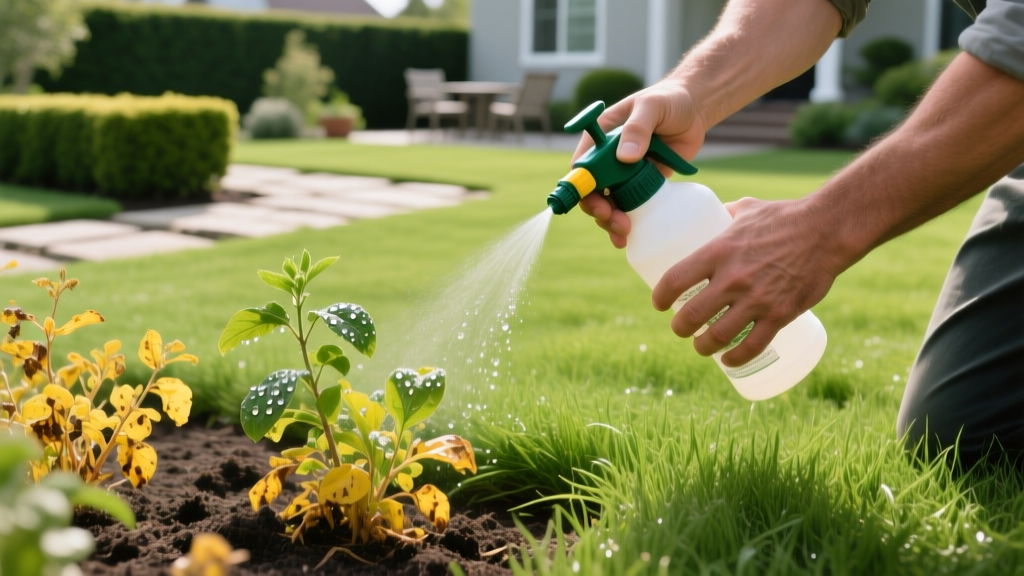
How to Use the Roundup Active Ingredient Glyphosate for Weed Control
Identifying True Glyphosate Concentrates in the Current Market
Before mixing any solution, you must verify the active ingredient on the label. Following recent corporate reformulations, many ready-to-use residential weed killers branded under the Roundup name now rely on alternative active ingredients like diquat or fluazifop. To access the original Roundup active ingredient glyphosate for home garden use, you must purchase agricultural or commercial concentrates, such as Roundup Super Concentrate (50.2% glyphosate) or generic equivalents like Compare-N-Save Concentrate (41% isopropylamine salt of glyphosate). These concentrates typically cost between $45 and $60 per gallon and require manual dilution.
Glyphosate is a systemic, non-selective herbicide. It works by inhibiting the EPSP synthase enzyme, effectively blocking the shikimic acid pathway that plants need to synthesize essential amino acids. Because it translocates through the phloem down to the root system, it is exceptionally effective against deep-rooted perennials like bindweed, bermudagrass, and poison ivy, provided it is applied correctly.
Mandatory PPE and Mixing Station Setup
While the Environmental Protection Agency (EPA) notes that glyphosate has low acute toxicity when used according to label directions, concentrated formulations (41% to 50.2%) are severe eye and skin irritants. Proper personal protective equipment (PPE) is non-negotiable during the mixing phase.
WARNING: Skin and Eye Protection Protocol
- Gloves: Use unlined, chemical-resistant nitrile or neoprene gloves. Latex and cotton gloves will absorb the concentrate and hold it against your skin.
- Eye Protection: Wear tight-fitting safety goggles, not standard prescription glasses, to prevent splash-back from entering the sides of your eyes.
- Clothing: Wear long sleeves, long pants, and closed-toe shoes. Wash mixing clothes separately from your regular household laundry.
Set up your mixing station on an impermeable surface like a concrete driveway, never over bare soil or grass. This prevents accidental soil sterilization or localized turf death from spills. Use a dedicated 2-gallon or 4-gallon pump sprayer that is clearly marked with a permanent marker as 'HERBICIDE ONLY' to prevent future cross-contamination of ornamental plants if the sprayer is later used for liquid fertilizers.
Precision Dilution Matrix
The most common failure mode for home gardeners is under-dosing tough perennials or over-dosing simple annuals, which wastes product and increases environmental runoff. According to the National Pesticide Information Center (NPIC), glyphosate requires adequate leaf surface coverage to enter the plant tissue. Use the matrix below to calculate your mix rates based on a standard 41% glyphosate concentrate.
| Target Weed Type | Weed Examples | Mix Rate (per 1 Gal Water) | Surfactant Requirement |
|---|---|---|---|
| Annual Broadleaf & Grasses | Crabgrass, Chickweed, Pigweed | 1.5 fl oz (3 tbsp) | Usually pre-mixed |
| Tough Perennial Weeds | Bindweed, Thistle, Bermudagrass | 2.5 fl oz (5 tbsp) | Add 0.5% non-ionic surfactant |
| Woody Brush & Vines | Poison Ivy, Kudzu, Blackberry | 4.0 fl oz (8 tbsp) | Add 1.0% non-ionic surfactant |
Pro Tip: If your concentrate does not include a built-in surfactant package, add a non-ionic surfactant (like a dedicated agricultural spreader-sticker or even a few drops of plain liquid dish soap in a pinch) to break the surface tension of the water, allowing the herbicide to spread evenly across waxy leaf cuticles rather than beading up and rolling off.
The 5-Step Application Protocol
- Pressurize to 30-40 PSI: Pump your tank sprayer until the pressure relief valve hisses. Spraying at too high a pressure creates a fine aerosol mist that is highly susceptible to wind drift, which can decimate nearby desirable ornamentals.
- Select a Flat-Fan Nozzle: Avoid cone-spray nozzles. Adjust the tip to a flat-fan pattern, which produces larger, heavier droplets that fall directly onto the target foliage.
- Maintain an 18-Inch Distance: Hold the wand approximately 18 inches above the weed canopy. This ensures an even distribution pattern without saturating the soil.
- Apply to Dry, Actively Growing Foliage: Spray only when leaves are completely dry. Do not spray weeds that are drought-stressed, as their stomata will be closed and translocation to the roots will halt.
- Use the 'Wipe' Method Near Desirables: When treating weeds growing directly inside a flower bed or near vegetable crops, do not spray. Instead, wear a heavy nitrile glove over a cotton gardening glove, dip your fingers in the mixed solution, and physically wipe the leaves of the target weed.
Environmental Constraints and Rainfast Windows
Glyphosate is rendered useless if washed off the leaf surface before it penetrates the cuticle. Monitor the following parameters strictly:
Temperature
60°F - 85°F
Absorption slows dramatically below 55°F and halts above 90°F due to plant heat stress.
Wind Speed
< 10 MPH
Anything higher risks particulate drift onto non-target broadleaf plants and turfgrass.
Rainfast Time
2 Hours
While some labels claim 30 minutes, a full 2 hours ensures complete cuticle penetration for perennials.
Post-Application Soil and Replanting Timelines
A major advantage of the Roundup active ingredient glyphosate is its rapid degradation in the soil matrix. Once it contacts the soil, it binds tightly to soil particles and is broken down by microbes into aminomethylphosphonic acid (AMPA) and eventually carbon dioxide and phosphate. It possesses virtually no residual soil activity.
- Ornamental Replanting: You can safely plant new flowers, shrubs, or trees in the treated area just 3 to 7 days after application, once the target weeds have begun to yellow and wilt.
- Edible Crop Replanting: For vegetable gardens, wait a minimum of 14 days before seeding or transplanting edibles to ensure complete foliar absorption and initial microbial breakdown in the topsoil.
- Turf Seeding: If you are killing an existing lawn to prepare for a full renovation, wait 7 to 10 days before aerating and dropping new grass seed.
Expert Troubleshooting: Why Did the Weeds Survive?
Symptom: The weed leaves turned yellow but the roots survived and regrew a month later.
Cause: You likely mowed or weed-whacked the area immediately before spraying. Glyphosate requires a minimum of 30 to 40 square inches of healthy leaf surface area per plant to absorb enough chemical to translocate to and kill the root crown. Always allow weeds to grow out for at least a week after mowing before applying.
Symptom: The herbicide beaded up and rolled off the leaves onto the soil.
Cause: Hard water or lack of a surfactant. If your municipal water is high in calcium and magnesium (hard water), these cations can bind to the glyphosate molecule, neutralizing it before it enters the plant. Use distilled water for mixing small batches, or add 1 to 2 ounces of ammonium sulfate (AMS) per gallon of water to condition the hard water before adding the glyphosate concentrate.
Mastering the precise application of glyphosate concentrates transforms a frustrating, recurring weed problem into a one-time eradication event. By respecting the dilution ratios, utilizing the correct nozzle technology, and timing your application to the plant's natural growth cycles, you can reclaim your garden beds efficiently and safely.