
Home & Garden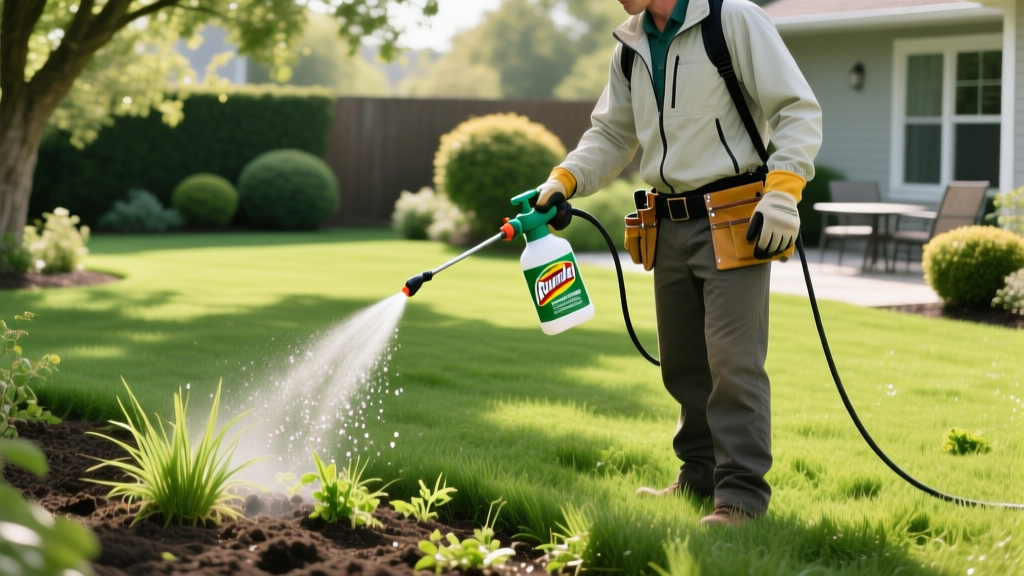
How Long Does Roundup Take to Work? Dosage, Coverage & Cost Guide
When tackling invasive weeds, the most common question homeowners ask is: how long does Roundup take to work? The short answer is that you will see visible wilting within 12 to 24 hours on most annual weeds, but complete root system death takes between 7 and 14 days. However, this timeline fluctuates wildly based on the specific Roundup formulation you choose, your mixing ratios, and environmental variables like water hardness and ambient temperature.
This guide breaks down the exact timelines, professional dosage rates, coverage mathematics, and hidden costs of using glyphosate-based herbicides in your yard. Whether you are spot-treating driveway cracks or clearing a half-acre fence line, understanding the chemistry and economics of your application will save you time and money.
The Timeline: Formulation Kill-Speed Breakdown
Not all Roundup products are created equal. The brand has expanded far beyond its original glyphosate-only concentrate. Here is how the kill timeline differs across the three most common product lines available to consumers:
Fast-Acting vs. Long-Term Control: Products labeled 'Max Control' or '365' contain secondary active ingredients like imazapic or diquat. Diquat provides 24-hour visible burn-down, while imazapic creates a soil barrier that prevents germination for up to 12 months. Standard glyphosate-only formulas do not leave a soil residue and allow replanting within days.
- Roundup Ready-To-Use III: Visible results in 12 hours. Complete kill in 7–10 days. Formulated with fast-acting surfactants for quick leaf penetration.
- Roundup Pro Concentrate (50.2% Glyphosate): Visible results in 24–48 hours. Complete systemic kill in 10–14 days. Slower initial burn-down ensures the chemical translocates fully to the rhizomes and taproots before the leaf tissue dies.
- Roundup Max Control 365: Visible results in 12 hours. Complete kill in 14–21 days. Extended timeline due to the secondary soil-active herbicide binding to organic matter.
Dosage & Mixing Rates for Optimal Speed
Over-mixing glyphosate is a common amateur mistake that actually slows down the kill process. If the concentration is too high, the leaf tissue burns and dies before the chemical can translocate down to the root system, resulting in rapid top-growth dieback but inevitable weed regrowth. According to the EPA's glyphosate regulatory guidelines, adhering to precise label rates ensures systemic efficacy.
| Target Weed Type | Roundup Pro Mix Rate (per Gallon) | Expected Root Kill Time | Application Notes |
|---|---|---|---|
| Annual Broadleaf (Dandelion, Chickweed) | 1.5 to 2 fl oz | 7–10 Days | Apply when weeds are actively growing and under 6 inches tall. |
| Perennial Grasses (Bermudagrass, Quackgrass) | 3 to 4 fl oz | 14–21 Days | Requires higher rate to penetrate thick, waxy leaf cuticles and reach deep rhizomes. |
| Tough Brush & Vines (Poison Ivy, Blackberry) | 5 to 6 fl oz | 21–28 Days | Best applied in late summer/early fall when plants are pulling nutrients into roots for winter. |
Coverage Area & Cost Breakdown
Understanding the economics of weed control requires looking past the upfront sticker price and calculating the cost per 1,000 square feet. Ready-to-use (RTU) bottles offer convenience but carry a massive premium for the water weight you are hauling from the store.
The Math: RTU vs. Concentrate
Let us compare the cost of treating a standard 5,000 square foot driveway and fence line using current average retail pricing.
- Roundup Ready-To-Use (1.25 Gallon Jug): Costs roughly $18.00. Covers approximately 400 sq ft. To treat 5,000 sq ft, you need 12.5 jugs. Total Cost: $225.00 ($45.00 per 1,000 sq ft).
- Roundup Pro Concentrate (2.5 Gallon Jug): Costs roughly $55.00. At a standard rate of 2 oz per gallon, one jug yields 160 gallons of finished spray. At a standard application rate of 1 gallon per 1,000 sq ft, this single jug covers 160,000 sq ft. To treat 5,000 sq ft, you use roughly 3 cents worth of product. Total Cost: $1.72 ($0.34 per 1,000 sq ft).
The Verdict: Buying concentrate and a $30 one-gallon pump sprayer pays for itself on the very first application. RTU products should only be purchased for micro-applications, like treating three or four weeds popping through patio pavers.
Environmental Variables That Delay or Prevent Results
If you have applied Roundup and the weeds are still green after 14 days, the product did not fail—your environment did. Glyphosate is highly sensitive to external conditions. The National Pesticide Information Center (NPIC) notes that glyphosate's systemic movement relies heavily on plant photosynthesis and active growth cycles.
1. Hard Water Antagonism (The Silent Killer)
If you live in an area with hard water (high in calcium and magnesium), those positively charged ions will bind to the negatively charged glyphosate molecule in your sprayer tank. This creates a heavy, inactive salt that the plant cannot absorb.
The Fix: Add Ammonium Sulfate (AMS) to your sprayer. Use 2.7 ounces of AMS per gallon of water. Add the AMS before adding the Roundup to condition the water and ensure the herbicide remains bioavailable.
2. Temperature Thresholds
- Below 60°F: Plant metabolism slows down. Translocation to the roots can take 3 weeks or more.
- 70°F to 85°F: The ideal window. Plants are actively photosynthesizing and rapidly moving the herbicide to the roots.
- Above 90°F: Weeds experience heat stress and close their stomata (leaf pores) to conserve moisture. The herbicide sits on the leaf surface and evaporates or degrades in UV light without entering the plant.
3. Dust and Mud on Foliage
Glyphosate binds tightly to soil particles. If your target weeds are covered in dust from a dirt road or mud from recent rain, the herbicide will bind to the dirt on the leaf and never reach the plant tissue. Always spray when foliage is clean and dry.
Step-by-Step Application Protocol
- Check the Forecast: Ensure no rain is expected for at least 2 hours (for concentrates) or 30 minutes (for specific fast-act RTU formulas). Ensure temperatures are between 65°F and 85°F.
- Condition the Water: Fill your pump sprayer with water and add Ammonium Sulfate if using hard water. Agitate.
- Measure and Mix: Add the precise ounce-measurement of Roundup concentrate. Do not exceed label rates. Add a non-ionic surfactant if treating waxy weeds like ivy or plantain.
- Apply to Point of Run-Off: Spray the leaves until they are visibly wet and glistening, but not dripping. Dripping means the product is wasting onto the soil where it is instantly deactivated.
- Wait 7 Days Before Mowing: Do not mow, weed-whack, or disturb the treated area for at least a week. The plant needs its leaf surface area intact to pump the chemical down into the root crown.
Frequently Asked Questions
Is Roundup safe to use near vegetable gardens?
Standard glyphosate formulations have no soil activity and are deactivated upon contact with soil microbes. The label generally permits planting ornamental flowers 1 day after application, and edible crops 3 days after application. However, avoid using 'Max Control' or 'Extended Control' variants near edibles, as their secondary soil-sterilizing chemicals will persist and damage future crops.
Why did the weeds turn yellow but not die?
Yellowing (chlorosis) without death usually indicates an under-dosed application, spraying during drought stress when the plant is dormant, or mowing the weeds too soon after application, which severs the chemical pathway to the roots.
Does Roundup expire?
Unopened glyphosate concentrate has a shelf life of 3 to 5 years if stored in a climate-controlled area away from freezing temperatures and direct UV light. Once mixed with water in a sprayer tank, it should be used within 24 to 48 hours, as it begins to degrade and lose efficacy when suspended in water.

