
Home & Garden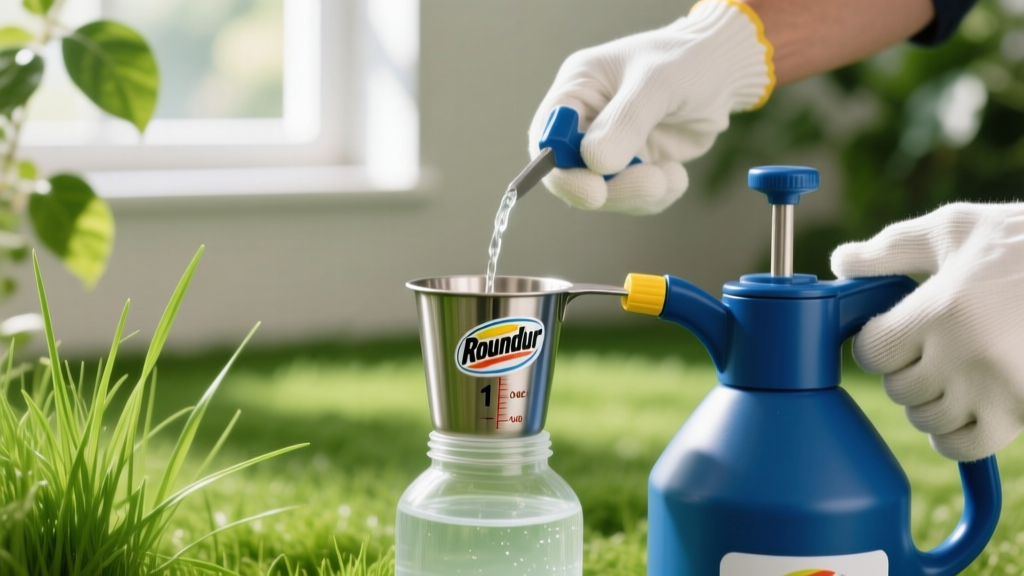
How Many Ounces of Roundup Per Gallon of Water? Exact Mix Guide
The Short Answer: Standard Dosage Rates
When determining how many ounces of Roundup per gallon of water to mix, the baseline rate for general weed control is 2.5 fluid ounces (5 tablespoons) per gallon of water. However, this baseline only applies to specific retail formulations and standard annual weeds. If you are targeting deep-rooted perennials, brush, or using a commercial-grade concentrate, the dosage must increase to ensure complete translocation to the root system.
Over-mixing herbicide does not kill weeds faster; it simply burns the top foliage, sealing off the plant's vascular system and preventing the glyphosate from reaching the roots. Under-mixing leads to herbicide resistance and wasted time. Below is the exact mixing matrix based on the two most common glyphosate concentrates available to homeowners and property managers in 2026.
The Exact Mixing Matrix
| Weed Target | Retail Super Concentrate (50.2%) | Commercial Pro (41% + Surfactant) | Water Volume |
|---|---|---|---|
| Annual Weeds & Grasses | 2.5 fl oz (5 tbsp) | 2.0 fl oz (4 tbsp) | 1 Gallon |
| Perennial Weeds (Dandelion, Bindweed) | 3.75 fl oz (7.5 tbsp) | 3.0 fl oz (6 tbsp) | 1 Gallon |
| Heavy Brush & Woody Vines | 5.0 fl oz (10 tbsp) | 4.0 fl oz (8 tbsp) | 1 Gallon |
Understanding Active Ingredient Percentages
The confusion around dosage usually stems from the difference between retail and commercial products. Roundup Super Concentrate, typically sold in 32 oz or 1-gallon jugs at home improvement stores, contains 50.2% glyphosate as its active ingredient but lacks a built-in surfactant in some newer 2026 formulations, requiring you to add a non-ionic surfactant (NIS) separately. Roundup Pro Concentrate Plus, sold through agricultural and landscape supply stores, contains 41% glyphosate but includes a proprietary surfactant blend (Pelox) that drastically improves leaf penetration. Because the Pro version penetrates faster, you can use slightly less active ingredient to achieve the same root-kill result.
⚠️ Hard Water Tie-Up Warning: Glyphosate molecules bind tightly to calcium, magnesium, and iron ions found in hard well water. If you mix your solution with untreated hard water, the active ingredient becomes locked in a salt complex and is rendered useless before it even hits the leaf. To prevent this, add Ammonium Sulfate (AMS) at a rate of 0.25 ounces per gallon of water before adding the Roundup. According to Penn State Extension pesticide guidelines, AMS conditions the water and ensures the herbicide remains biologically active.
Step-by-Step Calibration and Mixing Flow
Proper mixing order is critical to prevent the concentrate from clumping or foaming out of the tank. Follow this exact sequence for a 2-gallon pump sprayer:
- Pre-fill Water: Fill the sprayer tank with 1.5 gallons of clean water (about 3/4 full). Never pour concentrate into an empty tank.
- Condition the Water: If using hard water, add 0.5 oz of liquid Ammonium Sulfate (AMS) or a commercial water conditioner. Agitate gently.
- Measure the Concentrate: Using a dedicated, chemical-resistant measuring cup, measure exactly 5.0 fl oz of Roundup Super Concentrate (for a 2-gallon batch targeting standard weeds).
- Add Herbicide: Pour the concentrate into the tank. Secure the lid and shake gently to integrate.
- Add Surfactant (If Required): If your specific concentrate label requires a non-ionic surfactant, add 1/2 teaspoon (approx. 0.08 oz) per gallon. Add this last to prevent excessive foaming.
- Top Off: Add the remaining 0.5 gallons of water to reach the 2-gallon fill line. Pressurize the tank to 40 PSI.
Coverage Rates and Cost Breakdown
Understanding how many ounces of Roundup per gallon of water is only half the equation; you must also calculate your coverage area to budget effectively. A standard 1-gallon of mixed solution, applied through a flat-fan nozzle (like a TeeJet 8002VS) at a walking pace of 3 MPH, will cover approximately 1,000 square feet of dense weed coverage. For spot-treating sparse weeds, that same gallon can stretch to cover 2,500 square feet.
2026 Cost Analysis: Retail vs. Commercial
Let us break down the actual cost per 1,000 square feet of treatment based on current market pricing.
- Retail Route (Super Concentrate 50.2%): A 32 oz bottle costs approximately $26.00. At a mix rate of 2.5 oz per gallon, one bottle yields 12.8 gallons of mixed solution. This covers 12,800 sq ft. Cost: $2.03 per 1,000 sq ft.
- Commercial Route (Pro 41%): A 2.5-gallon (320 oz) jug costs approximately $165.00. At a mix rate of 2.0 oz per gallon, one jug yields 160 gallons of mixed solution. This covers 160,000 sq ft. Cost: $1.03 per 1,000 sq ft.
Pro Tip for Large Properties: If you are managing over 10,000 square feet of driveway edges, fence lines, or pasture, stop buying retail jugs. The upfront cost of a commercial 2.5-gallon jug of 41% glyphosate and a separate bottle of non-ionic surfactant will cut your annual herbicide budget in half while providing superior, professional-grade weed control.
Common Mixing Mistakes That Kill Efficacy
Even if your ounce-to-gallon ratio is perfect, environmental and mechanical factors can cause your application to fail. Avoid these three critical errors:
1. Spraying During Temperature Inversions or High Heat
Glyphosate translocates best when plants are actively photosynthesizing. If you spray when temperatures exceed 85°F, the plant closes its stomata to conserve moisture, halting the uptake of the herbicide. Furthermore, spraying during early morning temperature inversions can cause the chemical to volatilize and drift onto desirable ornamental plants. The EPA's glyphosate overview emphasizes following label directions regarding weather conditions to prevent off-target damage.
2. Mowing or Disturbing Weeds Before Application
Herbicide requires adequate leaf surface area to be absorbed. If you string-trim or mow the weeds immediately before spraying, you remove the very tissue needed to absorb the chemical. Always spray when weeds have at least 4 to 6 inches of active, green foliage, and wait a minimum of 7 days after spraying before mowing or tilling the area to allow the chemical to reach the root crown.
3. Using Muddy or Algae-Filled Water
Drawing water from a pond or rain barrel that contains suspended clay particles or heavy algae will neutralize your mix. Soil particles possess a high cation exchange capacity (CEC) and will bind to the glyphosate molecules instantly. Always use clean, potable water or heavily filtered rainwater for your mixing base. For more on managing tough perennial weeds that survive standard applications, refer to the UC IPM Weed Management in Lawns guide, which details integrated approaches for stubborn species.
Final Calibration Check
Before treating your entire property, perform a water-only calibration test. Fill your sprayer with 1 gallon of plain water and spray a 500-square-foot section of your driveway at your normal walking pace and nozzle pressure. If you run out of water before finishing the 500 square feet, your output is too high, and you are wasting chemical. If you have water left over, you are walking too fast or your nozzle is clogged, resulting in a sub-lethal dose that will breed resistant weeds. Adjust your pace until exactly 1 gallon covers 1,000 square feet, then mix your final batch with confidence.

