
Home & Garden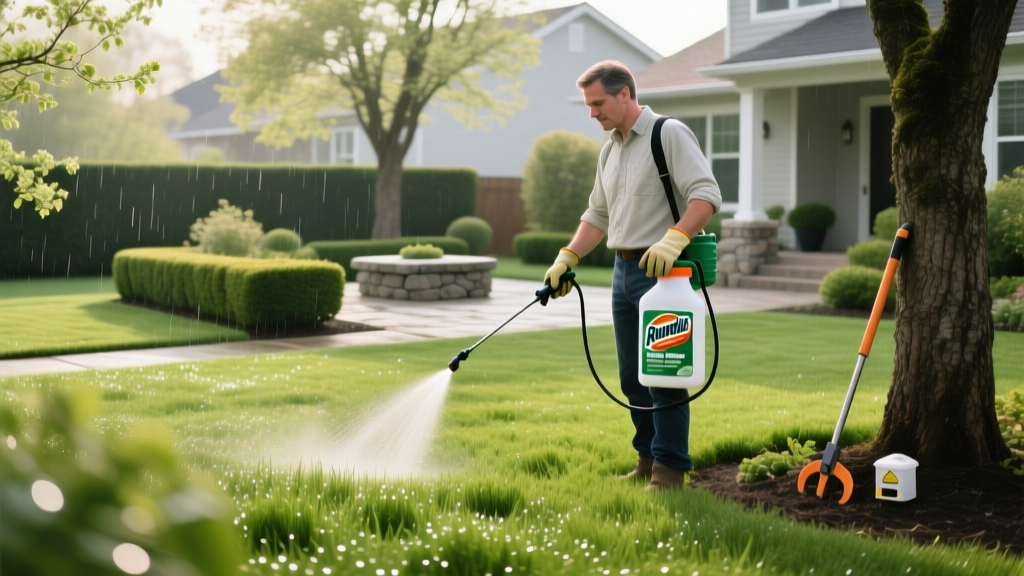
How Long Does Roundup Need Before Rain? Rainfast Timelines
The exact time Roundup requires before a rain event depends entirely on the specific formulation you are using. While the general industry baseline for standard glyphosate is two hours, modern Roundup products incorporate varied active ingredients, surfactants, and soil-residual chemicals that drastically alter this timeline. Applying these herbicides without understanding their specific rainfast windows leads to diluted efficacy, chemical runoff, and wasted money on re-applications.
The Biology of Cuticle Penetration and Phloem Loading
Glyphosate is a systemic, non-selective herbicide. It does not kill weeds upon surface contact; it must penetrate the waxy leaf cuticle, enter the plant's phloem, and translocate down to the root system. According to the Environmental Protection Agency (EPA), this translocation process is what ultimately prevents weed regrowth. If rain strikes the leaf before the active ingredient has crossed the cuticle barrier, the water physically washes the chemical off the plant, resulting in a total application failure.
The speed of this absorption is dictated by the surfactant package included in the product. Surfactants lower the surface tension of water, allowing the spray droplet to flatten and spread across the leaf rather than beading up and rolling off. However, environmental factors like high humidity, low temperatures (below 60°F), and drought-stressed plants with thickened cuticles can slow absorption, requiring you to extend your rain-free window beyond the manufacturer's minimum recommendation.
Exact Rainfast Timelines by Roundup Formulation
Not all Roundup products are created equal. The brand has expanded far beyond basic glyphosate. Below is a breakdown of the required dry times for the most common residential formulations available on the market.
| Product Formulation | Active Ingredients | Minimum Rainfast Time | Ideal Application Window |
|---|---|---|---|
| Roundup Ready-To-Use Weed & Grass Killer III | Glyphosate + Pelargonic Acid | 30 Minutes | Fast-acting contact burn with systemic root kill. |
| Roundup Super Concentrate | Glyphosate (50.2%) | 2 Hours | Heavy brush, deep-rooted perennials, and large areas. |
| Roundup Poison Ivy Plus Tough Brush Killer | Glyphosate + Triclopyr | 2 Hours | Waxy, hard-to-kill broadleaf weeds and woody vines. |
| Roundup Max Control 365 | Glyphosate + Imazapic | 4 to 6 Hours | Driveways and patios where soil residual prevention is needed. |
Expert Warning: Products containing Imazapic (like Max Control 365) require significantly longer dry times because the chemical must not only be absorbed by the foliage but also wash down into the top inch of soil to create a pre-emergent barrier. If rain occurs at the 2-hour mark, the foliar glyphosate might survive, but the soil barrier will fail, allowing new weeds to germinate weeks later.
Dosage, Coverage, and the True Cost of Wash-Off
Understanding coverage rates is critical for calculating the financial impact of a failed application. A standard 32 oz bottle of Roundup Super Concentrate retails for approximately $45 to $48. The label dictates a mix rate of 6 fluid ounces per gallon of water for standard weeds, yielding just over 5 gallons of mixed solution.
Calculating Your Cost Per Square Foot
- Total Coverage: 1 gallon of mixed solution covers roughly 300 to 400 square feet, depending on weed density and sprayer nozzle output.
- Total Yield: 5 gallons covers approximately 1,500 to 2,000 square feet.
- Cost Analysis: At $46 per bottle, your baseline cost is $0.023 to $0.030 per square foot.
If you apply the herbicide and a sudden shower washes it off before the rainfast window closes, you have effectively doubled your cost per square foot. For a standard 2,500 square foot driveway border, a wash-off event costs you an additional $60 to $75 in wasted chemical, not including the labor and time required to re-mix and re-spray.
The Hard Water Antagonism Factor
According to research published by NC State Extension, water quality heavily influences glyphosate efficacy. Hard water contains high levels of calcium, magnesium, and iron cations. These positively charged ions bind to the negatively charged glyphosate molecule, creating a complex that the plant cannot absorb. If you are mixing Roundup concentrate with hard well water, the absorption time slows down significantly, increasing the risk that an unexpected rain shower will wash the deactivated chemical off the leaf. To mitigate this, add 1/2 ounce of liquid ammonium sulfate (AMS) per gallon of water to your tank before adding the herbicide. The AMS ties up the hard water cations, freeing the glyphosate to penetrate the leaf rapidly.
Tactical Application Strategies for Unpredictable Weather
When dealing with volatile spring or late-summer weather patterns, rely on these operational adjustments to secure your application:
- Optimize Droplet Size: Adjust your pump sprayer nozzle to a medium-coarse spray pattern (producing 200 to 400-micron droplets). Fine mists dry faster but are highly susceptible to wind drift and immediate evaporation. Coarse droplets carry more surfactant mass per drop, maintaining a liquid state on the leaf longer to facilitate cuticle penetration without rolling off.
- Target the Morning Window: Apply between 8:00 AM and 10:00 AM. Morning applications allow the chemical to absorb during the peak transpiration hours of the day. Avoid late afternoon applications; as temperatures drop and stomata close in the evening, absorption halts, leaving the chemical vulnerable to overnight dew or unexpected evening showers.
- Use a Spray Indicator Dye: When treating large properties, add a non-ionic blue or red spray indicator dye to your tank. This prevents accidental double-spraying if you are interrupted by a rain delay and need to finish the job the following day.
Frequently Asked Questions
What happens if it rains 15 minutes after I spray standard Roundup?
If you are using a standard glyphosate-only concentrate that requires a 2-hour rainfast window, a rain event at the 15-minute mark will wash away approximately 80% to 90% of the active ingredient. You will likely see minor yellowing of the foliage due to the small amount absorbed, but the root system will survive and the weed will recover within two weeks. A full re-application is required once the leaves dry.
Can I spray if it is going to rain tomorrow morning?
Yes. As long as you have a guaranteed 4 to 6 hours of dry weather immediately following the application, the glyphosate will have sufficient time to translocate into the plant's vascular system. Rain falling 12 to 16 hours after application will not negatively impact the systemic kill process, and may actually help activate soil-residual ingredients in extended-control formulations.
Does high humidity extend the time Roundup needs before rain?
Paradoxically, high humidity can speed up initial absorption because the water in the spray droplet does not evaporate as quickly, keeping the chemical in a liquid state on the leaf. However, high humidity also causes plant stomata to close and reduces the plant's internal transpiration pull, which slows the downward movement of the herbicide to the roots. In highly humid conditions, extend your rain-free buffer window by an additional 30 to 45 minutes to ensure complete phloem loading.