
Home & Garden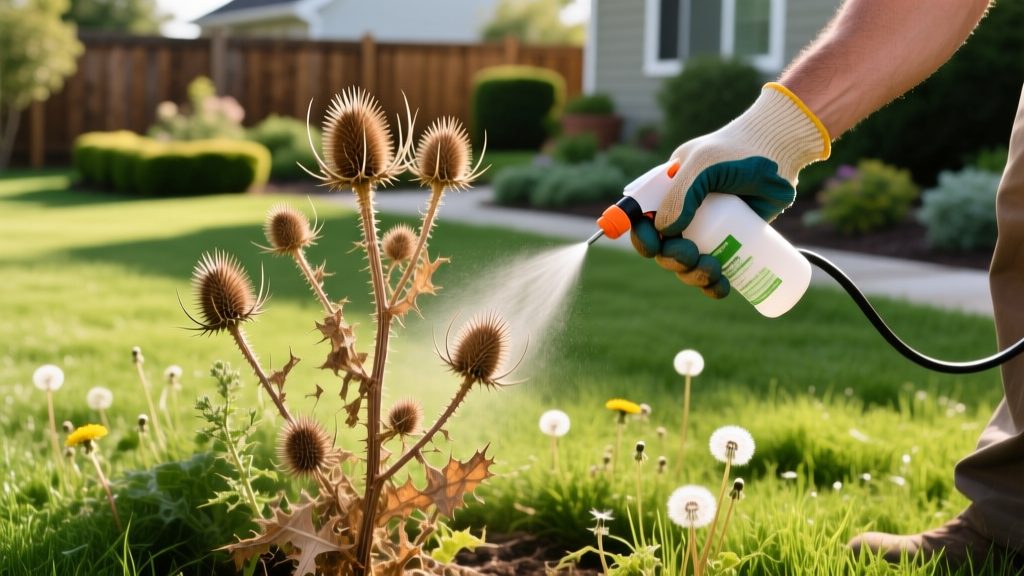
How to Kill Tumbleweed Before It Spreads: Spot-Treatment Guide
The iconic tumbleweed rolling across a barren landscape is not a native botanical marvel; it is a highly aggressive, drought-adapted summer annual that can drop up to 200,000 seeds across your property in a single season. Most commonly identified as Russian thistle (Salsola tragus) or kochia (Kochia scoparia), these weeds thrive in poor, compacted soils and outcompete desirable turfgrass. Spot-treating tumbleweed requires precise timing, specific herbicide chemistries, and an understanding of the plant's unique biological defense mechanisms.
The Biology of the Tumble: Why Spot-Treatment is Critical
Tumbleweeds are summer annuals that germinate in early spring when soil temperatures consistently reach 50°F to 55°F. Unlike broadleaf weeds that spread via rhizomes or stolons, tumbleweed relies entirely on seed dispersal. In late autumn, the plant forms a specialized cellular structure called an abscission layer at the base of the main stem. This layer weakens, allowing the dead plant to snap off at ground level and roll in the wind, scattering seeds miles from the parent plant.
⚠️ CRITICAL WARNING: Never use a string trimmer or rotary mower on mature tumbleweeds. Cutting the plant above the abscission layer simply accelerates the drying process and triggers premature seed shedding. Spot-treatment must occur when the plant is under 6 inches tall, or via manual extraction before the abscission layer forms.
Identifying Russian Thistle vs. Kochia
While both are colloquially called "tumbleweed," their chemical susceptibilities and growth habits differ slightly. Accurate identification ensures you select the correct adjuvant for your herbicide mix.
| Feature | Russian Thistle (Salsola tragus) | Kochia (Kochia scoparia) |
|---|---|---|
| Leaf Structure | Fleshy, needle-like, spine-tipped | Flat, lance-shaped, covered in fine hairs |
| Stem Color | Green with distinct purple/red striping | Green, turning deep red in late summer |
| Mature Shape | Spherical, highly branched, rigid | Conical/pyramidal, denser foliage |
| Cuticle Defense | Thick waxy cuticle under drought stress | Dense trichomes (hairs) block droplets |
Pre-Emergent Defense: Stopping Germination
Because tumbleweed seeds germinate in a massive flush during early spring, pre-emergent herbicides are the most cost-effective control method. According to the University of California Statewide IPM Program, establishing a chemical barrier before soil temperatures hit 50°F prevents the radicle (embryonic root) from establishing.
Recommended Pre-Emergent Chemistries
- Prodiamine 65 WDG (Barricade): Apply at a rate of 0.23 oz per 1,000 sq ft. This provides up to 4 months of residual control. Cost is approximately $0.15 per 1,000 sq ft. Must be watered in with 0.5 inches of irrigation within 48 hours to activate the soil barrier.
- Pendimethalin (Pendulum AquaCap): Apply at 2.3 oz per 1,000 sq ft. Better suited for areas with heavy organic matter where prodiamine might bind too tightly to soil particles.
- Dithiopyr (Dimension): Apply at 0.5 oz per 1,000 sq ft. This is the only pre-emergent that offers early post-emergent activity, meaning it will kill tumbleweed seedlings that have already sprouted up to the 2-leaf stage.
Post-Emergent Spot-Treatment Protocols
If you miss the pre-emergent window, spot-treating young tumbleweeds (under 4 inches tall) is mandatory. Mature plants develop biological defenses that render standard herbicides useless. Research from Colorado State University Extension highlights that drought-stressed tumbleweeds drastically increase their waxy cuticle thickness, preventing water-based herbicides from penetrating the leaf tissue.
Lawn and Turf Spot-Treatment (Selective)
For tumbleweeds invading Bermuda, Zoysia, or Kentucky Bluegrass, use a three-way broadleaf herbicide. Avoid single-active-ingredient products like 2,4-D alone, as Russian thistle exhibits high tolerance to it.
💡 PRO MIX RECIPE (Per 1 Gallon of Water):
• 0.75 oz Trimec Classic (2,4-D + MCPP + Dicamba)
• 0.5 oz Quicksilver T&O (Carfentrazone - accelerates cell membrane rupture)
• 0.33 oz Methylated Seed Oil (MSO) (Crucial for dissolving the waxy cuticle)
Agitate the tank continuously. Spray until the leaves are wet, but not to the point of runoff. Expect visible necrosis within 24 hours.
• 0.75 oz Trimec Classic (2,4-D + MCPP + Dicamba)
• 0.5 oz Quicksilver T&O (Carfentrazone - accelerates cell membrane rupture)
• 0.33 oz Methylated Seed Oil (MSO) (Crucial for dissolving the waxy cuticle)
Agitate the tank continuously. Spray until the leaves are wet, but not to the point of runoff. Expect visible necrosis within 24 hours.
Hardscape, Driveways, and Fencelines (Non-Selective)
In rock beds, gravel driveways, or along fence lines where turf safety is irrelevant, systemic non-selective herbicides are the standard. However, hard water and the plant's internal pH can neutralize glyphosate before it translocates to the taproot.
- Glyphosate 41% (Roundup ProMax): Mix at 2.5 oz per gallon of water.
- Ammonium Sulfate (AMS): Add 1 tablespoon (approx. 0.5 oz) of AMS per gallon. The AMS binds to calcium and magnesium ions in hard water, preventing them from locking up the glyphosate molecule. It also lowers the spray solution pH, increasing foliar absorption.
- Application Timing: Spray between 8:00 AM and 10:00 AM when the plant's stomata are fully open and transpiration rates are highest, pulling the herbicide down into the deep taproot.
Mechanical Removal: Timing the Pull
For organic lawns or areas near edible gardens where herbicide drift is unacceptable, manual extraction is required. Tumbleweed develops a deep, woody taproot that can extend 3 to 5 feet into compacted soil within its first month of growth.
- Wait for Moisture: Attempting to pull tumbleweed from dry, baked clay will result in the taproot snapping, leaving the crown intact to regenerate. Water the area deeply (1 inch) 24 hours before extraction.
- Use a Weed Wrench or Dandelion Digger: Standard gardening trowels are too short. Use a 14-inch steel soil knife or a dedicated weed wrench to lever the taproot out from the base.
- Dispose Before Abscission: If the plant has begun to turn brown and the base feels brittle, do not pull it. The vibration of pulling can shatter the abscission layer, dropping thousands of seeds directly into the soil bank. Instead, carefully place a heavy-duty contractor bag over the plant, tie it at the base, and cut the stem inside the bag.
Frequently Asked Questions
Can I burn tumbleweeds to destroy the seeds?
While mature tumbleweeds are highly flammable (hence the name "burning bush" for kochia), burning them in place is not recommended. The outer branches will burn, but the dense, moisture-rich core and the seeds resting on the soil surface often survive the brief heat exposure. Furthermore, rolling a burning tumbleweed poses a severe wildfire risk to neighboring properties and structures.
Why did my 2,4-D spray turn the tumbleweed red but not kill it?
This is a classic symptom of herbicide resistance and poor translocation. 2,4-D causes epinasty (uncontrolled, twisted growth) and reddening, but if the plant is drought-stressed, the phloem shuts down. The herbicide gets trapped in the leaves and never reaches the root crown. Adding a surfactant like MSO and a systemic booster like carfentrazone forces rapid cellular destruction before the plant can wall off the chemical.
How long do tumbleweed seeds remain viable in the soil?
Unlike some weeds with decades-long seed banks, Russian thistle seeds are relatively short-lived in the soil. Most seeds germinate within the first year, and viability drops to near zero after 24 to 36 months. This makes a strict two-year pre-emergent and spot-treatment regimen highly effective for total eradication from a localized yard.