
Home & Garden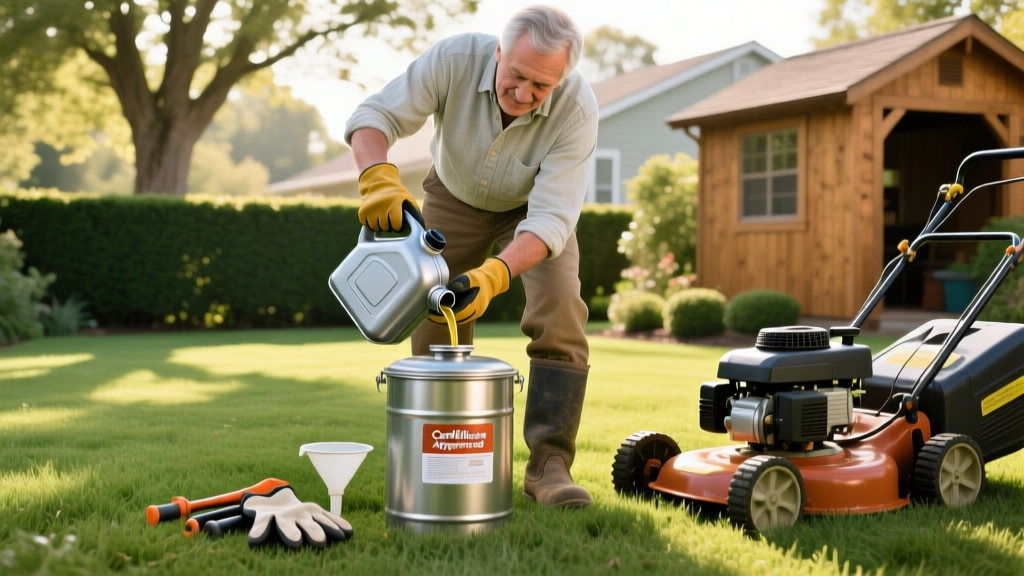
How to Safely Dispose of Gasoline From Lawn Equipment
The Hidden Cost of Degraded Fuel in Yard Equipment
Leaving gasoline in your lawn mower, string trimmer, or leaf blower over the winter is one of the most common mistakes homeowners make. Modern E10 gasoline (10% ethanol) begins to degrade in as little as 30 days. As the fuel oxidizes, it forms a sticky varnish and gum that clogs the microscopic passages in your carburetor—specifically the 0.030-inch main jets and emulsion tubes. When spring arrives, your equipment won't start, leading to costly rebuilds or replacements.
If you have discovered a forgotten gas can in the back of your shed or need to drain a winterized mower, you cannot simply dump the fuel down a drain, into the soil, or in your household trash. Gasoline is a highly volatile, toxic hazardous waste. Understanding how to safely dispose of gasoline from lawn equipment requires knowing the fuel's condition, local environmental regulations, and proper transport protocols.
How to Tell if Your Gasoline Has Gone Bad
Before deciding whether to dispose of the fuel or attempt to revive it, you must determine its age and condition. Ethanol is hygroscopic, meaning it absorbs moisture from the air. Over time, this leads to phase separation, where the ethanol and water sink to the bottom of the tank, leaving a lower-octane gasoline layer on top.
| Fuel Type | Standard Shelf Life | Shelf Life with Stabilizer | Primary Degradation Risk |
|---|---|---|---|
| E10 (10% Ethanol) | 3 to 6 months | 12 to 24 months | Phase separation, water absorption |
| E15 (15% Ethanol) | 1 to 3 months | 12 months | Rapid phase separation, corrosion |
| E85 (85% Ethanol) | 1 to 2 months | Not recommended | Extreme moisture absorption |
| Ethanol-Free (Rec 90) | 6 months | 24+ months | Oxidation, varnish buildup |
The Sensory and Visual Inspection Test
Pour a small sample of the suspect fuel into a clear glass jar. Do not use plastic, as degraded fuel can melt certain polymers and skew your visual inspection.
- Color: Fresh gasoline is nearly clear or slightly yellowish. Bad gas turns dark amber or brown due to oxidation.
- Smell: Fresh gas has a sharp, distinct petroleum odor. Degraded gas smells sour, acidic, or remarkably like old varnish or paint thinner.
- Separation: Look for a distinct line or cloudy layer at the bottom of the jar. If you see a watery layer beneath the fuel, phase separation has occurred. The fuel is ruined and must be disposed of.
⚠️ Critical Safety Warnings: What NOT to Do
Improper disposal of gasoline poses severe environmental and fire hazards. Never commit the following violations:
- Do NOT dump it on the ground or in a storm drain: One gallon of gasoline can contaminate up to 750,000 gallons of groundwater. This violates the Clean Water Act and carries massive municipal fines.
- Do NOT pour it in the household trash: Gasoline vapors can ignite from the compaction mechanisms inside garbage trucks.
- Do NOT burn it in a fire pit or burn barrel: Gasoline vapors are heavier than air and can travel along the ground to an ignition source, causing explosive flashbacks.
- Do NOT mix it with oil for disposal: Mixing fluids contaminates recycling streams at hazardous waste facilities, forcing them to reject your drop-off.
Always defer to the EPA's Household Hazardous Waste guidelines for legal disposal mandates in your jurisdiction.
Step-by-Step: How to Safely Dispose of Gasoline
If your visual inspection confirms the fuel is degraded, follow this exact protocol to remove it from your equipment and transport it to a facility.
Step 1: Extract the Fuel Safely
Never tip a lawn mower on its side to drain gas; this floods the carburetor bowl, air filter, and crankcase with oil and fuel. Instead, use a manual or battery-powered fluid extractor pump. Insert the extraction tube down the fuel tank neck until it hits the bottom. Pump the degraded fuel into an approved, empty red plastic gas can (such as an EPA/CARB-compliant HDX 2.5-gallon can).
Step 2: Prepare for Transport
The Department of Transportation (DOT) strictly regulates the transport of flammable liquids. To comply with limited quantity exemptions (49 CFR 173.150):
- Ensure your gas can is tightly sealed and the spout cap is secured.
- Limit transport to a maximum of 5 gallons per non-commercial vehicle trip.
- Place the gas can upright in the bed of a pickup truck or the trunk of a car. Never transport gasoline in the passenger cabin where vapors can accumulate and ignite from a static spark or cigarette.
- Secure the can with ratchet straps to prevent tipping during transit.
Step 3: Locate a Hazardous Waste Drop-Off
Most municipal landfills do not accept liquid hazardous waste. You must find a designated Household Hazardous Waste (HHW) collection site. Search your local county or city public works website for 'HHW collection days.' Many municipalities host bi-annual drop-off events, while larger counties maintain permanent, year-round facilities. You can also use the Earth911 recycling directory or consult resources from the National Fire Protection Association (NFPA) to find certified local handlers.
Decision Matrix: Can You Revive Old Gasoline?
Not all old gas needs to be disposed of. If the fuel is only slightly past its prime and has not suffered phase separation, you can often salvage it. Use this framework to decide your next move.
✅ Safe to Revive & Dilute
- Fuel is less than 6 months old.
- Color is slightly darkened but not brown.
- Smells like standard gasoline, not varnish.
- No visible water layer in the glass jar test.
- Action: Dilute at a ratio of 1 part old gas to 5 parts fresh, high-octane (89+) ethanol-free gas. Add a double dose of fuel stabilizer.
❌ Must Dispose Immediately
- Fuel is over 1 year old (without stabilizer).
- Color is dark amber, brown, or cloudy.
- Smells sour, acidic, or like paint thinner.
- Phase separation (water layer) is visible.
- Action: Extract entirely, flush the equipment tank with fresh fuel, and transport to an HHW facility.
Preventing Gas Buildup in Your Shed
The most effective way to avoid the hassle of gasoline disposal is to prevent fuel from degrading in the first place. Implement these shed-management protocols at the end of every mowing season:
1. Use Fuel Stabilizers Correctly
Products like STA-BIL Storage Fuel Stabilizer or Sea Foam Motor Treatment are essential for winterizing. However, timing is critical. You must add the stabilizer to the gas can before you fill your equipment, not after the fuel has already sat for months. The standard dosage is 1 ounce of STA-BIL per 2.5 gallons of fuel. For long-term storage (12+ months), double the dose.
2. The 5-Minute Circulation Rule
Adding treated fuel to the tank is not enough. You must start the engine and let it run for at least 5 to 10 minutes. This ensures the stabilized fuel is drawn through the fuel lines, the fuel pump, and into the carburetor float bowl, protecting the internal brass and aluminum components from corrosion.
3. Consider Ethanol-Free Fuel or Battery Alternatives
If you are tired of managing fuel degradation, switch to canned ethanol-free fuel (like TruFuel 4-in-1), which remains stable for up to two years unopened. Alternatively, the 2026 landscape of outdoor power equipment offers high-voltage lithium-ion alternatives (such as the EGO 56V or DeWalt 20V MAX lines) that entirely eliminate the need for gasoline, carburetor maintenance, and hazardous waste disposal.
Expert Insight: 'Many homeowners drain the gas tank but forget the carburetor bowl. Even an empty tank leaves 2 to 3 ounces of fuel in the bowl. If you drain the tank, you must also locate the carburetor drain screw or run the engine until it completely stalls to ensure the system is 100% dry for winter storage.'

