
Home & Garden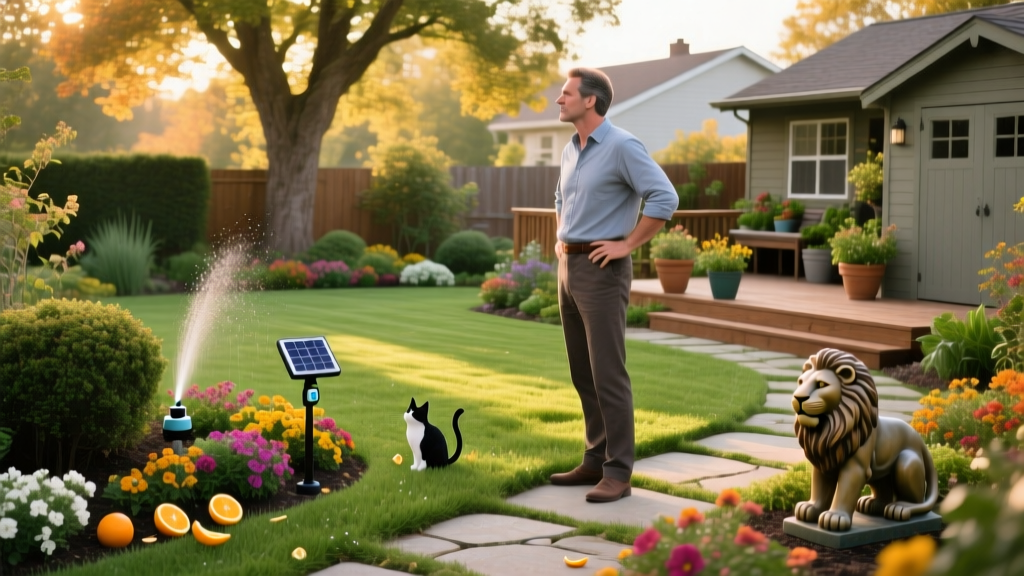
What Keeps Cats Away From Your House? 7 Proven Deterrents
Identifying the Attraction: Why Cats Target Your Yard
Before deploying deterrents, you must understand why felines are trespassing. Cats are territorial and highly sensory-driven. They do not wander into yards randomly; they are drawn by specific environmental triggers. The primary attractants include loose, dry soil (which mimics commercial litter), sheltered crawls spaces under decks, and the presence of small prey like rodents or ground-feeding birds.
Furthermore, feral and roaming neighborhood cats use gardens as communal latrines. This is not just a landscaping nuisance; it is a biological hazard. According to the Cornell Feline Health Center, outdoor cat feces are the primary environmental vector for Toxoplasma gondii, a parasite that poses severe health risks to pregnant women and immunocompromised individuals. Eliminating the attractants is the mandatory first step in any exclusion strategy.
Sensory Deterrents: Olfactory and Taste Barriers
Cats possess an olfactory system with roughly 200 million odor-sensitive cells—compared to a human's 5 million. Leveraging this sensitivity is one of the most effective ways to establish an invisible perimeter around your home.
Strategic Planting
Integrating feline-repellent flora into your garden borders creates a natural, low-maintenance barrier. The most effective species include:
- Plectranthus caninus (Scaredy Cat Plant): Emits a potent, skunk-like odor when brushed against. It thrives in USDA zones 9-11 but can be grown as an annual in cooler climates.
- Ruta graveolens (Rue): Features bitter, highly aromatic foliage that cats instinctively avoid. Note: Wear gloves when pruning, as rue can cause contact dermatitis in humans.
- Lavandula angustifolia (English Lavender): While pleasant to humans, the high camphor and linalool content overwhelms feline scent receptors.
Commercial Scent Repellents
For immediate results, commercial liquid repellents outperform DIY home remedies. Products like Liquid Fence Cat & Dog Repellent utilize putrescent whole egg solids and garlic to trigger a predator-avoidance instinct. Nature's Mace Cat Repellent relies on concentrated peppermint and rosemary oils. Apply these directly to the perimeter of your foundation and garden beds every 14 days, or immediately after heavy rainfall.
⚠️ Toxicity Warning: Never use undiluted citrus, eucalyptus, or tea tree essential oils directly on your soil or plants. While often recommended in amateur forums, these oils are highly toxic to cats if ingested during grooming and can cause acute liver failure. Always consult the ASPCA's Toxic and Non-Toxic Plants database before introducing new botanicals or oils to your yard.
Physical and Technological Barriers
When scent deterrents fail against highly motivated or hungry cats, you must escalate to physical and technological exclusion methods. These devices exploit a cat's startle reflex and physical discomfort without causing harm.
Motion-Activated Sprinklers
The gold standard for yard exclusion is the Orbit 62100 Yard Enforcer. Retailing around $75 to $85, this device uses a 3-sensor system (noise, heat, and motion) to differentiate between wind, small animals, and larger intruders. It projects a sudden burst of water up to 35 feet. The key to success is placement: position the unit to guard the specific garden bed or entry point, and move it every few weeks so cats do not learn its blind spots.
Ultrasonic Pest Repellers
Devices like the Aspectek Predator Guard emit high-frequency sound waves between 25 kHz and 65 kHz. Because human hearing typically caps at 20 kHz, the noise is silent to you but sounds like a blaring alarm to a cat. Critical installation detail: Ultrasonic waves do not penetrate solid objects. You must mount the device at cat head-height (12 to 18 inches off the ground) and ensure there is a clear line of sight to the target area. Placing it at human eye-level or behind thick shrubbery renders it useless.
Tactile Deterrents: Scat Mats and Prickle Strips
Cats despise walking on uneven or sharp surfaces. Plastic scat mats (such as the 16x13 inch Dahnta or Homarden models) feature blunt, UV-stabilized polypropylene spikes. They are uncomfortable enough to deter digging but flexible enough to prevent injury. Lay these flat over your soil and cover them with a light layer of decorative mulch to hide them from view while maintaining the tactile surprise.
Deterrent Comparison Matrix
| Method | Mechanism | Est. Cost | Maintenance | Best Application |
|---|---|---|---|---|
| Motion Sprinkler | Startle (Water/Noise) | $75 - $90 | Low (Battery swap) | Large open lawns, garden perimeters |
| Ultrasonic Emitter | Auditory Discomfort | $35 - $50 | Medium (Clear debris) | Under decks, narrow side-yards |
| Scent Repellents | Olfactory Overload | $20 - $40 | High (Bi-weekly spray) | Foundation lines, planter boxes |
| Plastic Scat Mats | Tactile Discomfort | $15 - $25 (per 2-pack) | None (Set and forget) | Inside raised beds, potted plants |
Environmental Modifications: Removing the Welcome Mat
No deterrent will work long-term if your yard provides a superior resource compared to neighboring properties. You must alter the environment to make it inhospitable.
Rethink Your Mulch Strategy
Fine-textured mulches like pine straw, shredded bark, and cocoa bean hulls are highly attractive to cats for digging and elimination. (Note: Cocoa bean mulch contains theobromine and is highly toxic to both cats and dogs). Replace these in high-traffic zones with large, jagged river rock (1 to 2 inches in diameter) or thick cedar wood chips. The sharp edges and strong cedar aroma naturally discourage digging.
Eliminate Food and Water Sources
Secure all outdoor trash bins with bungee cords or locking lids. If you feed birds, switch to weight-activated bird feeders that close when heavier animals land on them, and stop using ground-scatter seed mixes. Finally, ensure there are no standing water sources, such as clogged gutters or low-lying tarps, that could serve as a watering hole.
Block Shelter Access
Cats seek out dry, enclosed spaces for resting and nesting. Seal off crawl spaces, block access under sheds, and install heavy-duty, 16-gauge galvanized hardware cloth (not flimsy chicken wire) over any gaps in your foundation or deck skirting. Bury the bottom edge of the hardware cloth 6 inches into the soil and angle it outward in an 'L' shape to prevent digging underneath.
Frequently Asked Questions
Are mothballs effective for keeping cats away?
No. Mothballs contain naphthalene or paradichlorobenzene, both of which are highly toxic to cats, dogs, wildlife, and humans. Furthermore, using mothballs as an outdoor animal repellent is a violation of federal pesticide laws (FIFRA) and can result in severe environmental contamination and legal fines. Never use them in your yard.
Will ultrasonic devices harm my neighbor's dog or local wildlife?
Ultrasonic frequencies between 25 kHz and 30 kHz are generally annoying to most mammals, including dogs and foxes, but they do not cause physical hearing damage. However, they can cause stress to non-target wildlife. To minimize this, use models with adjustable frequency dials and motion sensors so the device only activates when an animal physically enters the zone, rather than running continuously.
How do I stop cats from climbing my trees?
Wrap the base of the tree trunk with a 2-foot-wide band of aluminum flashing or smooth PVC pipe. Cats rely on their claws to climb; a smooth, slippery surface prevents them from gaining the traction needed to ascend. Ensure the wrap is loose enough not to girdle the tree as it grows.
Summary Action Plan: For immediate relief, install an Orbit Yard Enforcer sprinkler and lay plastic scat mats in active garden beds. For long-term exclusion, transition your garden borders to large river rock, plant Plectranthus caninus, and seal all under-deck access points with 16-gauge hardware cloth.