
Home & Garden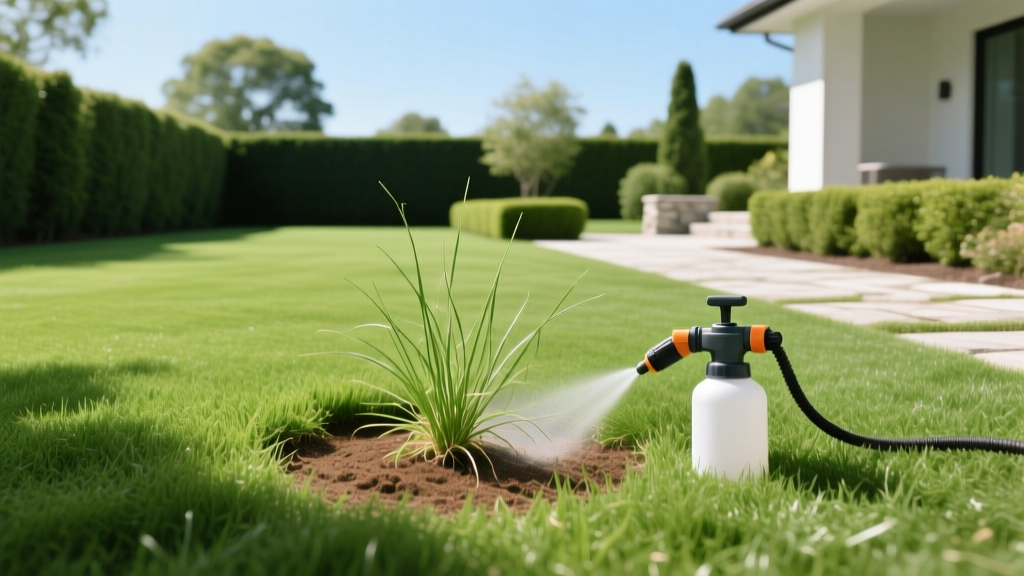
Best Quackgrass Killer Options: Spot-Treatment Guide for Lawns
Quackgrass (Elymus repens) is widely considered one of the most frustrating perennial weeds in home lawns. Unlike broadleaf weeds that succumb easily to standard 2,4-D herbicides, quackgrass is a grassy weed with a biological armor that makes it notoriously difficult to eradicate. Finding an effective quackgrass killer requires understanding its underground growth habits and selecting the right active ingredient for your specific turfgrass type. This guide breaks down the exact chemistry, product selections, and application protocols required to eliminate quackgrass without destroying your surrounding lawn.
The Rhizome Problem: Why Quackgrass Defies Standard Weed Killers
The primary reason most homeowners fail to kill quackgrass is its extensive rhizome network. While the visible grass blades might only stand a few inches tall, the underground rhizomes can extend up to 6 feet laterally and penetrate 4 feet deep into the soil profile. According to the University of Minnesota Extension, these rhizomes are segmented by nodes. If you pull the weed by hand or use a dethatching rake, the rhizomes snap at the nodes, and every single broken segment left in the soil will generate a new plant within weeks.
Furthermore, quackgrass exhibits allelopathy—it releases biochemicals from its roots that actively inhibit the growth of competing turfgrass. This is why you often see quackgrass growing in distinct, expanding circular patches where the desirable lawn has completely thinned out. To kill it, the herbicide must be systemic, meaning it is absorbed through the leaves and translocated down into the deepest rhizome tips.
Botanical Identification Check: Before applying any quackgrass killer, confirm you are not dealing with crabgrass or tall fescue. Pull a stem and look at the collar region (where the leaf blade meets the stem). Quackgrass possesses distinct, finger-like appendages called auricles that clasp around the stem. Crabgrass lacks auricles entirely. If your weed has clasping auricles and a membranous ligule, you are dealing with quackgrass.
Selective vs. Non-Selective Quackgrass Killers: The Turfgrass Matrix
The most critical factor in choosing a quackgrass killer is the type of desirable turfgrass you are trying to protect. Because quackgrass is a cool-season grass, herbicides that kill it will often kill other cool-season lawn grasses (like Kentucky bluegrass and fescue). The University of Wisconsin-Madison Extension notes that true selective control of quackgrass in cool-season lawns is currently unavailable to consumers. However, warm-season lawns have a selective advantage.
| Your Turfgrass Type | Recommended Active Ingredient | Herbicide Type | Application Strategy |
|---|---|---|---|
| Cool-Season (Kentucky Bluegrass, Tall Fescue, Ryegrass) | Glyphosate (41%) | Non-Selective | Precision wiping / Spot painting |
| Warm-Season (Bermudagrass, Zoysiagrass) | Fluazifop-p-butyl | Selective | Broadcast or targeted spray |
| Pre-Plant / Lawn Renovation | Mesotrione | Selective / Suppressant | Pre-emergent / Seedling suppression |
Top-Rated Quackgrass Killer Products for Spot Treatments
1. Roundup Pro Concentrate (41% Glyphosate)
For cool-season lawns where selective killing is impossible, a high-quality non-selective herbicide is required. Roundup Pro contains 41% glyphosate and lacks the unnecessary dyes and surfactants found in consumer-ready versions, allowing you to mix your own precise dilution. The Environmental Protection Agency (EPA) classifies glyphosate as a systemic herbicide that inhibits the EPSP synthase enzyme, effectively starving the plant's root system. Cost: ~$45 per gallon. Dilution: 2.5 fl oz per gallon of water for spot treatments.
2. Ortho Grass B Gon Lawn Weed Killer (Fluazifop-p-butyl)
If you maintain a Bermudagrass or Zoysia lawn, Fluazifop is the gold standard for selective quackgrass control. It targets the lipid synthesis in cool-season grasses while leaving warm-season turf unharmed. This product is ready-to-use and highly effective when applied to young, actively growing quackgrass. Cost: ~$22 per 24 oz ready-to-spray bottle.
3. Hi-Yield Super Concentrate Killzall
This is a cost-effective alternative to professional glyphosate, featuring a 41% glyphosate concentration. It is best used for heavy quackgrass infestations along fence lines, driveway edges, or garden borders where you do not need to worry about overspray damaging desirable turf. Cost: ~$35 per gallon.
The 'Cotton Glove' Protocol for Cool-Season Lawns
If you have a Kentucky bluegrass or fescue lawn, spraying glyphosate will kill your desirable grass alongside the quackgrass. To achieve a true spot-treatment without collateral damage, use the cotton glove wiping method. This technique ensures the herbicide only contacts the taller quackgrass blades.
- Prepare the Turf: Mow your lawn at your standard height, then wait 3 to 5 days. Quackgrass grows vertically faster than most turfgrasses and will stand a few inches taller than the surrounding canopy.
- Mix the Solution: In a 1-gallon pump sprayer, mix 2.5 fluid ounces of 41% glyphosate with water. Crucially, add 0.5% v/v (about 2.5 teaspoons) of a Non-Ionic Surfactant (NIS). Quackgrass leaves have a waxy cuticle; without a surfactant, the herbicide will bead up and roll off.
- Glove Up: Put on a heavy-duty, chemical-resistant nitrile or rubber glove on your dominant hand. Over that rubber glove, slip on a standard 100% cotton work glove.
- Apply the Herbicide: Lightly mist the cotton glove with the glyphosate solution until it is damp, not dripping. Walk through the lawn and gently run your hand over the top of the grass canopy. The damp cotton glove will wipe the herbicide exclusively onto the taller quackgrass blades, sparing the shorter desirable turf below.
Timing and Translocation: When to Apply
The efficacy of a quackgrass killer is entirely dependent on application timing. The optimal window for treatment is late summer to early fall (late August through September). During this period, perennial weeds shift their energy allocation from upward leaf growth to downward carbohydrate storage in preparation for winter. When you apply a systemic herbicide like glyphosate in the fall, the plant actively pulls the chemical down into the deepest rhizome nodes, ensuring a complete kill. Spring applications often result in 'top-kill' only, where the leaves brown but the rhizomes survive and resprout by June.
Patience is mandatory after application. Systemic herbicides take 7 to 14 days to translocate fully through the rhizome network. Do not mow, water heavily, or pull the brown, dying quackgrass during this window, or you will interrupt the chemical movement to the roots.
Post-Eradication Recovery and Pre-Emergent Defense
Once the quackgrass patch has turned completely brown and the rhizomes are dead (usually 14 days post-application), rake out the dead thatch to expose the bare soil. Quackgrass leaves behind allelopathic residues, so lightly tilling or aerating the top inch of soil can help break up these compounds.
Immediately overseed the bare patch with a competitive, rhizomatous turfgrass like Kentucky bluegrass or a high-quality tall fescue blend. Apply a starter fertilizer (e.g., 18-24-12) to encourage rapid germination. To prevent any missed quackgrass seeds from germinating, apply a pre-emergent herbicide containing mesotrione (such as Tenacity) at the time of seeding. Unlike standard pre-emergents that kill all seeds, mesotrione is safe for use during the seeding of most cool-season grasses and will suppress any lingering quackgrass seedlings while your new lawn establishes.