
Home & Garden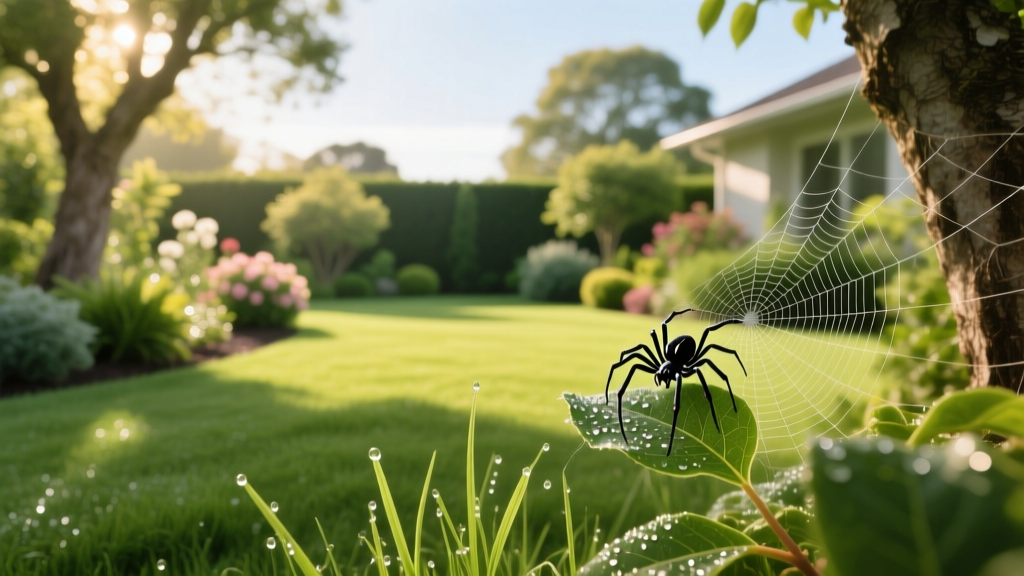
Should I Kill Black Widows in the Garden? Expert Guide
The Short Answer: A Proximity-Based Decision
The question of whether to eliminate black widows (*Latrodectus* spp.) in your outdoor space does not have a universal yes-or-no answer. As a general rule of integrated pest management (IPM), black widows are highly beneficial apex predators that control populations of destructive garden insects, including cockroaches, beetles, and mosquitoes. However, their neurotoxic venom poses a legitimate medical risk to humans and pets.
The decision to kill black widows should be dictated entirely by proximity to high-traffic zones. If a web is located in a remote corner of a woodlot or at the back of an unused shed, coexistence is the recommended approach. If the web is situated within three feet of a children's playset, a frequently used patio door, or a dog's primary outdoor enclosure, targeted eradication is necessary.
Identifying North American Black Widows
Before taking action, accurate identification is critical. Many harmless spiders, such as the false black widow (*Steatoda grossa*) or the dark fishing spider, are mistakenly killed due to superficial resemblance. True black widows belong to the genus *Latrodectus*. In North America, three primary species encroach on residential yards.
| Species | Scientific Name | Primary Region | Distinguishing Markings | Adult Female Size |
|---|---|---|---|---|
| Southern Black Widow | L. mactans | Southeast / Mid-Atlantic | Classic solid red hourglass on the ventral abdomen | 1.5 inches (leg span) |
| Western Black Widow | L. hesperus | West Coast / Southwest | Red hourglass, often with a secondary red dot above | 1.5 to 2 inches (leg span) |
| Northern Black Widow | L. variolus | Northeast / Midwest / Canada | Broken red hourglass, distinct red dorsal spots | 1 to 1.5 inches (leg span) |
According to Penn State Extension, male black widows are roughly half the size of females, brown or gray in color, and possess significantly less venom, making them virtually harmless to humans. When assessing a web, focus your identification efforts on the large, spherical females.
The Ecological Argument for Coexistence
Black widows are sit-and-wait predators that construct messy, three-dimensional cobwebs rather than the symmetrical orb webs of garden spiders. These webs act as a biological filter for your yard. A single mature female black widow can consume hundreds of pest insects annually.
Furthermore, black widows are highly reclusive. Bites almost exclusively occur when a spider is accidentally crushed or pressed against human skin—such as when reaching blindly into a stack of firewood or putting on gardening gloves left outdoors. They do not jump, fly, or aggressively hunt humans. If a web is located in a low-traffic perimeter zone, leaving the spider intact provides free, chemical-free pest control.
When Lethal Control is Necessary: Risk Assessment
⚠️ High-Risk Zone Eradication Protocol
Immediate lethal action is justified if black widows are found in the following micro-habitats:
Immediate lethal action is justified if black widows are found in the following micro-habitats:
- Underneath the lips of patio tables or outdoor dining chairs.
- Inside the frames of screen doors or sliding glass door tracks.
- Within stacked children's toys, plastic playhouses, or sandbox rims.
- Inside the wheel wells of vehicles or under the hoods of cars parked near tall grass.
Targeted Eradication Protocols
If you determine that the spider poses a direct threat and must be eliminated, avoid broad-spectrum bug bombs or aerosol sprays like Raid. These products often fail to penetrate the dense, tangled silk of a black widow web, resulting in a superficial kill that leaves the spider alive and agitated. Instead, use microencapsulated or suspension concentrate (CS) liquid insecticides.
Recommended Chemical Treatments
- Cyzmic CS (Lambda-cyhalothrin 9.7%): This is a professional-grade suspension concentrate that leaves a micro-encapsulated residue on the web and surrounding surfaces. When the spider grooms itself or walks across the treated silk, it absorbs a lethal dose.
- Dilution Rate: 0.8 fl oz per gallon of water.
- Application: Use a pump sprayer to thoroughly soak the web, the anchor points, and a 2-foot perimeter around the web site.
- Estimated Cost: $30 to $40 for an 8 oz bottle (yields up to 40 gallons of solution).
- Onslaught FastCap: Combines esfenvalerate with prallethrin and a synergist (piperonyl butoxide) for a faster knockdown time, which is crucial if the spider is actively roaming.
- Dilution Rate: 0.5 to 1.0 fl oz per gallon of water.
- Estimated Cost: $45 to $55 per 16 oz bottle.
Note: Always apply liquid residuals at dusk or dawn when black widows are most active outside their retreat holes. Wear nitrile gloves, safety glasses, and long sleeves during application.
Non-Lethal Relocation Method
If you prefer not to use chemicals but need the spider moved from a high-traffic area, perform a nighttime relocation. Wait until the spider is sitting in the center of the web. Slowly place a clear 1-gallon plastic jug over the spider and the center of the web. Slide a piece of stiff cardboard under the jug's opening to sever the anchor threads. Seal the cardboard against the jug with tape, and release the spider in a wooded area at least a quarter-mile from your home.
Preventative Habitat Modification
Killing individual spiders is a temporary fix; altering the habitat ensures they do not return. Black widows require two things to establish a web: structural harborage and a steady food supply (insects). The University of California Agriculture and Natural Resources (UC ANR) IPM program emphasizes environmental modification as the primary long-term control strategy.
Lighting Adjustments
Standard exterior LED lights (typically 3000K to 4000K color temperature) emit blue and UV wavelengths that attract massive swarms of nocturnal insects. More insects equal more black widows.
- The Fix: Replace porch and patio bulbs with 2200K amber LEDs or low-pressure sodium vapor equivalents. Insects cannot perceive these longer wavelengths, drastically reducing the prey base and forcing black widows to relocate to darker, more insect-rich environments.
Physical Exclusion and Yard Maintenance
- Clear the Perimeter: Remove lumber piles, rock accumulations, and dense ivy within 10 feet of your home's foundation. Black widows thrive in undisturbed, ground-level clutter.
- Seal Foundation Cracks: Use a high-quality polyurethane sealant (such as Sikaflex) to fill gaps around utility penetrations, hose bibs, and foundation vents where widows build retreat nests.
- Manage Mulch: If you use organic mulch, keep it at least 6 inches away from the base of your siding. Consider switching to inorganic gravel or rubber mulch in high-traffic seating areas, as these materials do not harbor the insects that widows eat.
Frequently Asked Questions
How dangerous is a black widow bite in 2026?
While black widow venom (alpha-latrotoxin) is 15 times stronger than a rattlesnake's, the volume injected is minuscule. According to national poison control data, out of roughly 2,200 reported bites annually in the U.S., fatalities are exceptionally rare due to the widespread availability of supportive care and antivenom. However, bites cause severe muscle cramping, abdominal rigidity, and localized pain that can last for days, requiring immediate medical evaluation.
Do black widow egg sacs mean an infestation?
A single female can produce up to four egg sacs in a summer, each containing 200 to 750 eggs. However, the cannibalistic nature of spiderlings means only a handful survive to maturity. Finding an egg sac does not mean your yard will be overrun; it simply indicates a successful local hunter. Destroy the sac with a stick or vacuum it up if it is located near human activity zones.