
Home & Garden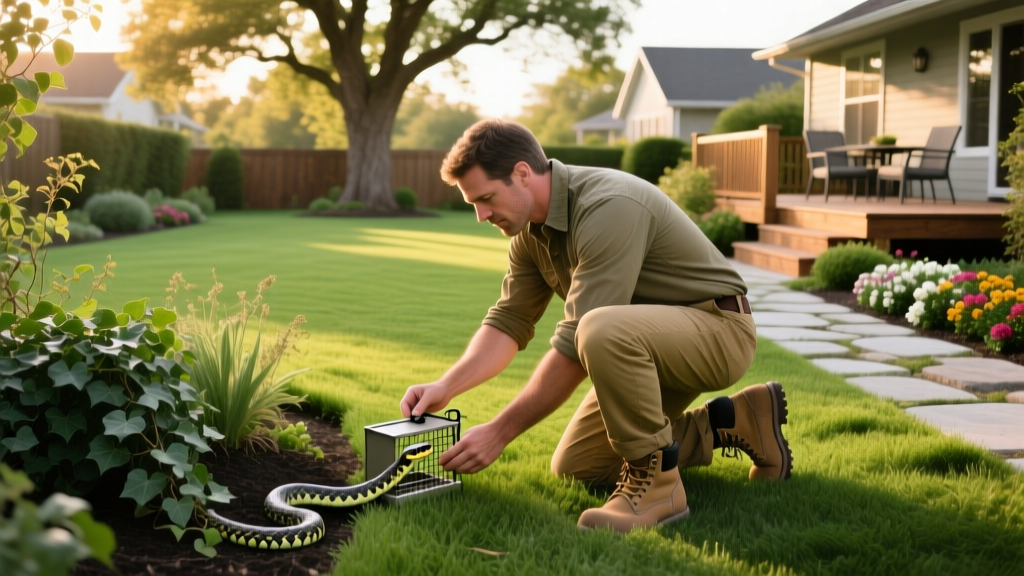
How to Get Rid of Snakes in the Yard: A Complete Removal Playbook
The Root Cause: Why Snakes Choose Your Property
Snakes do not randomly invade yards; they are drawn by two specific resources: prey (primarily rodents and insects) and protective cover. If you are wondering how to get rid of snakes in the yard, you must first eliminate the ecological incentives that keep them there. Killing or trapping a snake without modifying the habitat is a temporary fix, as a new snake will quickly claim the vacant territory within 48 to 72 hours.
This playbook outlines a systematic, three-phase approach to snake removal, focusing on long-term habitat modification, physical exclusion, and ethical trapping. Before taking action, use the decision matrix below to determine if intervention is actually necessary.
Snake Encounter Decision Matrix
| Snake Type | Common Species | Threat Level | Recommended Action |
|---|---|---|---|
| Non-Venomous (Small) | Garter, Ring-necked, Dekay's Brown | None (Eats slugs/insects) | Leave alone; they are beneficial garden allies. |
| Non-Venomous (Large) | Rat Snake, Gopher Snake, Corn Snake | Low (Bites if cornered) | Habitat modification; trap and relocate if near play areas. |
| Venomous | Copperhead, Rattlesnake, Cottonmouth | High (Medical emergency) | Immediate professional removal; install exclusion fencing. |
Phase 1: Habitat Modification (Starve and Expose)
Snakes rely on stealth to hunt and avoid predators like hawks and owls. By removing ground-level clutter, you make your yard an unappealing, high-risk environment for them.
1. Turf and Vegetation Management
Maintain your lawn at a strict height of 2.5 to 3.5 inches. While taller grass is often recommended for drought resistance, grass exceeding 4 inches provides a perfect highway for snakes to travel undetected. Trim all shrub branches so they are at least 12 inches off the ground, eliminating the "umbrella" effect that hides rodents and snakes from aerial predators.
2. Mulch and Debris Protocols
Thick mulch beds are primary snake habitats because they retain moisture and harbor insects and small mammals. Limit mulch depth to a maximum of 2 inches. More importantly, maintain a strict 12-inch "mulch-free zone" directly against your home's foundation. Replace organic wood mulch near the house with inorganic crushed stone or gravel (3/4-inch size), which is uncomfortable for snakes to slither over and does not harbor prey.
3. Structural Clean-Up
- Firewood: Stack wood at least 12 inches off the ground on metal racks, and keep piles at least 30 feet from the home.
- Lumber & Tarps: Remove flat items resting directly on the soil, as snakes seek the cool, dark microclimates they create.
- Bird Feeders: Clean up spilled seed daily. Spilled seed attracts mice, which in turn attracts rat snakes and copperheads.
⚠️ Critical Warning: The Mothball Myth
Do not use mothballs (naphthalene or paradichlorobenzene) outdoors. The EPA explicitly prohibits using mothballs as an outdoor snake repellent. They are highly toxic to children, pets, and local groundwater, and university studies show they are entirely ineffective at repelling snakes. Similarly, commercial sulfur-based granular repellents wash away after a single rain event and fail to deter determined reptiles.
Phase 2: Exclusion Fencing (The Permanent Solution)
For yards bordering wooded areas, fields, or known venomous snake habitats, physical exclusion is the only 100% effective long-term strategy. According to the Internet Center for Wildlife Damage Management, properly installed snake fencing can reduce yard incursions by over 95%.
Material Specifications
Purchase 1/4-inch (0.6 cm) galvanized hardware cloth. Do not use chicken wire, as the hexagonal gaps are large enough for juvenile snakes and smaller species to pass through. In 2026, 23-gauge galvanized hardware cloth costs approximately $1.50 to $2.20 per linear foot at major home improvement centers.
Step-by-Step Installation
- Dig a Trench: Dig a narrow trench 3 to 6 inches deep along the perimeter of the area you wish to protect (e.g., a children's play area or patio).
- Bury the Base: Bury the bottom 3 inches of the hardware cloth in the trench and backfill with soil. This prevents snakes from burrowing underneath.
- Set the Height: The fence must stand at least 24 to 30 inches above ground level.
- Angle the Top: Bend the top 6 inches of the fencing outward at a 30-degree angle. Snakes are excellent climbers, but they cannot navigate an overhang.
- Secure the Posts: Use metal T-posts or wooden stakes every 4 to 6 feet to keep the mesh rigid against wind and animal pressure.
Phase 3: Safe Trapping and Relocation
If habitat modification and exclusion are not immediately feasible, or if a snake is already trapped inside a fenced area, use passive trapping. Avoid glue traps, as they cause prolonged suffering to the animal and often catch non-target wildlife like songbirds and lizards.
The Minnow Trap Method
The most effective DIY trap is a collapsible plastic or wire minnow trap (such as the Frabill Promar Model 4560, retailing around $18 to $22). These feature funnel entrances that allow snakes to enter but prevent them from finding the exit.
- Baiting: Place a frozen-thawed mouse or a few raw, uncracked eggs inside the trap. Snakes rely heavily on their Jacobson's organ to track scent.
- Placement: Position the trap flush against a wall, fence line, or foundation edge. Snakes rarely travel across open spaces; they "hug" vertical structures for security.
- Monitoring: Check traps every 12 hours. A snake left in a trap during peak summer heat can die of dehydration or hyperthermia within hours.
Relocation Legalities and Best Practices
Before relocating a trapped snake, consult your state's Department of Natural Resources (DNR). Many states, including Pennsylvania and Texas, legally prohibit relocating wildlife more than 1 mile from the capture site or across county lines without a specific permit, to prevent the spread of diseases like Snake Fungal Disease (SFD). Release the snake in a shaded, brushy area on your own property line, preferably near a water source.
Frequently Asked Questions
Do ultrasonic snake repellents work?
No. Snakes lack external ears and do not hear airborne sounds the way mammals do. They sense ground-borne vibrations. Solar-powered ultrasonic stakes sold online are entirely ineffective against snakes, though they may mildly irritate rodents. Save your money and invest in hardware cloth.
Will getting a cat or dog keep snakes away?
While outdoor cats and terrier breeds will occasionally kill small snakes, they are just as likely to be bitten by a venomous species. Relying on pets for pest control puts their lives at risk and is not a reliable management strategy. Copperheads, in particular, are highly camouflaged and will strike defensively if stepped on by a dog.
How do I seal my home's foundation against snakes?
Snakes can flatten their bodies to fit through gaps as small as 1/4 inch. Inspect your foundation, dryer vents, and HVAC lines. Seal all cracks with expanding polyurethane foam or copper mesh stuffed into the gap and covered with silicone caulk. Ensure weather stripping on garage doors is flush with the concrete; a gap of just 1/2 inch is an open door for a rat snake.
For more localized advice on identifying native species and understanding regional wildlife regulations, consult your local university extension office. They provide free, science-based identification services and can connect you with licensed nuisance wildlife control operators (NWCOs) if professional extraction is required.