
Home & Garden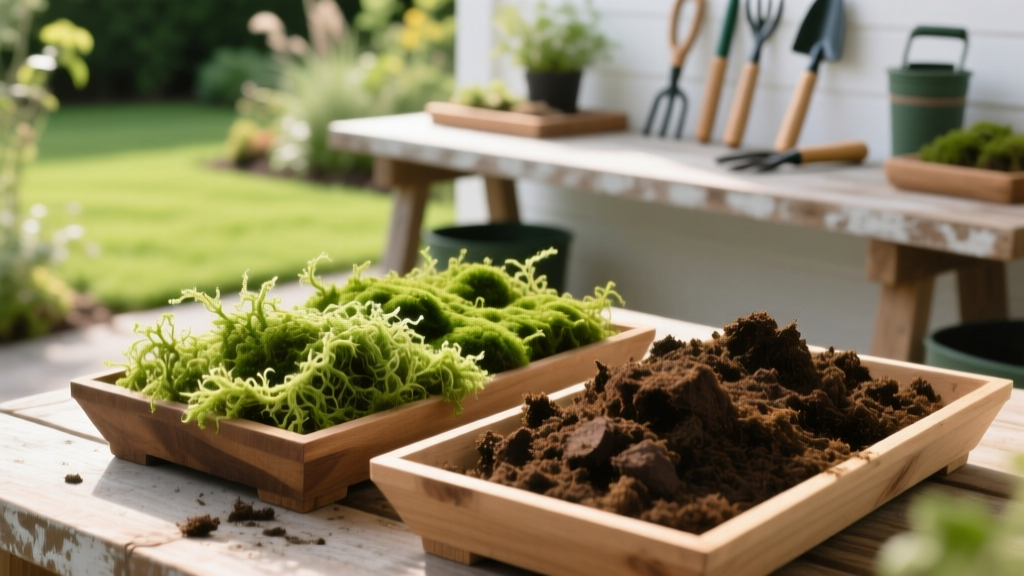
Sphagnum Moss and Peat Moss: Soil Amendment Differences & Uses
The Botanical and Harvesting Divide
Homeowners frequently use the terms interchangeably, but sphagnum moss and peat moss represent two entirely distinct stages of botanical decomposition with radically different applications in garden soil management. Understanding the physical and chemical divide between the two is the first step in preventing costly soil amendment failures.
Sphagnum moss is the living, fibrous top layer of a peat bog. It is harvested while the plant is still alive and actively photosynthesizing, then dried and compressed. Because it is undecomposed, it retains a neutral to slightly acidic pH (typically 5.5 to 6.5) and features long, intact cellular strands that provide exceptional macro-porosity and aeration.
Peat moss (often labeled as "sphagnum peat moss") is the dead, decomposed organic matter found at the anaerobic bottom of the bog. It takes centuries to form. Harvested from deep below the water table, peat moss is highly degraded, resulting in a fine, crumbly texture. The anaerobic decomposition process generates humic acids, driving its pH down to a highly acidic 3.5 to 4.5.
Horticultural Rule of Thumb: Use living sphagnum moss for aeration, surface mulching, and epiphytic root zones. Use decomposed peat moss for bulk soil conditioning, water retention in sandy profiles, and lowering soil pH.
Chemical and Physical Properties Matrix
Before purchasing in bulk, compare the exact metrics of these amendments against your soil test results. The following matrix highlights the functional differences that dictate their garden roles.
| Property | Living Sphagnum Moss | Decomposed Peat Moss |
|---|---|---|
| pH Level | 5.5 – 6.5 (Near Neutral) | 3.5 – 4.5 (Highly Acidic) |
| Water Retention | Holds 10-12x its dry weight | Holds 10-15x its dry weight |
| Cation Exchange Capacity (CEC) | Low (Poor nutrient holding) | High (100-200 meq/100g) |
| Decomposition Rate | Breaks down in 1-2 years | Highly stable, lasts 5+ years |
| Primary Texture | Long, fibrous strands | Fine, crumbly particulate |
| Average Retail Cost (2026) | $15-$22 per 100g compressed brick | $14-$18 per 1.5 cu. ft. bale |
When to Deploy Sphagnum Moss in the Garden
Because living sphagnum moss is expensive per cubic volume and lacks the nutrient-holding CEC of its decomposed counterpart, it should never be used as a bulk lawn topdressing or general garden bed filler. Instead, deploy it in targeted, high-value horticultural scenarios:
- Orchid and Aroid Media: The long fibers create massive air pockets, preventing root rot in Phalaenopsis and Monstera while maintaining ambient humidity.
- Air Layering: Wrapping a wounded stem node in hydrated sphagnum moss stimulates adventitious root growth on woody shrubs and fruit trees due to its sterile, moisture-retentive environment.
- Hanging Basket Liners: Pressing hydrated fibers against the wire frames of coco-lined baskets prevents soil washout while allowing roots to breathe.
- Seed Starting Surface: A thin dusting of finely chopped, sterilized sphagnum over seed trays prevents damping-off disease, as the moss naturally harbors Trichoderma fungi that outcompete pathogenic oomycetes.
Pro-Tip: Hydrating Compressed Bricks
A standard 100g compressed brick of long-fibered sphagnum (from brands like Mosser Lee or Better-Gro) will expand to roughly 1.5 gallons. Submerge the brick in a 5-gallon bucket filled with 2 gallons of warm (90°F) water. Allow it to sit for 45 minutes, then gently pull the fibers apart. Never wring it out like a sponge; squeeze gently to retain capillary moisture.
A standard 100g compressed brick of long-fibered sphagnum (from brands like Mosser Lee or Better-Gro) will expand to roughly 1.5 gallons. Submerge the brick in a 5-gallon bucket filled with 2 gallons of warm (90°F) water. Allow it to sit for 45 minutes, then gently pull the fibers apart. Never wring it out like a sponge; squeeze gently to retain capillary moisture.
When to Deploy Peat Moss as a Soil Amendment
Decomposed peat moss is a workhorse for structural soil modification. Its high CEC makes it an excellent carrier for synthetic and organic fertilizers, preventing nutrient leaching in fast-draining sandy soils. When incorporated into heavy clay, the particulate structure physically pushes clay plates apart, reducing compaction.
For general garden beds, incorporate a 2-inch layer of peat moss into the top 6 inches of native soil. This will increase the soil organic matter (SOM) percentage by roughly 2% to 3%, vastly improving the soil's biological activity and moisture buffer.
The Hydration Challenge: Overcoming Hydrophobicity
The most common failure mode when using peat moss occurs during initial incorporation. When peat moss dries out completely in its plastic bale, the degraded plant cuticles become highly hydrophobic (water-repellent). If you spread dry peat moss onto a garden bed and water it, the water will simply bead up and run off, leaving the amendment bone-dry beneath the surface.
To bypass this, you must pre-moisten the amendment before it ever touches your garden soil.
- Score the Bale: Use a utility knife to slice the plastic wrapping and break the compressed block into chunks inside a heavy-duty wheelbarrow.
- Add a Surfactant: Fill a 2-gallon watering can with warm water and add two drops of a non-ionic surfactant (such as yucca extract or a mild, non-antibacterial liquid dish soap). This breaks the water's surface tension.
- Agitate and Rest: Water the chunks thoroughly while turning them with a pitchfork. Let the mixture sit for 20 minutes, then turn it again. The peat is properly hydrated when it feels like a damp sponge and turns from dusty brown to deep black.
- Incorporate: Spread the pre-moistened peat over your beds and till or fork it into the native soil immediately.
Health, Safety, and Handling Protocols
Handling dry soil amendments requires basic respiratory protection. When breaking apart dry bales of peat moss or shaking out dusty sphagnum bricks, fine particulate matter becomes airborne. Inhaling this dust can irritate the respiratory tract. Furthermore, both materials can occasionally harbor spores of Sporothrix schenckii, a fungus that causes sporotrichosis (a localized skin infection introduced through micro-abrasions).
Always wear an N95 particulate mask when opening dry bales outdoors, and use nitrile or heavy leather gardening gloves when handling the material, especially if you have open cuts on your hands. Wetting the material down immediately upon opening the bale significantly reduces airborne dust.
Sustainability and Sourcing in 2026
The environmental impact of harvesting peat bogs has become a central issue in modern horticulture. Peatlands are massive carbon sinks; when drained for harvesting, they release stored carbon dioxide into the atmosphere. According to the International Peatland Society, while responsible restoration practices are improving, the extraction rate still outpaces the natural regeneration of these ancient ecosystems.
In response, organizations like the Royal Horticultural Society (RHS) have aggressively pushed for peat-free gardening, championing alternatives like composted pine bark, coconut coir, and biochar. If your primary goal is bulk water retention and soil structure without the acidic pH shift or environmental footprint of peat, consider buffering coconut coir (which has a neutral pH of 5.5-6.8) or utilizing locally sourced leaf mold compost.
However, for specialized acid-loving plants (like blueberries, azaleas, and rhododendrons) that require a sustained pH below 5.0, Canadian sphagnum peat moss remains one of the most reliable and cost-effective amendments available on the market, provided it is sourced from suppliers certified by the Veriflora sustainability standard.
Quick-Reference Troubleshooting FAQ
Can I use peat moss to lower the pH of my alkaline lawn?
Technically yes, but practically no. To permanently lower the pH of a highly alkaline clay lawn (pH 7.5+) using peat moss, you would need to incorporate massive, economically unfeasible volumes. For lawn applications, use elemental sulfur or acidifying liquid fertilizers (like ammonium sulfate) instead. Reserve peat moss for garden beds and container mixes.
Why is my sphagnum moss turning green and growing algae?
If your living sphagnum moss is being used as a top dressing in a terrarium or potted plant and develops a slimy green algae layer, it indicates excessive surface moisture and poor air circulation. Sphagnum requires high humidity but must have ambient airflow. Reduce overhead watering and increase ventilation to prevent algae and cyanobacteria from choking the moss fibers.
Does peat moss contain fertilizer?
No. Raw, unblended peat moss is virtually devoid of essential macronutrients (Nitrogen, Phosphorus, Potassium). In fact, as it begins to break down in the soil, the microbes decomposing it will temporarily tie up available soil nitrogen. You must always pair peat moss applications with a nitrogen-rich fertilizer, such as blood meal or a balanced synthetic NPK, to prevent nitrogen deficiency in your plants.

