
Home & Garden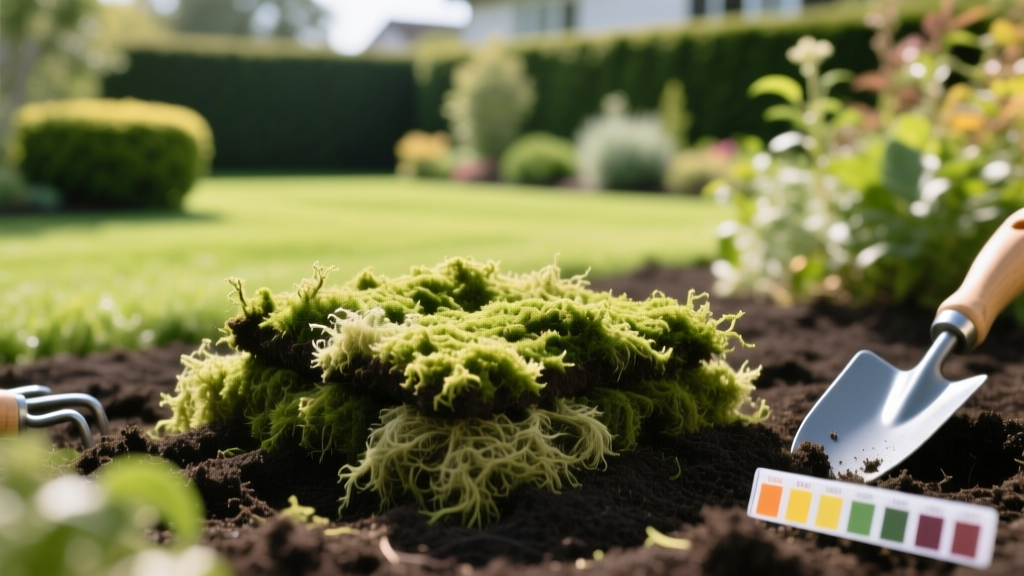
Sphagnum Peat Moss Guide: Soil Amendment Rates & pH Control
The Chemistry of Sphagnum: pH, CEC, and Porosity
Sphagnum peat moss is the partially decomposed remains of sphagnum moss, harvested from the lower layers of peat bogs. It is critical to distinguish this from live, long-fibered sphagnum moss used for orchid mounts. As a soil amendment, peat moss is valued for its specific chemical and physical properties, which fundamentally alter soil structure and nutrient retention.
The natural pH of sphagnum peat moss ranges from 3.0 to 4.5. This high acidity makes it an active pH-lowering agent, not just a passive bulking material. When integrated into alkaline soils (pH 7.0+), it actively buffers the soil downward, creating optimal conditions for acid-loving ericaceous plants like blueberries, azaleas, and camellias.
Beyond pH, its Cation Exchange Capacity (CEC) is remarkably high, typically measuring between 100 and 200 meq/100g. For context, standard topsoil often sits around 10 to 20 meq/100g. This means sphagnum peat moss acts as a massive nutrient reservoir, holding onto positively charged ions (calcium, magnesium, potassium) and preventing them from leaching out of the root zone during heavy rainfall. Its physical structure also provides 60% to 70% air-filled porosity when properly hydrated, preventing soil compaction in heavy clay profiles.
Exact Application Rates and Mixing Ratios
Applying peat moss as a surface top-dressing is ineffective; it must be mechanically integrated into the root zone to prevent it from drying out and becoming hydrophobic. The table below outlines precise volumetric ratios based on specific horticultural scenarios.
| Scenario | Peat Moss Ratio | Amendment Depth | Target Plants |
|---|---|---|---|
| Acidifying Alkaline Clay | 30% by volume | Top 6 inches | Blueberries, Azaleas, Rhododendrons |
| General Loam Improvement | 15% by volume | Top 4 inches | Tomatoes, Peppers, Annual Flowers |
| Heavy Sandy Soil Water Retention | 25% by volume | Top 8 inches | Hydrangeas, Ferns, Moisture-loving perennials |
| Container Potting Mix Base | 40% to 50% by volume | N/A (Full pot depth) | General houseplants, seed starting |
Note: A standard 2.2 cubic foot compressed bale of sphagnum peat moss will expand to approximately 3 to 3.5 cubic feet when fully broken apart and fluffed. At current 2026 retail pricing, expect to pay between $14 and $22 per bale depending on regional shipping costs.
Step-by-Step Field Application for In-Ground Beds
Proper preparation is mandatory. Dry peat moss is notoriously hydrophobic and will repel water if applied straight from the compressed bale into the garden.
- Pre-Moisten the Bale: Puncture the plastic bale wrapping and inject 2 to 3 gallons of water directly into the block. Allow it to sit for 24 hours. The internal moisture content should reach roughly 60% before opening.
- Calculate Volume: For a 10-square-foot bed requiring a 2-inch integration depth, you need roughly 1.6 cubic feet of expanded peat moss.
- Break and Spread: Open the bale and break the compressed blocks apart by hand or with a garden fork. Spread the material evenly over the target bed surface.
- Mechanical Integration: Use a rear-tine rototiller or a broadfork to mix the peat moss into the top 6 inches of native soil. Do not till deeper than 8 inches, as burying organic matter too deeply cuts off oxygen to the subsoil microbiome.
- Buffer the pH Drop: Because peat moss will immediately lower soil pH, run a soil test 14 days after integration. If the pH drops below your target threshold, apply pelletized garden lime at a rate of 5 lbs per 100 square feet to neutralize the excess acidity.
Sphagnum Peat Moss vs. Coconut Coir: A Structural Comparison
Coconut coir is frequently marketed as a direct 1:1 replacement for peat moss, but their chemical and physical behaviors in the soil matrix are distinctly different. Understanding these variances prevents crop failure when substituting materials.
Sphagnum Peat Moss
- pH: 3.0 - 4.5 (Highly acidic)
- Decomposition Rate: Slow (lasts 3 to 5 years in soil)
- Nutrient Profile: Inert; low inherent nutrients
- Wetting Ability: Difficult to re-wet once completely dry
- Best Use: Acidifying soil, long-term structural aeration
Coconut Coir (Pith)
- pH: 5.5 - 6.5 (Near neutral)
- Decomposition Rate: Fast (breaks down in 1 to 2 years)
- Nutrient Profile: High in potassium and sodium
- Wetting Ability: Re-wets easily even when bone dry
- Best Use: Neutral pH container mixes, moisture retention
According to research from the Canadian Sphagnum Peat Moss Association, the physical structure of peat moss maintains its porosity significantly longer than coir, which tends to collapse and compact as its lignin content breaks down rapidly in active soil food webs.
Sustainability and 2026 Sourcing Standards
The environmental debate surrounding peat harvesting is a valid concern for modern gardeners. Peatlands are massive carbon sinks, and unregulated harvesting releases sequestered carbon. However, the North American industry operates under strict regulatory frameworks.
North American peat bogs cover over 270 million acres. The industry harvests less than 0.02% of this total acreage annually, and for every acre harvested, 13 acres are designated for preservation or active ecological restoration.
When purchasing in 2026, look for the CSPMA (Canadian Sphagnum Peat Moss Association) certification logo on the bale packaging. This guarantees the bog was harvested using vacuum methods that leave the underlying peat layers intact for future regeneration, and that the surface was immediately reseeded with live sphagnum fragments post-harvest. Avoid unbranded, bulk peat moss from regions lacking strict environmental oversight, as this often originates from unprotected, drained wetlands.
Troubleshooting: The Hydrophobic Dry-Out Failure
Diagnosis: Water Pooling on the Soil Surface
If you water a container plant or amended garden bed and the water immediately pools on top or runs down the edges of the pot, your sphagnum peat moss has become hydrophobic. When peat moss drops below 30% moisture content, its cellular structure collapses, and the waxy cuticles on the decomposed plant matter actively repel water.
The Surfactant Fix
Do not just water heavier; the water will bypass the dry root ball. Instead, apply a liquid soil wetting agent (a non-ionic surfactant). Products containing yucca extract or alkyl polyglucosides break the surface tension of the water, allowing it to penetrate the waxy peat barrier. Mix 1 ounce of liquid yucca surfactant per 5 gallons of water and apply slowly via bottom-watering for potted plants, or use a watering can for in-ground beds. Within 15 minutes, the peat moss will expand and resume its water-holding capacity.
By respecting the chemical properties and physical limitations of sphagnum peat moss, you can leverage its unmatched CEC and porosity to build resilient, highly productive soil profiles that support vigorous root growth for years.