
Home & Garden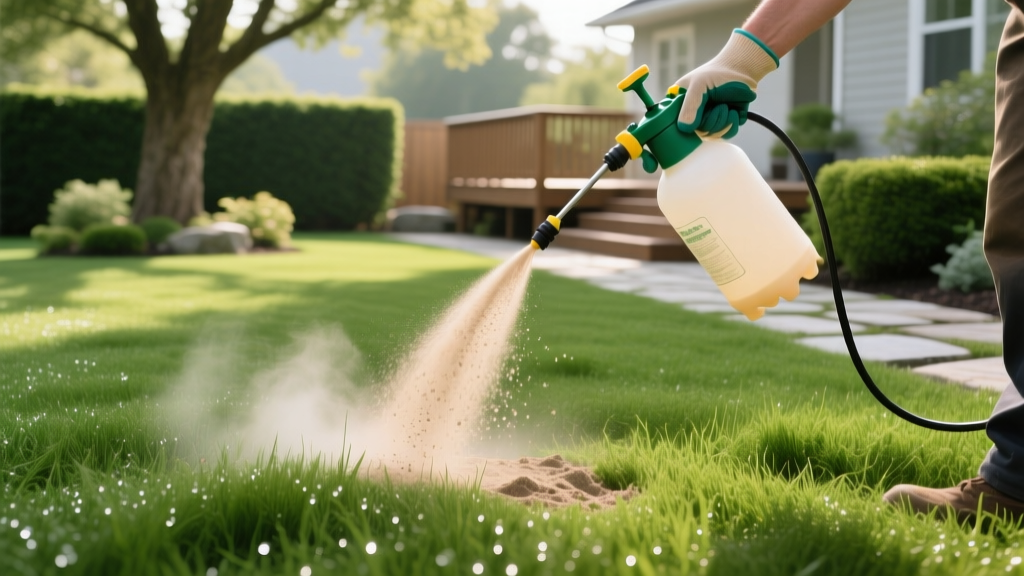
How to Spray Diatomaceous Earth: Liquid Slurry Guide
Most homeowners fundamentally misunderstand diatomaceous earth (DE). The standard advice dictates that it must always be applied as a dry dust. While it is true that DE only kills pests after the moisture evaporates, learning how to spray diatomaceous earth as a liquid slurry is the superior delivery method for reaching deep into foundation cracks, weep holes, and inaccessible wall voids where dry dusting simply blows away or fails to penetrate.
When mixed with water, DE creates a suspended slurry. You spray this liquid into tight crevices; the water acts as a temporary carrier, and once it evaporates, it leaves behind a microscopically thin, highly lethal layer of abrasive silica dust. This guide details the exact mixing ratios, necessary safety protocols, and application techniques to execute a liquid DE treatment effectively.
The Science of Liquid DE: Why Spray Instead of Dust?
Diatomaceous earth consists of the fossilized remains of diatoms, a type of hard-shelled microalgae. According to the National Pesticide Information Center, the abrasive action of DE works by scratching and absorbing the waxy lipid layer of an insect's exoskeleton, leading to fatal desiccation.
Dry dusting is excellent for broad, flat surfaces like attic floors or carpet edges. However, outdoor environments present wind, uneven terrain, and deep structural gaps. If you try to puff dry DE into a 1/8-inch weep hole in a brick facade, the dust will clump, bounce back, or blow into your face. A liquid slurry bypasses these physical barriers. The water carries the microscopic silica particles deep into the void. As the water dries, the DE reverts to its active, desiccating state, coating the interior of the crack where pests like ants, earwigs, and scorpions travel.
CRITICAL SAFETY WARNING: Never Use Pool-Grade DE
You must exclusively use Food Grade diatomaceous earth (amorphous silica, containing less than 1% crystalline silica). Pool-grade or filter-grade DE is heat-treated (calcined), which converts it into crystalline silica. Inhaling crystalline silica causes severe, irreversible lung damage (silicosis). Always verify the packaging explicitly states 'Food Grade' or 'OMRI Listed' for organic pest control.
You must exclusively use Food Grade diatomaceous earth (amorphous silica, containing less than 1% crystalline silica). Pool-grade or filter-grade DE is heat-treated (calcined), which converts it into crystalline silica. Inhaling crystalline silica causes severe, irreversible lung damage (silicosis). Always verify the packaging explicitly states 'Food Grade' or 'OMRI Listed' for organic pest control.
Essential Gear and Safety Protocols
Spraying DE requires specific equipment to prevent clogging and protect your respiratory system. Even though Food Grade DE is safe for consumption, inhaling any fine particulate matter irritates the mucous membranes of the lungs.
- Respirator: A standard surgical mask or N95 is insufficient for prolonged spraying. Use a NIOSH-approved half-face respirator equipped with P100 particulate filters (the magenta-colored discs). Cost: $25–$35.
- Sprayer Type: A standard 1-gallon or 2-gallon handheld pump sprayer. Crucial modification: You must remove the internal mesh filter screen located at the tip of the wand. DE particles will instantly clog standard pesticide filters.
- Nozzle Selection: Use a fan-pattern or coarse-spray nozzle. Avoid pinpoint or misting nozzles, as the larger silica particles will block the aperture.
- Agitation Tool: A long wooden stir stick or a dedicated paint mixer attachment for a power drill to keep the heavy silica suspended in the tank.
The Exact Liquid DE Mixing Ratios
The efficacy of a DE slurry depends entirely on the concentration. Too little DE, and the dried residue will be too sparse to scratch an insect's cuticle. Too much DE, and the slurry becomes a thick paste that clogs your sprayer and dries into thick, easily scraped-off cakes that pests will simply walk around.
| Pest Pressure Level | DE Amount | Water Volume | Best Application Scenario |
|---|---|---|---|
| Preventative / Light | 4 Tablespoons (1/4 Cup) | 1 Gallon | Routine perimeter maintenance, window sills, baseboards. |
| Moderate Infestation | 1/2 Cup | 1 Gallon | Active ant trails, earwig harborages, fence lines, and garden borders. |
| Heavy / Structural | 3/4 Cup | 1 Gallon | Deep foundation cracks, weep holes, retaining wall voids, and under decks. |
Note: As of 2026, a high-quality 4 lb bag of Food Grade DE typically costs between $15 and $22, which is enough to mix up to 16 gallons of moderate-concentration slurry.
Step-by-Step: How to Spray Diatomaceous Earth Effectively
- Prep the Sprayer: Unscrew the nozzle tip and remove the small plastic or metal mesh filter screen. Reattach the nozzle. Fill the tank with halfway with warm water (warm water helps break up dry clumps more efficiently than cold).
- Add the DE: Pour the measured Food Grade DE into the tank. Do this slowly to avoid creating a dry dust cloud in the air.
- Agitate Vigorously: Add the remaining water, leaving about 10% of the tank empty for air space. Seal the tank and shake it violently for 60 seconds. DE does not dissolve; it suspends. If you let it sit for even three minutes, the heavy silica will sink to the bottom.
- Pump and Test: Pressurize the tank to about 30-40 PSI (roughly 25-30 pumps). Spray a test patch onto a piece of cardboard. It should look like milky white water, not a thick milkshake.
- Apply with Constant Agitation: Spray the target areas. Every 60 seconds, stop spraying and gently swirl or shake the tank to keep the heavy particles suspended in the water column.
- The Drying Phase: The sprayed area will look wet and white. Keep pets and children away until the surface is completely bone dry. Once dry, the white cast will fade to a nearly invisible, micro-thin layer of active dust.
Target Zones: Where to Apply the Slurry
Liquid DE is highly targeted. According to the University of California Integrated Pest Management program, creating continuous, unbroken barriers is the key to stopping invading pests. Focus your liquid slurry on these specific architectural and landscape vulnerabilities:
- Weep Holes: The small gaps between bricks on a home's exterior. Spray directly into them to coat the interior cavity where pests nest.
- Expansion Joints: The gaps in concrete driveways and sidewalks. The liquid will seep deep into the soil below where ants build colonies.
- Utility Penetrations: Where HVAC lines, water spigots, and gas pipes enter the siding. The slurry will coat the irregular gaps that caulk cannot seal.
- Retaining Wall Voids: Spray the gaps between landscape timbers or stone blocks where earwigs and centipedes hide during the day.
Troubleshooting Common Application Failures
The Nozzle Keeps Clogging
Cause: You are using too much DE, or you forgot to remove the internal wand filter.
Fix: Depressurize the tank, unscrew the nozzle, and clear the aperture with a sewing needle or pin. Never use wire, which can widen the hole and ruin the spray pattern. Add more water to dilute the slurry.
The Rain Washed It Away
Cause: DE is completely inert and ineffective when wet. If it rains before the slurry dries, or after it dries, the physical dust barrier is compromised.
Fix: You must reapply after any significant rainfall. For areas prone to moisture (like under leaky spigots), mix the DE with a tiny drop of horticultural oil or apply a mechanical rain-guard over the treated area once dry.
Pests Are Walking Over the Dried Residue
Cause: The layer is too thick. If the slurry was mixed too heavily, it dries into a cracked, cake-like crust. Pests will simply walk on top of the crust without their abdomens making contact with the abrasive silica.
Fix: Brush off the thick crust with a stiff bristle broom and reapply using the lighter 'Preventative' ratio (4 tablespoons per gallon) to ensure a micro-thin, easily transferable dust layer.
Frequently Asked Questions
Can I use a hose-end sprayer for large yard perimeters?
No. Hose-end sprayers rely on high water volume and pressure, which dilutes the DE far beyond its effective threshold. Furthermore, the high flow rate will wash the heavy silica out of the siphon tube unevenly, resulting in patchy, ineffective coverage. Stick to pressurized pump sprayers for precise, concentrated application.
Is liquid DE safe for my lawn and garden plants?
Food Grade DE is non-toxic to plants, earthworms, and soil biology. However, spraying it directly onto the foliage of your prized ornamentals can block sunlight and interfere with photosynthesis once it dries. Restrict your spraying to hardscapes, soil perimeters, foundations, and structural cracks.
How long does a dried DE slurry barrier last outdoors?
In a dry, undisturbed outdoor environment, a properly applied DE barrier can remain lethal to insects for 3 to 6 months. However, environmental factors like heavy winds, foot traffic, and rain will degrade the physical barrier. Inspect your perimeter monthly and reapply the slurry to high-traffic pest corridors as needed.