
Home & Garden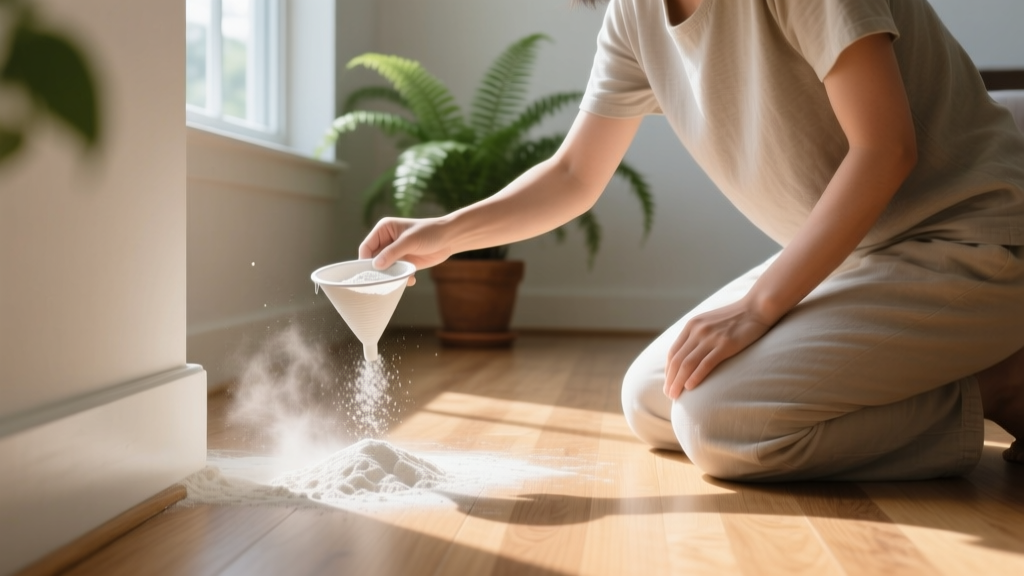
How to Spread Diatomaceous Earth in House Safely for Pest Control
The Science of DE: Why It Works Indoors
Diatomaceous earth (DE) is a staple in the garden shed for controlling aphids and slugs, but its mechanical pest-control properties make it equally valuable for indoor use. Unlike chemical neurotoxins that pests can build a genetic resistance to, food-grade DE kills via desiccation. The powder consists of fossilized diatoms (microscopic algae) with sharp, silica-based edges. When crawling insects like ants, cockroaches, or bed bugs walk through the dust, these microscopic shards scratch their waxy exoskeletons, causing them to dehydrate and die within 24 to 72 hours.
According to the National Pesticide Information Center (NPIC), DE is highly effective against a broad spectrum of crawling insects, provided it remains dry. Because it relies on physical destruction rather than chemical poisoning, it is an excellent choice for homeowners looking to minimize indoor toxin exposure. However, applying it correctly is the difference between eradicating an infestation and simply creating a messy, ineffective white ring on your floors.
⚠️ CRITICAL SAFETY WARNING: You must exclusively use Food-Grade or OMRI-listed diatomaceous earth indoors. Never use 'Filter-Grade' or 'Pool-Grade' DE. Pool-grade DE is heat-treated, which converts the amorphous silica into crystalline silica—a known human carcinogen that causes severe respiratory damage. Food-grade DE contains less than 1% crystalline silica and is safe for indoor use when applied with basic respiratory precautions.
Essential Gear for Indoor Application
Beginners often fail with DE because they attempt to sprinkle it by hand or shake it directly from the bag. This results in thick clumps that insects will simply walk around. To achieve the necessary microscopic film, you need the right tools.
- Food-Grade Diatomaceous Earth: Harris Food Grade DE (OMRI Listed) or Safer Brand Ant & Crawling Insect Killer. Expect to pay $12 to $16 for a 4-pound bag, which is more than enough for an entire 2,500-square-foot home.
- Bulb Duster: The Surefire Bulb Duster ($9) or the Harris Red Duster ($12). These tools inject a fine, aerosolized cloud of dust into cracks and crevices.
- Respiratory Protection: A 3M 8210 N95 Particulate Respirator ($2 to $3 each). While food-grade DE is non-toxic if ingested, inhaling any fine particulate matter irritates the lungs and mucous membranes.
- Safety Glasses: Standard wrap-around safety goggles ($5) to prevent fine dust from drifting into your eyes during overhead applications.
Step-by-Step: How to Spread Diatomaceous Earth in House
Follow this exact protocol to ensure a lethal, barely visible application that targets pests without ruining your home's aesthetics.
- Prep the Zone: Vacuum and mop the application areas. DE must be applied to completely dry surfaces. If the floor is damp from mopping, wait until it is bone dry.
- Load the Duster Correctly: Fill your bulb duster only 1/3 full with DE. Pro-Tip: Drop a small pebble or a copper penny into the bulb before sealing it. When you shake the duster, the coin breaks up clumps, ensuring a fine, even spray.
- Apply the 'Barely Visible' Layer: Squeeze the bulb gently. You want a light puff, not a heavy stream. The golden rule of DE application: If you can easily see a thick pile of white powder, you have applied too much. Insects will avoid walking over thick mounds. The layer should be a barely visible, translucent film roughly 1/32nd of an inch thick.
- Target the Voids: Use the duster's extension tube to inject DE deep into wall voids, behind baseboards, under the dishwasher, and behind the refrigerator. Remove outlet cover plates (turn off the breaker first) and puff a small amount of dust into the wall cavities where pests travel.
Target Zones: Where to Apply DE for Specific Pests
Different pests utilize different highways inside your home. Use this matrix to prioritize your application zones based on your specific infestation.
| Target Pest | Primary Indoor Zones | Application Technique | Expected Kill Time |
|---|---|---|---|
| Bed Bugs | Mattress seams, bed frame joints, baseboards near the bed | Inject deeply into crevices; avoid top surfaces of mattresses | 7 to 14 days |
| Carpenter Ants | Window sills, door frames, attic eaves, wall voids | Drill 1/8-inch holes in voids and puff dust inside | 24 to 48 hours |
| Cockroaches | Under sinks, behind fridge coils, inside cabinet hinges | Light dusting along the back edges of shelves and motor housings | 3 to 5 days |
| Fleas | Carpet edges, pet bedding, under area rugs | Broadcast lightly, work into carpet fibers with a broom, leave for 24h | 48 to 72 hours |
Common Beginner Mistakes and Edge Cases
The Humidity Failure Point
DE is highly hygroscopic, meaning it absorbs moisture from the air. When DE gets wet or is exposed to high humidity (above 65%), it clumps and loses its abrasive, desiccating properties. If you are applying DE in a damp basement, a bathroom, or a laundry room, it will become ineffective within days. The Fix: Run a dehumidifier to drop ambient humidity below 50% before application, or use a silica gel desiccant alternative in highly damp zones.
The Vacuuming Catastrophe
When it is time to clean up DE, do not use a standard upright vacuum (like a basic Dyson or Shark) unless it features a fully sealed HEPA system. The microscopic, razor-sharp silica shards can tear through standard paper vacuum bags, bypass foam filters, and destroy the vacuum's motor. The Fix: Sweep up the bulk of the powder with a damp mop or broom, and use a wet/dry Shop-Vac for the remaining residue. If you must use an indoor vacuum, ensure it has a true, sealed HEPA filter (like the Miele C3 or Shark Navigator Lift-Away HEPA models) and replace the filter immediately after cleanup.
Over-Application in Pet Zones
While food-grade DE is safe for dogs and cats to ingest in small amounts (it is often used as a dewormer in livestock feed), inhaling large clouds of it while rolling on a freshly treated carpet can cause temporary respiratory irritation and dry out their paw pads. Apply DE only in areas pets cannot access, or apply it, leave it for 24 hours, and then thoroughly vacuum it up before allowing pets back into the room.
Cleanup and Reapplication Timelines
DE does not degrade over time like chemical sprays. As long as it remains dry and undisturbed, it will remain lethal to insects indefinitely. However, in high-traffic indoor areas, the dust will eventually be swept away by foot traffic or absorbed into carpet fibers.
- Exposed Hardwood/Tile: Reapply every 2 to 3 weeks, or immediately after mopping.
- Inside Wall Voids/Behind Appliances: Reapply every 6 to 12 months. These areas remain undisturbed and dry, allowing the DE to work continuously.
- Carpets: Leave the dust in the carpet fibers for 48 hours to ensure fleas and larvae contact the silica, then vacuum thoroughly. Reapply monthly during peak flea season (late summer to early autumn).
Frequently Asked Questions
Can I mix diatomaceous earth with water to spray it?
Yes, but with a major caveat. You can mix DE with water (roughly 4 tablespoons per gallon) to spray it into hard-to-reach wall voids using a pump sprayer. However, it will not kill insects while it is wet. The water acts only as a carrier. The DE must completely dry out to a fine powder before it regains its desiccating properties. Never spray it directly on crawling insects expecting an instant kill.
Does DE kill spiders and centipedes?
DE is largely ineffective against spiders and centipedes. These arachnids and myriapods have different exoskeleton structures and do not groom themselves the way insects do, meaning they rarely ingest or accumulate enough of the dust to suffer fatal desiccation. For spiders, rely on sticky traps or targeted essential oil sprays instead.
Is it safe to use around indoor houseplants?
Absolutely. In fact, dusting the top layer of your houseplant soil with food-grade DE is an excellent way to control fungus gnats. The adult gnats will land on the soil to lay eggs and pick up the lethal dust, while the sharp edges deter the larvae from emerging from the soil surface. Just ensure you do not overwater the plant, as wet soil neutralizes the DE.
Expert Summary: Mastering how to spread diatomaceous earth in house environments comes down to restraint and precision. Buy OMRI-listed food-grade DE, use a bulb duster with a coin inside to break up clumps, wear an N95 mask, and apply a layer so thin you can barely see it. Target the dark, dry voids where pests travel, and avoid damp zones entirely.