
Home & Garden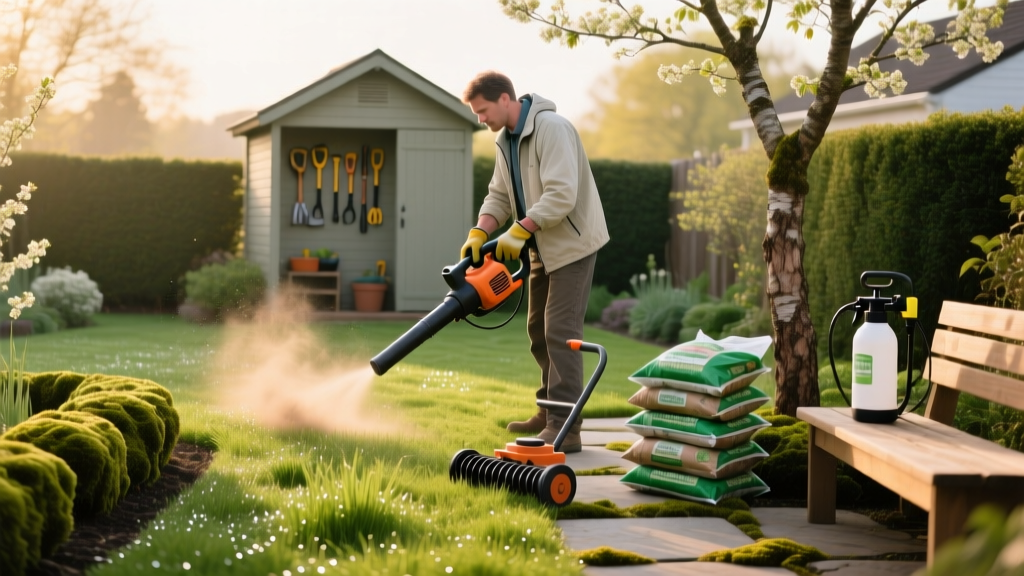
How to Master Your Spring Yard Clean Up: A Step-by-Step Guide
A successful spring yard clean up is not merely about raking dead leaves; it is a biological reset for your landscape. Timing your intervention based on soil temperature, selecting the correct turf-management tools, and properly handling biomass are the differences between a lawn that struggles until July and one that thrives by May. This guide provides a precise, actionable framework for executing a professional-grade yard clean up on a standard 0.25-acre residential lot.
The 55°F Soil Rule: Timing Your Intervention
The most common mistake homeowners make is starting their yard clean up based on the calendar rather than soil biology. Cool-season grasses (Kentucky Bluegrass, Fescue) and warm-season grasses (Bermuda, Zoysia) have distinct root-activation temperatures. Raking or aerating a lawn before the root zone is active causes severe turf tearing and delays recovery.
Expert Rule of Thumb: Do not begin aggressive mechanical yard clean up (power raking, core aeration) until your soil temperature reaches a consistent 55°F at a 2-inch depth for three consecutive mornings. Use a digital soil probe thermometer, not an ambient air thermometer, to verify this baseline.
Applying pre-emergent herbicides during this same 55°F window is critical, as this is the exact soil temperature threshold that triggers crabgrass seed germination.
Phase 1: Hardscape Debris and Canopy Clearance
Before touching the turf, clear all hardscapes, gutters, and planting beds. Wet, matted leaves left on concrete or pavers cause alkaline staining and promote moss growth in the joints.
Tool Selection for Debris Removal
Ditch the standard bamboo rake for heavy debris removal; it is inefficient for wet, compacted winter leaves. Invest in or rent equipment matched to your lot size:
- Small Lots (Under 5,000 sq ft): The EGO Power+ 56V Lithium-Ion Leaf Blower (LB6504) (approx. $299) delivers 180 CFM and easily dislodges wet, matted debris from turf crowns without the fatigue of gas engines.
- Large Lots (Over 10,000 sq ft): Rent a Billy Goat KV650H Leaf Vacuum (approx. $120/day rental). This walk-behind vacuum shreds leaves at a 10:1 reduction ratio, immediately bagging them for composting while saving hours of manual labor.
- Bed Cleanup: Use a poly-tine shrub rake (like the A.M. Leonard 24-Tine Poly Rake, $35) in planting beds. Steel tines will slice through emerging spring perennials and shallow tree roots.
Phase 2: Thatch Evaluation and Turf Prep
Once the surface debris is cleared, assess the thatch layer. Thatch is the intermingled layer of living and dead stems and roots that develops between the zone of green vegetation and the soil surface. While a thin layer (under 0.5 inches) insulates roots, excessive thatch blocks water penetration and harbors fungal pathogens like Rhizoctonia solani (brown patch).
According to the University of Minnesota Extension, you should use a sharp trowel to cut a 3-inch deep cross-section of your turf. Measure the brown, spongy layer above the dark topsoil.
Dethatching vs. Core Aeration Decision Matrix
| Lawn Condition | Thatch Depth | Soil Compaction | Required Action | Equipment Needed |
|---|---|---|---|---|
| Healthy, well-draining | Less than 0.5 inches | Low | Mow low (scalp) & rake lightly | Standard push mower, fan rake |
| Spongy, water pooling | 0.5 to 1.0 inches | Moderate | Power Raking (Dethatching) | Walk-behind power rake with flail blades |
| Hard, dry, high traffic | Less than 0.5 inches | Severe | Core Aeration | Gas-powered core aerator (removes 3-inch plugs) |
| Severe neglect | Over 1.0 inches | Severe | Dethatch first, aerate 3 weeks later | Both power rake and core aerator |
Note: Never dethatch a warm-season grass (like Zoysia) in early spring. Wait until it has fully greened up and is actively growing, usually late May or June, to prevent devastating frost damage to exposed stolons.
Phase 3: Precision Bed Edging and Shrub Pruning
Crisp edges define a landscape. Over winter, turfgrass creeps into garden beds, blurring the boundaries and stealing nutrients from ornamental plants.
- Establish the Trench: Use a half-moon edger or a motorized stick edger (like the STIHL FC 91, $429) to cut a precise boundary. The trench should be exactly 6 inches wide and 3 inches deep.
- Clear the Lip: Remove the excavated soil and grass from the trench. Do not throw it into the planting bed, as this introduces weed seeds and alters the drainage grade around shrub root flares.
- Prune Spring-Flowering Shrubs: Shrubs that bloom on old wood (Lilacs, Forsythia, Azaleas) must not be pruned during the spring yard clean up. Pruning them now removes the flower buds. Only prune summer-blooming shrubs (Butterfly Bush, Hydrangea paniculata) and remove dead, diseased, or crossing branches using a bypass pruner like the Fiskars ProCantilever ($45), making 45-degree cuts exactly 0.25 inches above an outward-facing bud.
⚠️ Warning: Mulching Mistakes
When applying fresh mulch after edging, maintain a strict 3-inch maximum depth. Piling mulch against tree trunks ('volcano mulching') traps moisture against the bark, inviting Phytophthora root rot and providing cover for bark-gnawing voles. Keep mulch at least 3 inches away from the base of all trees and woody shrubs.
Phase 4: Biomass Management and Composting
A thorough yard clean up generates hundreds of pounds of organic biomass. Sending this material to a landfill is both ecologically wasteful and financially inefficient. The Environmental Protection Agency (EPA) emphasizes that yard trimmings and food scraps together make up over 30% of what we throw away, and composting them creates a vital soil amendment.
What to Compost vs. What to Discard
Set up a dual-bin composting system using wire mesh or a tumbler (e.g., the FCMP Outdoor IM4000 Tumbling Composter, $119). Balance your carbon-to-nitrogen ratio by mixing brown debris (dry leaves, twigs) with green debris (grass clippings, pulled weeds).
- Safe to Compost: Dry leaves, pine needles (use sparingly, they are acidic), small twigs (under 0.5-inch diameter), grass clippings, and pulled annual weeds that have not gone to seed.
- Do NOT Compost: Grass clippings treated with broadleaf herbicides (like 2,4-D) within the last 6 months, diseased plant material (like rose black spot or powdery mildew), and large woody branches that will take years to break down without a commercial chipper.
DIY vs. Professional Yard Clean Up Cost Matrix
Deciding whether to tackle the yard clean up yourself or hire a landscape contractor depends on your available time, physical capability, and budget. Below is a cost breakdown for a standard 0.25-acre (10,890 sq ft) lot in 2026.
| Cost Category | DIY Approach (Estimated) | Professional Service (Estimated) |
|---|---|---|
| Debris Removal & Hauling | $40 (Trash bags/municipal pickup) | $150 - $250 (Includes labor and dump fees) |
| Equipment Rental (Dethatcher/Aerator) | $85 - $120 (4-hour rental) | Included in service fee |
| Consumables (Mulch, Pre-emergent, Seed) | $180 - $250 | $300 - $450 (Includes markup and application) |
| Labor / Time | 12 - 16 hours of physical labor | 3 - 5 hours (Crew of 2-3) |
| Total Estimated Cost | $305 - $410 | $650 - $950 |
If you choose the DIY route, prioritize renting commercial-grade equipment from local rental yards rather than purchasing cheap, consumer-grade electric dethatchers from big-box stores. Consumer models often lack the torque to penetrate compacted spring soil and will burn out their motors on a standard 0.25-acre lot.
Frequently Asked Questions
Should I bag my grass clippings during the first spring mow?
Yes. The first mow of the season (often called 'scalping') should be set one notch lower than your normal cutting height to remove winter-killed leaf tips and allow sunlight to reach the soil. Bag these specific clippings, as they contain high amounts of dead tissue and potential fungal spores. For all subsequent mows, leave the clippings on the lawn to return nitrogen to the soil.
How do I clean up a yard with heavy clay soil without compacting it?
Heavy clay soils are highly susceptible to compaction when wet. Never walk on, rake, or drive equipment over clay soil if it fails the 'ribbon test.' Grab a handful of soil and squeeze it; if it forms a tight, muddy ribbon that holds its shape, it is too wet. Wait 48 to 72 hours after the last heavy rainfall for the soil to dry to a crumbly, workable consistency before executing your yard clean up.