
Home & Garden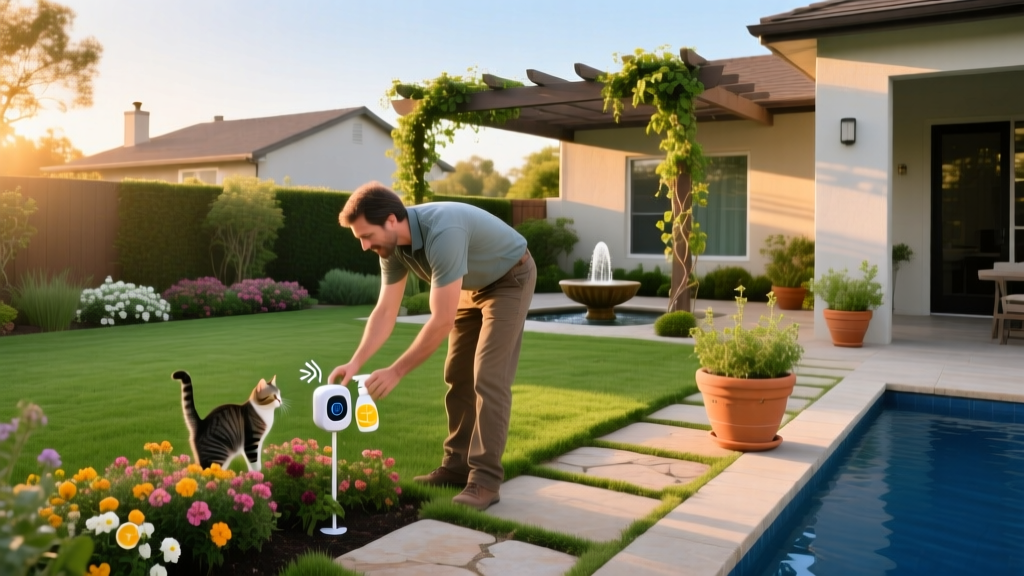
How to Get Rid of Stray Cats Permanently: A Humane Garden Playbook
The Biology of Feline Intrusion: Why They Choose Your Yard
Before deploying deterrents, you must understand feline behavioral ecology. Stray and feral cats do not target gardens out of malice; they target them for biological convenience. A cat’s ideal latrine requires dry, fine-textured, easily excavated soil. Standard garden beds filled with loose topsoil, fine pine bark mulch, or dry sand perfectly mimic the environmental conditions cats seek for waste elimination and scent marking. Furthermore, dense shrubbery provides the overhead canopy they require to feel secure from predators while digging.
To permanently resolve the issue, you must shift from temporary scare tactics to permanent environmental modification. This playbook outlines a three-phase exclusion strategy combining habitat modification, physical barriers, and active conditioning.
Data Highlight: Feline Territorial Metrics
A single feral tomcat can maintain a territory spanning up to 2 acres in urban environments. If your yard sits on a transit corridor between a colony's sleeping area and hunting ground, passive deterrents will fail. You must alter the physical architecture of the space to break the transit habit.
A single feral tomcat can maintain a territory spanning up to 2 acres in urban environments. If your yard sits on a transit corridor between a colony's sleeping area and hunting ground, passive deterrents will fail. You must alter the physical architecture of the space to break the transit habit.
Phase 1: Habitat Modification and Soil Armoring
The most cost-effective permanent solution is making the soil physically impossible or highly unpleasant to dig. Cats rely on tactile feedback from their paw pads; altering the surface texture creates immediate aversion.
The Chicken Wire Sub-Surface Grid
Lay down 19-gauge, 1-inch hexagonal galvanized chicken wire directly over the soil surface, then cover it with 2 to 3 inches of mulch or topsoil. Plant roots will easily grow through the 1-inch gaps, but a cat’s claws will catch on the wire mesh the moment they attempt to dig. This creates an immediate negative tactile response without harming the animal.
Heavy Aggregate Mulching
Replace fine bark mulch with heavy, coarse materials. Use smooth river rocks measuring at least 2 to 3 inches in diameter. Cats cannot move rocks of this weight, and the rounded, uneven surface provides zero traction for digging. Alternatively, lay down prickly holly branch cuttings or rose prunings beneath a light layer of aesthetic mulch to create a hidden physical barrier.
Phase 2: Perimeter Exclusion and Fencing Frameworks
Cats are exceptional climbers and jumpers, capable of clearing 5 to 6 feet vertically from a standstill. Standard privacy fences do not stop them. To permanently exclude strays, you must modify the top 24 inches of your perimeter fencing.
| Exclusion Method | Mechanism of Action | Estimated Cost (per linear ft) | Effectiveness Rating |
|---|---|---|---|
| Floppy Fence Top | Extends fence by 24" outward at a 45-degree angle using flexible PVC or wire. Cats lack the grip to pull themselves over the overhang. | $3.50 - $5.00 | 95% |
| Coyote Rollers | Aluminum spinning cylinders mounted to the fence lip. When a cat grabs the top, the roller spins, preventing the leverage needed to climb over. | $18.00 - $25.00 | 99% |
| Angled Lattice Inward | Wooden lattice angled inward at 45 degrees. Creates a visual and physical ceiling that traps the cat's climbing momentum. | $6.00 - $9.00 | 85% |
Phase 3: Active Sensory Deterrents
When physical barriers are impossible (e.g., open front yards), active deterrents rely on classical conditioning to teach the cat that your yard is a hostile environment.
Motion-Activated Sprinklers
The Orbit Yard Enforcer (retailing around $65-$75) remains the gold standard for active deterrence. It utilizes an infrared sensor to detect heat and motion, triggering a sharp, 3-second burst of water.
- Placement Strategy: Mount the sensor at an 8-inch height. If placed too high, the water arc will pass over the cat's back, failing to deliver the startle stimulus.
- Pressure Requirements: Ensure your hose bib delivers at least 30 to 50 PSI. Lower pressure results in a gentle spray that curious cats may actually play with, reinforcing the behavior.
Ultrasonic Repellents: The Reality Check
Devices like the Aspectek PredatorGuard ($40) emit high-frequency sound waves (13.5kHz to 45.5kHz). While effective in controlled studies, field application requires strict adherence to physics. Ultrasonic waves do not penetrate solid objects and degrade rapidly over distance. You must place these units with a clear, unobstructed line-of-sight to the target area, no more than 25 feet away. They are best used as secondary reinforcements in conjunction with physical soil armoring.
Phase 4: The TNR Protocol for Established Colonies
If your garden is being overrun by a localized feral colony, no amount of fencing or sprinklers will provide permanent relief. The biological drive to mate and establish territory will override deterrents. In these scenarios, you must address the population dynamics through Trap-Neuter-Return (TNR).
According to Alley Cat Allies, TNR is the only proven, humane method to stabilize and eventually reduce feral cat populations. By humanely trapping the cats, having them spayed or neutered, vaccinated, and eartipped, you halt the breeding cycle. Neutered cats are significantly less likely to roam, fight, spray urine, or dig extensively in gardens, as their territorial drives are vastly diminished. Contact your local municipal animal control or a registered TNR rescue group to borrow humane gravity-trigger box traps.
Warning: Toxic and Illegal Deterrents
Never use mothballs (naphthalene or paradichlorobenzene) outdoors. The EPA strictly prohibits using mothballs outside of airtight containers, as they leach toxic chemicals into the soil and groundwater. Furthermore, they pose a lethal ingestion risk to local wildlife, neighborhood dogs, and children. Similarly, avoid antifreeze or cayenne pepper powders, which can cause permanent blindness or fatal kidney failure in animals that groom their paws after walking through them. Always prioritize humane exclusion, as advised by the ASPCA.
Never use mothballs (naphthalene or paradichlorobenzene) outdoors. The EPA strictly prohibits using mothballs outside of airtight containers, as they leach toxic chemicals into the soil and groundwater. Furthermore, they pose a lethal ingestion risk to local wildlife, neighborhood dogs, and children. Similarly, avoid antifreeze or cayenne pepper powders, which can cause permanent blindness or fatal kidney failure in animals that groom their paws after walking through them. Always prioritize humane exclusion, as advised by the ASPCA.
Frequently Asked Questions
Will coffee grounds keep stray cats out of my garden?
This is a pervasive internet myth. While cats dislike the strong scent of fresh coffee grounds, the concentration required to create an effective olfactory barrier in an outdoor, wind-swept environment is impractical. More importantly, coffee grounds contain residual caffeine, which is highly toxic to cats and dogs if ingested during grooming. Rely on physical soil armoring instead.
How do I safely clean cat urine and feces from my raised vegetable beds?
Feline feces can carry Toxoplasma gondii, a parasite dangerous to humans, particularly pregnant women. Wear heavy rubber gloves and a mask. Remove the feces and the surrounding 2 inches of soil, disposing of it in sealed plastic bags in the trash (do not compost it). Flood the affected soil area with a commercial enzymatic cleaner designed for outdoor pet waste, which breaks down the uric acid crystals and eliminates the scent markers that attract other cats to the same spot.
Are commercial liquid repellents effective long-term?
Products like Liquid Fence Dog & Cat Repellent rely on putrescent egg solids and garlic oils. They can work for 2 to 3 weeks, but UV degradation and rainfall will rapidly break down the active compounds. They are useful for protecting specific, high-value plants (like freshly planted catnip or mint, which ironically attract cats), but they are not a permanent, yard-wide solution. You must reapply after every 1/2 inch of rainfall.
What plants naturally repel cats?
Cats have a highly developed olfactory system and actively avoid the scent of Ruta graveolens (Common Rue), Lavandula (Lavender), and Coleus canina (Scaredy Cat Plant). Planting a dense border of Rue around your garden beds can create a natural, low-maintenance scent barrier, though it should be paired with physical soil deterrents for maximum efficacy.