
Home & Garden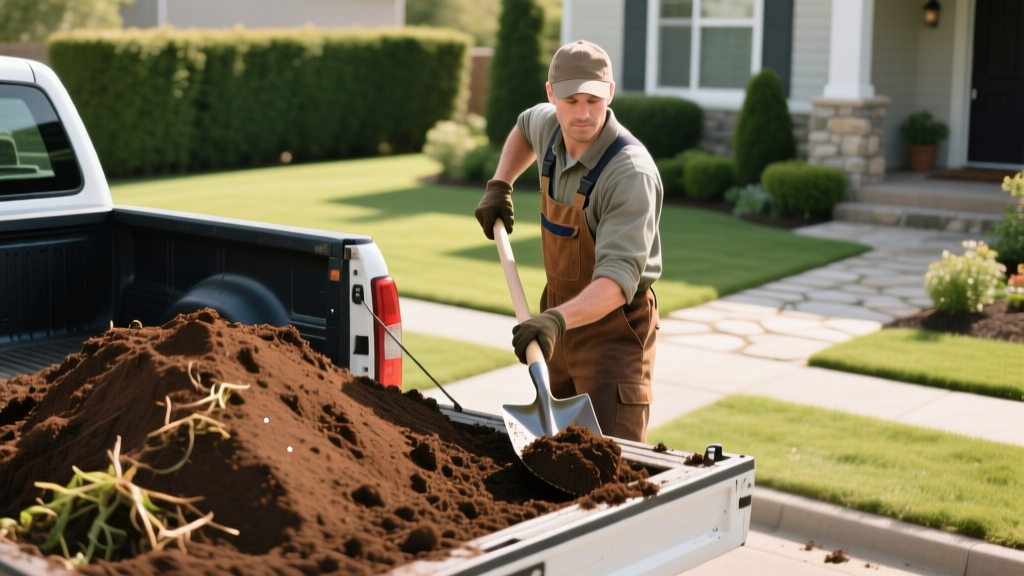
How Much Does 1 Yard of Topsoil Weigh? Hauling & Cost Guide
The Short Answer: How Much Does 1 Yard of Topsoil Weigh?
A standard cubic yard of dry topsoil weighs approximately 2,000 pounds (1 ton). However, this baseline figure is highly deceptive for logistical planning. Topsoil is a porous, organic-rich medium that acts like a sponge. When exposed to rainfall or high groundwater, the weight of a single cubic yard can easily surge past 2,700 pounds. Understanding the exact weight of your soil order is not merely an academic exercise; it is a critical safety calculation that dictates whether your pickup truck can safely haul the load, how much your delivery fee will be, and whether your driveway can support a fully loaded tandem-axle dump truck.
Quick Reference Weight Matrix
- Dry Topsoil (Summer/Bagged): 1,800 to 2,000 lbs per cubic yard
- Moist Topsoil (Spring/Fall): 2,400 to 2,700 lbs per cubic yard
- Saturated Topsoil (After heavy rain): 2,800 to 3,200+ lbs per cubic yard
- Volume Equivalent: 1 cubic yard = 27 cubic feet = approx. 36 standard 0.75 cu. ft. bags
The Science of Soil Weight: Moisture and Bulk Density
According to Cornell University's Soil Health Initiative, soil bulk density—the mass of dry soil per unit volume—typically ranges from 1.0 to 1.5 grams per cubic centimeter for mineral soils. Topsoil, which contains higher organic matter, generally sits on the lower end of that spectrum when dry. However, the pore spaces between soil particles fill with water during wet seasons. Water weighs 62.4 pounds per cubic foot. If a cubic yard of topsoil (27 cubic feet) absorbs enough water to fill just 20% of its volume with moisture, you are adding over 330 pounds of pure water weight to the load.
This is why landscape supply yards often refuse to load bulk topsoil into customer trucks after a week of heavy rain. The material becomes dangerously heavy and highly prone to compaction, which destroys the soil structure necessary for healthy lawn root development. As noted by Michigan State University Extension, managing soil bulk density and avoiding severe compaction during transport and installation is vital for maintaining proper aeration and water infiltration in residential landscapes.
| Soil Condition | Estimated Weight (per cu. yd.) | Primary Risk Factor |
|---|---|---|
| Oven-Dry / Screened | 1,800 - 2,000 lbs | Dust blow-off during transport |
| Field-Moist (Ideal) | 2,400 - 2,600 lbs | Clumping if spread too thick |
| Saturated / Muddy | 2,800 - 3,200 lbs | Truck suspension failure, severe compaction |
| Unscreened (with rocks) | 2,500 - 3,000 lbs | Damage to lawn mowers, poor seed contact |
Hauling Guide: Can Your Truck Handle a Full Yard?
The most common mistake homeowners make is assuming a 'half-ton' pickup truck can safely haul a full cubic yard of topsoil. The term half-ton is a historical payload classification, not a literal weight limit. Modern half-ton trucks have vastly different payload capacities depending on the cab size, bed length, and engine configuration.
Half-Ton vs. Heavy-Duty Payload Limits
If you order a full cubic yard of moist topsoil weighing 2,600 pounds, you must verify your vehicle's specific payload capacity, which is printed on the yellow sticker inside the driver-side door jamb. This sticker accounts for the weight of passengers, fuel, and aftermarket accessories.
- Ford F-150 / Chevy Silverado 1500 / Ram 1500: Payload capacities typically range from 1,400 to 2,200 pounds. A full yard of moist topsoil will exceed the Gross Vehicle Weight Rating (GVWR), causing the rear suspension to bottom out, severely reducing braking efficiency, and potentially causing tire blowouts. Maximum safe haul: 0.5 to 0.75 cubic yards.
- Ford F-250 / Chevy Silverado 2500HD (Three-Quarter Ton): Payload capacities generally range from 3,000 to 4,000 pounds. These trucks can safely haul one full cubic yard of moist topsoil without compromising steering or braking dynamics. Maximum safe haul: 1 to 1.5 cubic yards.
- Ford F-350 / Ram 3500 (One Ton): Payload capacities can exceed 5,000 pounds. These trucks can comfortably haul up to 2 cubic yards, provided the bed volume can contain the material without spilling over the tailgate. Maximum safe haul: 2 cubic yards.
Warning: Never use a standard passenger SUV or crossover to haul bulk topsoil in the rear cargo area. The interior volume is insufficient, the moisture will ruin the upholstery, and the unibody frame is not engineered for concentrated point-loads exceeding 1,000 pounds.
Coverage Math: Calculating Your Square Footage
Once you know how much weight your vehicle or driveway can handle, you need to calculate how far that single cubic yard will stretch. One cubic yard equals 27 cubic feet. The coverage area is entirely dependent on your target application depth.
The Formula: (Length in feet x Width in feet x Depth in inches) / 324 = Cubic Yards Required.
Standard Coverage Depths for 1 Cubic Yard
- Top-Dressing an Existing Lawn (0.25 inches): Covers approximately 1,296 square feet. Use finely screened topsoil to prevent smothering the existing grass blades.
- Seeding a New Lawn (2 inches): Covers approximately 162 square feet. This provides adequate depth for root establishment and moisture retention.
- Filling Raised Garden Beds (4 inches): Covers approximately 81 square feet. (Note: Pure topsoil is too dense for raised beds; mix with 30% compost and 10% perlite for drainage).
- Grading and Leveling Depressions (6 inches): Covers approximately 54 square feet. Use unscreened fill dirt for the base, and reserve your premium topsoil for the top 2 inches.
2026 Cost Analysis: Bulk Delivery vs. Bagged Topsoil
Deciding between bulk delivery and palletized bags comes down to volume, accessibility, and hidden fees. While bulk soil is cheaper per cubic foot, the delivery logistics often erase the savings for small projects.
| Purchasing Method | Estimated Cost (per cu. yd.) | Pros & Cons |
|---|---|---|
| Bulk Delivery (1-3 yards) | $80 - $140 | High delivery fees ($60-$100); requires driveway space; difficult to move to backyard. |
| Bulk Delivery (4+ yards) | $35 - $55 | Lowest per-yard cost; delivery fee amortized; requires heavy equipment to spread. |
| Bagged (0.75 cu. ft. bags) | $110 - $160 | Easy to transport in trunk; can be staged anywhere; generates massive plastic waste. |
| Self-Haul (Truck/Trailer) | $25 - $40 | Cheapest option; high physical labor; requires proper truck payload capacity. |
The break-even point where bulk delivery becomes more economical than bagged topsoil is typically around 1.5 cubic yards. If you need less than 1.5 yards, buying bags from a local home improvement center and transporting them yourself is usually cheaper and far less messy than paying a landscape supply yard's minimum delivery dispatch fee.
Expert Tips for Ordering and Site Preparation
Before the dump truck arrives, proper site preparation will save you hours of backbreaking labor and prevent property damage.
- Specify 'Screened' Topsoil: Always order screened topsoil for lawn applications. The screening process passes the soil through a 5/8-inch or 1/2-inch mesh, removing rocks, roots, and large clay clods. Unscreened topsoil is cheaper but will leave your lawn surface uneven and pose a severe hazard to your mower blades.
- Use a Tarp for Driveway Drops: If the truck must dump on an asphalt or concrete driveway, lay down a heavy-duty 10x10 foot tarp first. Topsoil holds moisture, and the runoff will stain concrete and degrade asphalt over time. Furthermore, sweeping loose soil off a tarp takes five minutes; power-washing it off a driveway takes an hour.
- Verify Overhead Clearance: A standard single-axle dump truck requires at least 14 feet of vertical clearance to fully raise its bed. Check for low-hanging tree branches, utility drops, and pergolas before directing the driver to your drop zone.
- Avoid Saturated Installation: Never spread topsoil when the underlying ground is waterlogged. Tamping or rolling wet topsoil creates a hardpan layer that restricts root penetration and causes surface pooling during future rain events.