
Home & Garden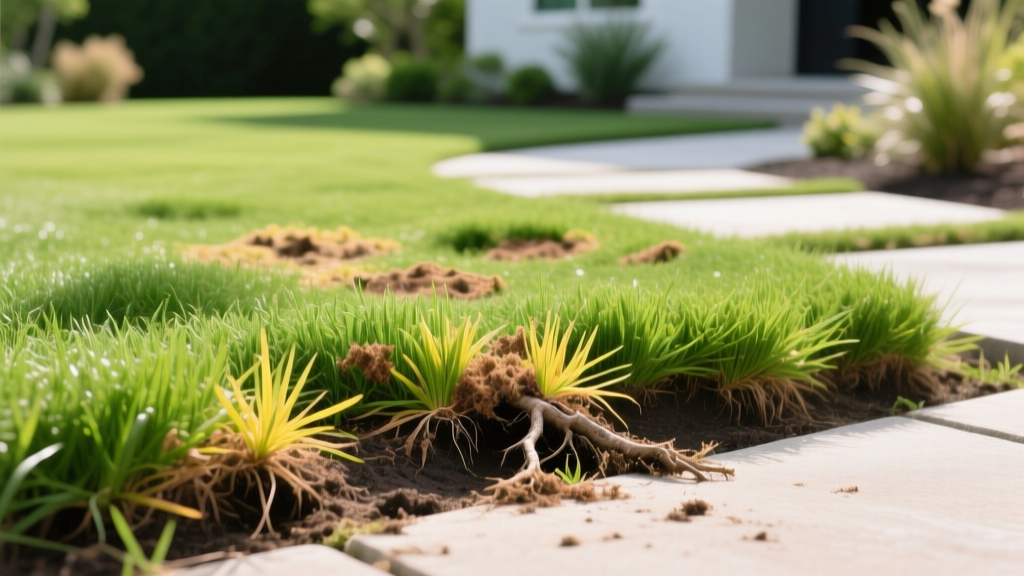
How to Identify and Treat Take All Root Rot in St. Augustine Grass
The Science Behind Take All Root Rot
Take all root rot (TARR) is a devastating soil-borne fungal disease caused by the pathogen Gaeumannomyces graminis var. graminis. While it can affect Bermuda, Centipede, and Zoysia grasses, it is notoriously destructive to St. Augustine lawns across the Southern United States. Unlike foliar diseases that merely damage grass blades, TARR attacks the root system and stolons (runners), effectively severing the plant's ability to uptake water and nutrients.
⚠️ Critical Pathogen Fact: The TARR fungus thrives in alkaline soils with a pH above 7.0 and requires high moisture levels to infect roots. It is most active in spring and fall when soil temperatures hover between 60°F and 75°F, but the visible damage often peaks during the heat stress of mid-summer.
According to the Texas A&M AgriLife Extension, the fungus survives in the soil as mycelium on infected plant debris and thatch. When conditions become favorable, it produces runner hyphae that penetrate the root cortex, causing the roots to turn black, shorten, and rot away. Because the damage occurs underground, homeowners often misdiagnose the early stages as drought stress or chinch bug damage.
Differential Diagnosis: TARR vs. Common Lawn Problems
Accurate identification is the most critical step in lawn recovery. Applying the wrong treatment wastes time and money while the fungus continues to destroy your root system. Use this comparison matrix to confirm your diagnosis before purchasing fungicides.
| Symptom / Feature | Take All Root Rot | Brown Patch | Chinch Bug Damage |
|---|---|---|---|
| Leaf Appearance | Yellowing (chlorosis) progressing to brown; leaves pull easily from stolons. | Circular patches with tan lesions and dark brown borders on blades. | Yellow to brown patches, often starting near sidewalks or driveways. |
| Root Condition | Roots are black, short, and rotted. Nodes on stolons are blackened. | Roots remain white and healthy; damage is strictly foliar. | Roots are healthy; insects visible at the soil-thatch interface. |
| Seasonality | Infects in spring/fall; symptoms worsen in summer heat stress. | Peaks during hot, humid summer nights (above 68°F). | Mid-to-late summer, particularly in hot, dry, sunny areas. |
The 4-Step Treatment Protocol for TARR Recovery
Eradicating TARR requires a multi-pronged approach targeting soil chemistry, fungal populations, and cultural habits. The University of Florida IFAS Extension emphasizes that fungicides alone will fail if the underlying soil pH and moisture issues are not corrected.
Step 1: Acidify the Soil Profile
The TARR pathogen struggles to survive in acidic environments. Your first actionable step is to lower your soil pH to a target range of 5.5 to 6.0. Purchase a reliable digital soil pH meter or send a core sample to your local university extension office. If your pH is 7.0 or higher, apply elemental sulfur. A standard application rate is 1 pound of elemental sulfur per 1,000 square feet to drop the pH by approximately 0.5 points. Apply this in early spring and again in early fall, watering it in immediately to activate the soil bacteria that convert sulfur to sulfuric acid.
Step 2: Implement a Fungicide Rotation
Chemical control is necessary to halt active infections, but you must rotate Fungicide Resistance Action Committee (FRAC) groups to prevent the pathogen from developing immunity. The most effective active ingredients for TARR are Azoxystrobin (FRAC Group 11) and Propiconazole (FRAC Group 3).
- Group 11 (QoIs): Products like Scotts DiseaseEX or Syngenta Heritage TL provide systemic protection and are excellent for preventative spring applications.
- Group 3 (DMIs): Products containing Propiconazole (like Bayer Advanced Fungus Control or Banner MAXX) offer strong curative action when symptoms are already visible.
Apply fungicides at the curative rate (usually the higher end of the label's spectrum, such as 4 oz per 1,000 sq ft for liquid azoxystrobin) and water them in with exactly 0.25 inches of irrigation to move the active ingredient into the root zone where the fungus lives.
Step 3: Modify Your Fertilization Strategy
High-nitrogen fertilizers force rapid, weak top-growth that the compromised root system cannot support. During TARR recovery, halt all high-nitrogen applications (e.g., 24-0-6). Instead, switch to a low-nitrogen, high-potassium fertilizer like a 5-10-31 blend. Potassium thickens cell walls and improves the grass's drought and disease tolerance. Additionally, apply a humic acid and fulvic acid liquid amendment monthly to stimulate microbial activity and encourage new root hair development.
Step 4: Correct Irrigation and Mowing
TARR exploits chronically wet soil. Transition to a deep, infrequent watering schedule. Apply 0.5 to 0.75 inches of water only when the grass shows signs of wilting (blades folding in half, footprints remaining on the turf). Never water in the evening; irrigate between 4:00 AM and 6:00 AM so the foliage dries rapidly after sunrise. Raise your mower deck to 3.5 or 4 inches. Scalping a St. Augustine lawn below 3 inches removes vital photosynthetic tissue and exposes the soil to temperature fluctuations that stress the remaining roots.
Recommended Annual Fungicide Rotation Schedule
Follow this precise timeline to maintain chemical efficacy and protect your lawn through peak infection windows.
| Application Window | Active Ingredient | FRAC Group | Purpose |
|---|---|---|---|
| Early Spring (Soil temp 60°F) | Azoxystrobin | Group 11 | Preventative barrier before spring growth surge. |
| Late Spring (28 days later) | Propiconazole | Group 3 | Curative control and resistance rotation. |
| Early Fall (Soil temp dropping to 75°F) | Azoxystrobin | Group 11 | Protect roots during the secondary infection peak. |
| Late Fall (28 days later) | Propiconazole | Group 3 | Final systemic treatment before winter dormancy. |
Frequently Asked Questions
Will TARR kill my lawn completely?
If left untreated for multiple seasons, TARR will cause massive turf thinning, allowing invasive weeds like crabgrass and spurge to take over. However, St. Augustine grass is resilient. With strict adherence to the soil acidification and fungicide rotation protocol above, most lawns show significant root regeneration within 6 to 9 months.
Can I use peat moss instead of elemental sulfur?
Topdressing with sphagnum peat moss is a proven organic method to lower soil pH and suppress TARR. The NC State University Extension notes that applying a 1/4-inch layer of peat moss over infected areas can create a localized acidic microenvironment that hinders the fungus. However, for lawns with highly alkaline soil (pH > 7.5), elemental sulfur provides a faster, more measurable chemical correction.
Should I core aerate a lawn with active TARR?
Avoid core aeration during peak active infection periods (spring and fall when soil temps are 60°F–75°F). The aeration tines can physically spread the fungal mycelium from infected zones to healthy turf. Wait until mid-summer or winter when the fungus is less active, and always sterilize your aerator tines with a 10% bleach solution between passes if moving between different lawn zones.