
Home & Garden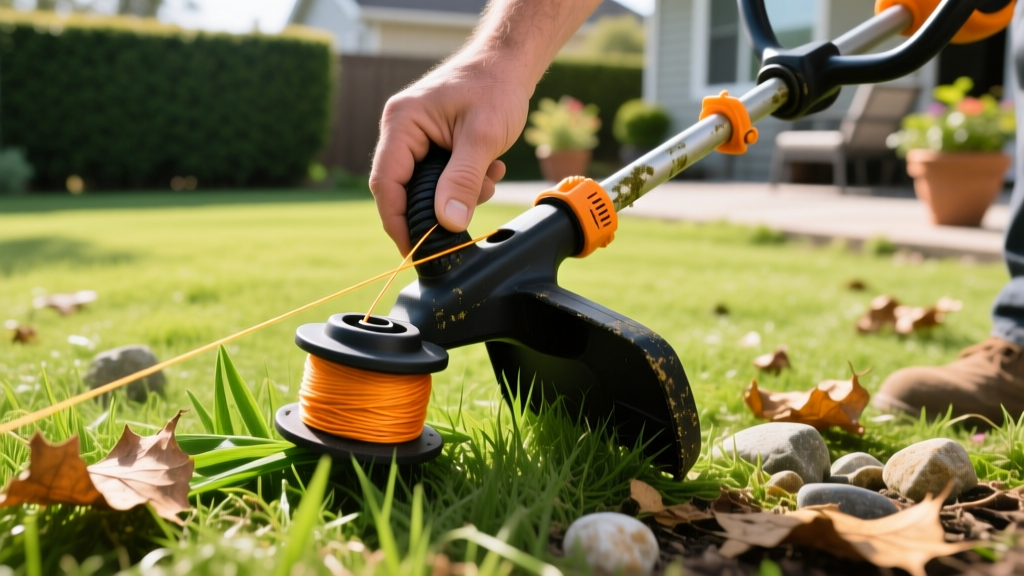
How to Put String on a Weedeater for Tough Weed Spot-Treatment
The Botany of Trimmer Line: Matching Geometry to Weed Species
Most homeowners treat string trimmers as one-size-fits-all tools, leading to pulverized soft annuals or frustrating bounce-offs on woody perennials. Effective weed species spot-treatment begins long before you pull the trigger; it starts with matching your trimmer line's diameter and cross-sectional geometry to the specific cellular structure of the target weed. Knowing how to put string on a weedeater is only half the battle—loading the correct string is what separates a ragged yard from a precision-maintained landscape.
As of 2026, advancements in copolymer nylon blends mean you no longer have to sacrifice flexibility for cutting aggression. However, selecting the wrong profile will still result in poor spot-treatment outcomes. For instance, using a standard 0.065-inch round line on mature Dallisgrass (Paspalum dilatatum) will cause the line to deflect off the thick, fibrous stolons rather than severing them. Conversely, using a 0.105-inch serrated line on delicate annual bluegrass will unnecessarily scalp the surrounding turf and throw excessive debris.
| Target Weed Species | Weed Characteristics | Recommended Diameter | Optimal Line Geometry | Product Example |
|---|---|---|---|---|
| Crabgrass / Annual Bluegrass | Soft tissue, high water content, shallow roots | 0.065" - 0.080" | Round | Oregon Round Co-Extruded |
| Dallisgrass / Bermudagrass | Dense fibrous stolons, tough rhizomes | 0.085" - 0.095" | Multi-Sided (Square/Star) | Husqvarna Titanium Force |
| Yellow Nutsedge | Triangular stems, waxy cuticle, rapid growth | 0.085" - 0.095" | Twisted or Serrated | Stihl X-Line Serrated |
| Blackberry / Woody Thistle | Lignified stalks, thick bark, deep taproots | 0.105" - 0.155" | Twisted / Heavy Serrated | Oregon Gatorline Twist |
Step-by-Step: How to Put String on a Weedeater (Bump-Feed Heads)
The dual-line bump-feed head is the industry standard for residential spot-treatment because it allows for rapid line advancement without disassembling the spool. Follow these exact measurements and steps to prevent spool jamming, which is the leading cause of trimmer downtime during heavy weed clearing sessions.
- Lock the Spool: Rotate the inner spool until the alignment arrows on the spool and the outer housing match. Push down on the spool to lock it in place. This prevents the spool from spinning while you wind.
- Cut Precise Lengths: Do not eyeball the line. Cut two exact 15-foot strands of your selected copolymer line. Exceeding 18 feet per eyelet on standard bump heads increases friction and causes the line to melt and fuse inside the housing.
- Anchor the Line: Feed one end of the first 15-foot strand into the center anchor hole of the spool. Pull it through until you have equal lengths on both sides of the divider (if using a single-line anchor, leave a 6-inch tail on the inside).
- Wind with Tension: Wind the line tightly in the direction indicated by the arrows on the spool. Critical: Maintain heavy manual tension on the line as you wrap. Loose winding causes the top layers to bite into the bottom layers, resulting in a catastrophic spool lock when you bump the head on the ground.
- Secure in Retainer Notches: Leave exactly 8 inches of line unwound and snap it into the temporary retainer notches on the spool's outer rim. Repeat for the second eyelet.
- Thread the Eyelets and Release: Feed the 8-inch tails through the metal or reinforced plastic exit eyelets on the outer housing. Pull both lines simultaneously to release them from the retainer notches, then pull firmly to extend about 4 inches of line past the cutting blade on the guard.
Expert Insight: The Hygroscopic Secret
Nylon trimmer line is hygroscopic, meaning it absorbs moisture from the air. Line that has been sitting in a hot, dry garage for a year becomes brittle and snaps upon impact with woody weeds like thistle. The Fix: Submerge your nylon trimmer line in a bucket of cold water for 24 hours before spooling it. This restores the polymer's flexibility, increases its tensile strength by up to 30%, and drastically reduces the friction-heat that causes line welding inside the spool head.
Advanced Spot-Treatment Techniques for Specific Weeds
Once you have successfully learned how to put string on a weedeater and loaded the correct profile, your physical technique must adapt to the weed species you are targeting. Spot-treatment is about precision eradication without damaging the surrounding desirable turfgrass.
- The Scythe Method (For Tall, Soft Weeds like Pigweed and Ragweed): Tilt the trimmer head so the left side (where the line is moving forward toward you) is slightly lower. Use a smooth, sweeping U-motion from right to left. This slices the weed cleanly at the base and throws the debris away from you and your freshly mowed lawn.
- The Chopping Method (For Dense Clumps like Dallisgrass): Hold the trimmer head perfectly parallel to the ground. Drop the spinning lines directly onto the crown of the weed clump in short, 1-second bursts. Do not sweep. The multi-sided line will act like a machete, shattering the fibrous crown without wrapping the long stolons around your trimmer shaft.
- The Edging Method (For Creeping Woody Weeds near Hardscapes): Rotate the trimmer 90 degrees so the head is vertical. Walk along the perimeter where blackberry brambles or woody thistles meet concrete. Use the tip of the line (the outermost 2 inches) to delicately slice the weed stalks at soil level. The outer tip moves at the highest velocity, providing maximum kinetic energy for cutting lignified tissue.
Troubleshooting Common String Feed Failures
Even with perfect spooling technique, environmental factors and weed density can cause mechanical failures. Use this diagnostic framework to resolve issues in the field.
Symptom: Line advances too far and breaks off at the guard blade immediately.
Cause: The cutting blade on the plastic guard is dull or missing, or you are bumping the head while the throttle is disengaged.
Fix: Replace the guard blade (usually a $4 part). Always bump the head at full throttle; the centrifugal force of the spinning spool is required to properly meter the line release.
Symptom: The trimmer bogs down and loses RPMs when engaging thick weeds.
Cause: Line diameter is too large for the trimmer's engine displacement (common when putting 0.105" line on a sub-25cc consumer trimmer).
Fix: Step down to a 0.095" serrated line. The serrated edges provide the cutting aggression of a thicker line while reducing aerodynamic drag on the engine, preserving RPMs for tough spot-treatments.
Safety and Environmental Considerations
When spot-treating weeds near garden beds or water features, line fragmentation becomes a serious environmental concern. Standard nylon lines do not biodegrade and leave microplastics in the soil. According to safety and environmental guidelines outlined by the Oregon State University Extension, operators should always wear ANSI-rated eye protection and clear the area of debris that could become projectiles. Furthermore, for eco-sensitive spot-treatments near vegetable gardens, consider switching to modern biodegradable trimmer lines made from polybutylene succinate (PBS), which break down naturally in the soil over 18 to 24 months without sacrificing the cutting edge needed for soft-tissue weeds.
"Proper trimmer line selection and maintenance is not just about equipment longevity; it is a critical component of integrated weed management. A clean cut prevents the shredding of weed stalks, which can otherwise leave the plant vulnerable to secondary fungal infections or allow it to resprout from damaged nodes."
— Adapted from OSHA Landscaping and Horticultural Services Safety Guidelines
Mastering how to put string on a weedeater and pairing that mechanical skill with botanical knowledge transforms your trimmer from a blunt edging tool into a precision surgical instrument for your landscape. By respecting the tensile limits of your equipment and the biological defenses of your target weeds, you will achieve cleaner spot-treatments, reduce equipment wear, and maintain a healthier turf ecosystem.

